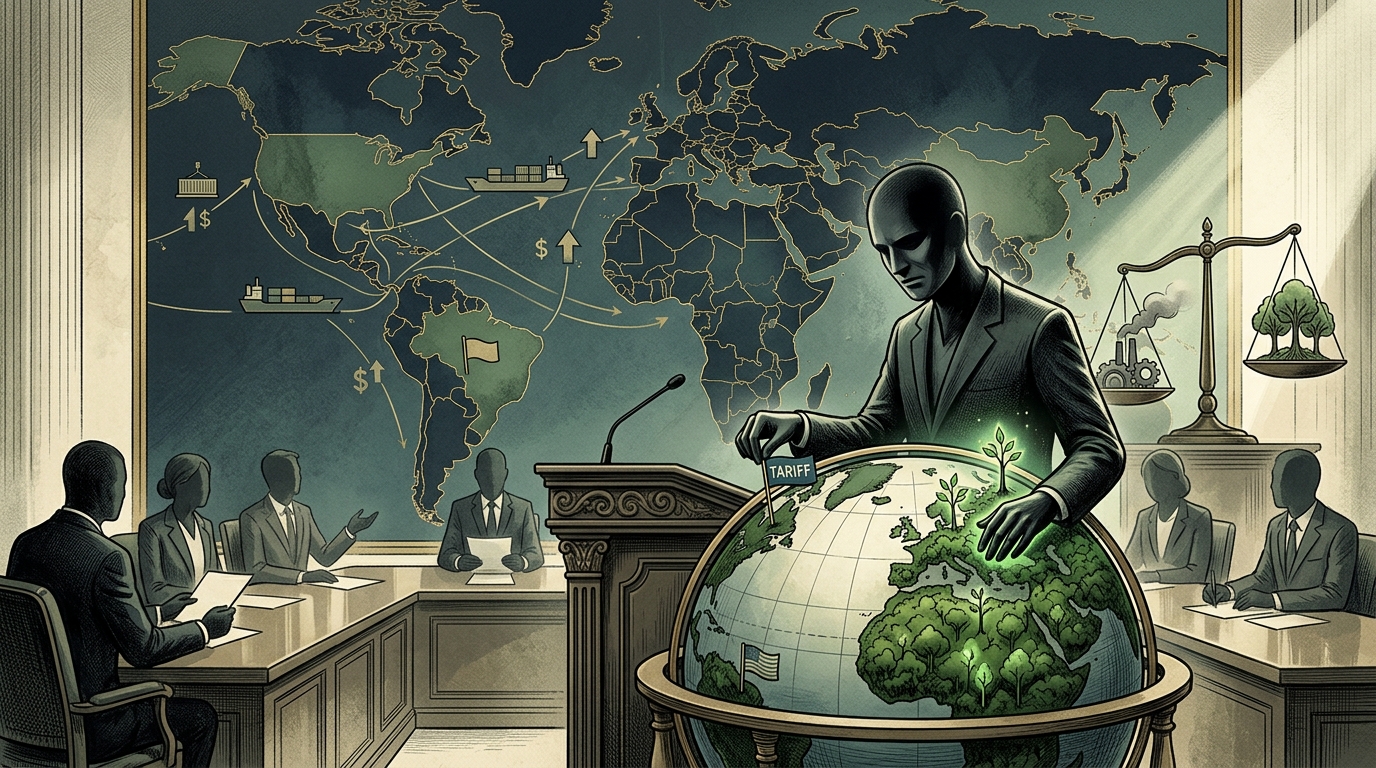
In one of the most ironic twists in modern geopolitics, the Trump administration—historically skeptical of international environmental accords—is now wielding the banner of ecological preservation as the tip of its trade policy spear. The recent proposal by the Office of the U.S. Trade Representative (USTR) to impose 25% tariffs on a vast array of Brazilian goods, ranging from beef to soy and steel, was officially justified as a response to "rampant illegal deforestation" in the Amazon. However, data released just 24 hours later by Brazil’s National Institute for Space Research (INPE) presents a radically different reality.
The Clash of Data and Rhetoric
According to satellite data from the DETER system, deforestation in the Amazon for May 2026 plummeted by a staggering 61.4% compared to the same month last year. This represents the lowest level of forest destruction recorded in a decade during the critical window preceding the dry season. The Brazilian government was quick to celebrate the success of its intensified law enforcement efforts and investments in real-time monitoring technologies.
The contrast is jarring: while Brazil offers tangible evidence of environmental recovery, Washington is using environmental degradation as the legal and moral pretext to shut its doors to the American market. This tactic, which many analysts are calling "Green Protectionism," signals a new era where climate change is no longer just a scientific issue, but a potent weapon of economic warfare.
The "Green Trump" and the Strategy of Isolation
Why would a president who has repeatedly withdrawn the U.S. from climate agreements now choose to play the role of the rainforest's guardian? The answer lies in domestic U.S. politics and pressure from the cattle and soybean lobbies in the Midwestern states. American producers struggle to compete with the low prices of Brazilian exports, and invoking environmental standards provides a "noble" cover for trade barriers that would otherwise violate World Trade Organization (WTO) rules.
- The weaponization of environmental data to serve national interests.
- An effort to weaken the influence of the BRICS bloc, where Brazil plays a pivotal role.
- Setting a precedent for future tariffs on other emerging economies.
This move has sparked outrage in Brasília. The Brazilian Foreign Minister characterized the tariffs as "illegal interference" and "hypocrisy of the highest order," noting that the U.S. remains historically one of the world's largest polluters. Brazil is now threatening to take the case to the WTO, arguing that the tariffs are not based on objective environmental criteria but on a distorted perception of reality designed to favor U.S. domestic industry.
Geopolitical Fallout and the Battle for Truth
This dispute highlights a broader crisis of trust in international data. When one country's satellite evidence is challenged by another's political will, truth becomes a casualty of geopolitical power. If the U.S. succeeds in imposing these tariffs despite the drop in deforestation, it will send a chilling message to developing nations: that even if they comply with environmental demands, the rules of the game can be changed at any moment to protect the interests of the powerful.
"This isn't about the trees; it's about who controls the global food supply chains," says an independent analyst in São Paulo.
At the heart of this conflict is Washington's attempt to curb the economic rise of Brazil, which has become the dominant food supplier for China. By striking at Brazilian exports under the guise of protecting the Amazon, the U.S. seeks to regain market share in Asia while simultaneously satisfying its domestic electoral base. The future of U.S.-Brazil relations now appears more uncertain than ever, with the Amazon transforming from the "lung of the planet" into a battlefield for tariffs and influence.