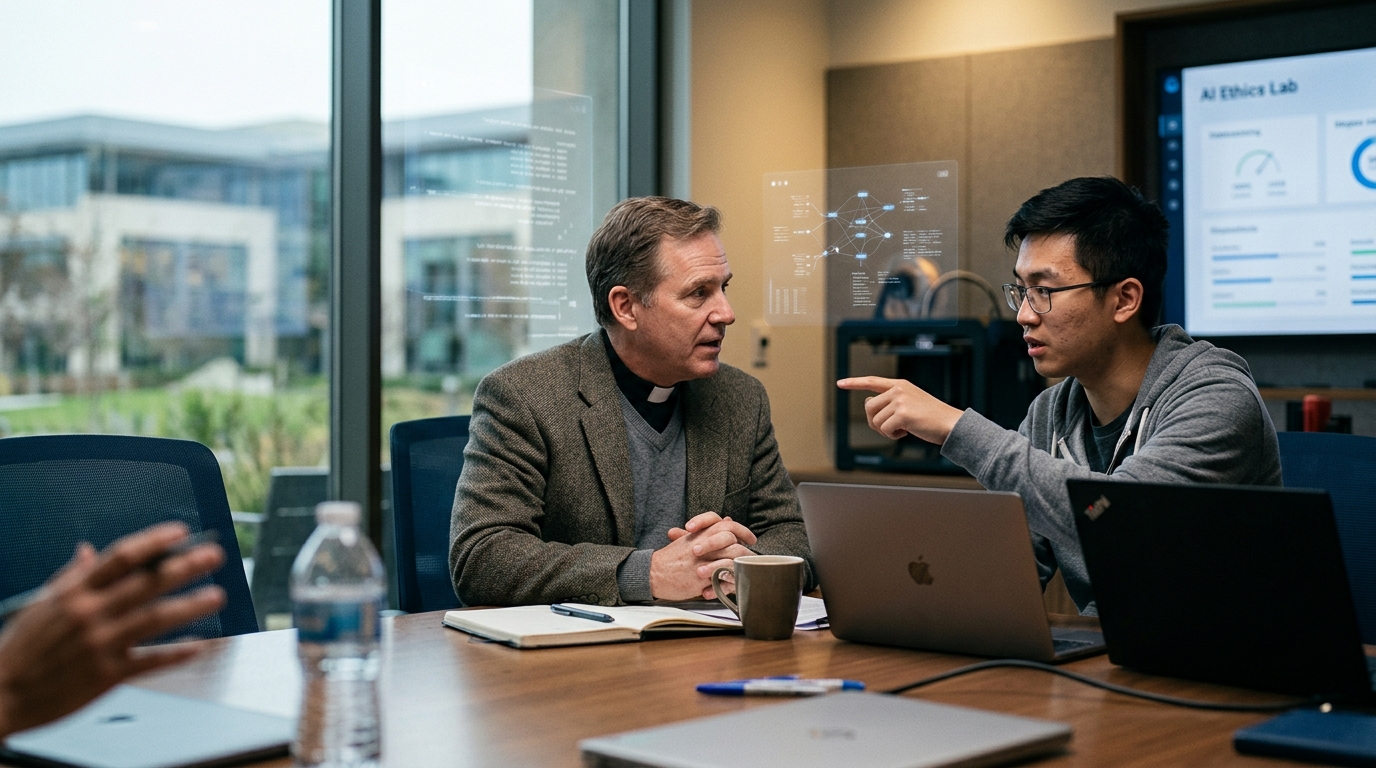
In the high-stakes boardrooms of Silicon Valley, where algorithms are the new scripture and data the ultimate currency, a Roman collar might seem out of place. Yet, Father Philip Larrey, a priest and professor who has spent decades bridging the gap between the Vatican and the tech world, has become a sought-after voice. He isn't there to preach in the traditional sense; he is there to address a fundamental crisis: the ethical vacuum at the heart of the AI revolution.
A Moral Compass for the Digital Age
The rise of Artificial Intelligence has brought humanity to a crossroads. As tech giants race to develop increasingly powerful Large Language Models (LLMs) and autonomous systems, the question has shifted from "what can we build?" to "what should we build?" Father Larrey argues that theology and philosophy offer a depth of understanding regarding human dignity that purely technical frameworks lack. His role is to serve as a moral consultant, helping developers and executives navigate the murky waters of algorithmic bias and existential risk.
Central to his philosophy is the concept of "human-centric technology." In an era where AI can mimic human creativity and decision-making, Larrey emphasizes that machines lack the intrinsic "soul" or consciousness that defines humanity. By bringing theological concepts into the conversation, he forces tech leaders to confront the long-term societal implications of their products, moving beyond quarterly earnings to consider the flourishing of the human spirit.
The "Rome Call for AI Ethics"
One of the most tangible results of this intersection between faith and tech is the "Rome Call for AI Ethics." Orchestrated by the Pontifical Academy for Life and supported by giants like Microsoft and IBM, this document outlines a framework for what Larrey calls "algorethics." It is a commitment to ensuring that AI systems are designed with transparency, inclusion, and accountability at their core. This initiative marks a historic moment where religious institutions and secular corporations find common ground in the face of a shared technological destiny.
- Transparency: Ensuring that AI decision-making processes are not "black boxes."
- Inclusion: Preventing the digital divide from creating a new class of marginalized citizens.
- Accountability: Maintaining human oversight in all critical AI-driven outcomes.
Father Larrey’s work suggests that the Vatican is no longer just a spectator of progress but a proactive participant. By engaging with Silicon Valley, the Church seeks to ensure that the digital future does not sacrifice the vulnerable at the altar of efficiency.
The Tension Between Profit and Principle
However, the path is fraught with challenges. Silicon Valley is driven by a "move fast and break things" ethos, which often clashes with the deliberate, reflective nature of ethical inquiry. Critics wonder if a priest's presence in these companies is merely "ethics washing"—a PR move to shield corporations from regulation. Larrey is acutely aware of this risk but maintains that engagement is the only way to effect change. He believes that tech leaders are genuinely concerned about the power they are unleashing and are looking for frameworks that go beyond mere legal compliance.
"We are not trying to turn engineers into theologians, but to remind them that every line of code carries a moral footprint," Larrey often notes during his consultations.
As we navigate the complexities of Generative AI, the need for diverse ethical perspectives is paramount. The Silicon Valley priest represents a broader movement to democratize the ethical debate surrounding AI. It is a reminder that while technology provides the tools to reshape our world, it is our shared values—be they secular or spiritual—that must determine the shape of that new world. In the end, the collaboration between the priest and the programmer might be the most important partnership of the 21st century.