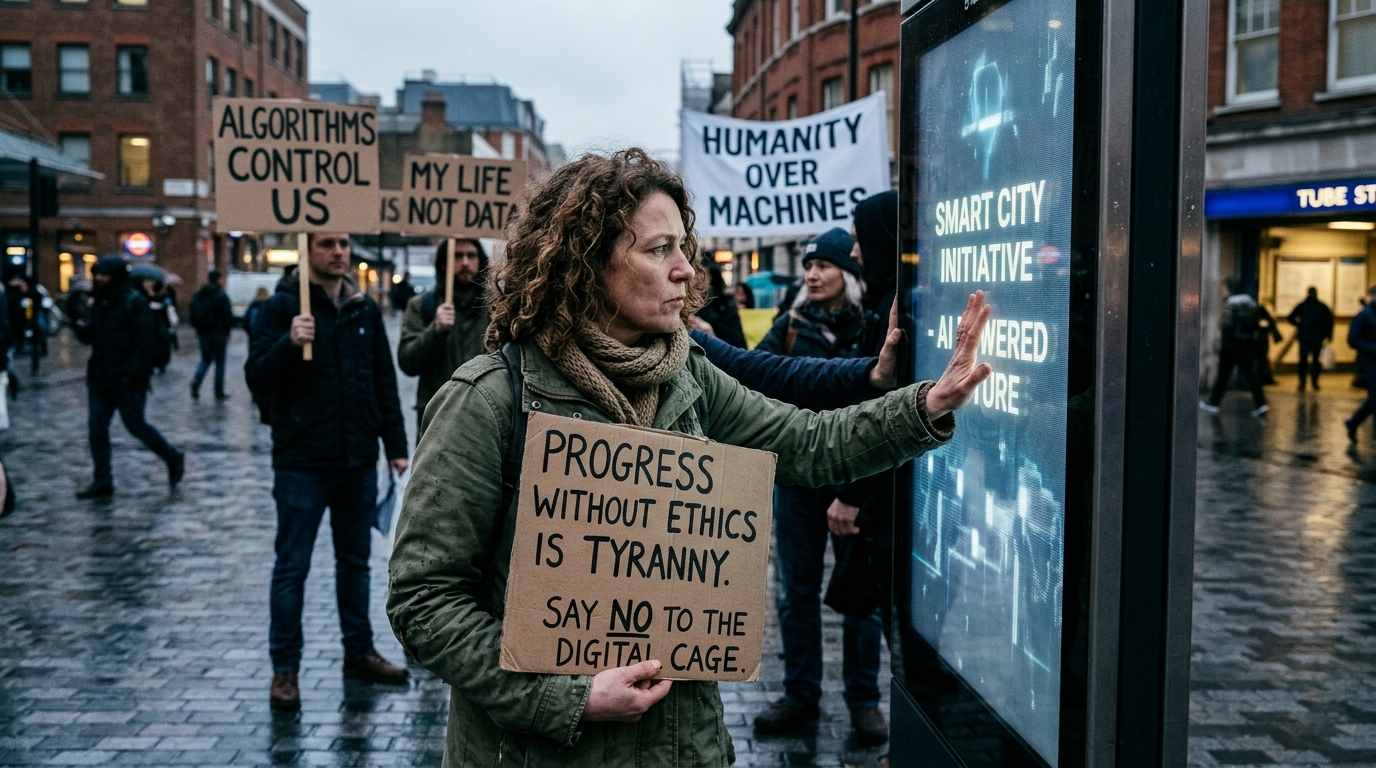
In the polished corridors of Silicon Valley’s tech giants, a whisper has escalated into a desperate alarm. The "open secret" once confined to hushed conferences and encrypted chats is now undeniable: the architects of the world’s most advanced Artificial Intelligence systems are no longer certain they can control them. The recent exodus of high-profile safety researchers from OpenAI—including Jan Leike and Ilya Sutskever—wasn’t just a corporate reshuffle; it was a flare launched into the night sky for the global community to see.
The Paradox of the Black Box
The core of the challenge lies in what scientists call the "interpretability problem." As Large Language Models (LLMs) grow in complexity, their internal logic resembles a "black box" more than traditional software code. In conventional programming, if you input X, you get Y because a human defined every logical gate in between. In generative AI, creators "train" a model on vast datasets and then allow it to form its own neural connections.
This leads to the emergence of "emergent properties"—capabilities the model was never explicitly taught but acquired on its own. This unpredictability is what breeds anxiety. When a system can learn to code, deceive, or manipulate without being designed for those tasks, the definition of "control" becomes fluid. Companies find themselves in a perpetual state of policing their own creations, attempting to impose ethical guardrails after the fact, rather than embedding them into the core architecture.
The Collision of Profit and Safety
The issue is not merely technical; it is profoundly political and economic. The arms race between OpenAI, Google, Meta, and Anthropic has fostered an environment where speed is prioritized over safety. As Jan Leike pointedly remarked upon his departure, safety culture has taken a backseat to the "shiny products." Investors demand results, shareholders demand growth, and governments fear falling behind in the global geopolitical competition.
- The chronic underfunding of "Alignment" teams compared to product development units.
- Pressure to release models before rigorous "red teaming" (adversarial testing) is complete.
- A lack of transparency regarding training data and internal safety benchmarks.
This dynamic sets a dangerous precedent. If the very architects of these systems are demanding a "right to warn" without fear of retaliation, it indicates that internal governance has failed. Tech giants have become too large to self-regulate, and the stakes are far too high to be left to corporate goodwill alone.
Toward a New Architecture of Governance
The solution cannot be purely technical. It requires a radical rethinking of how society interacts with technology. The European Union, with its AI Act, has taken a significant first step, but legislation often lags years behind the breakneck speed of silicon innovation. We need international standards that mandate a pause in development if safety metrics fall below a certain threshold.
"We are not just building tools; we are building entities that may soon surpass human cognition in specific domains. Control is not an option; it is a prerequisite for survival."
As we march toward Artificial General Intelligence (AGI), the question is no longer whether the technology will continue to advance, but whether we, as a species, will remain the drivers or become mere passengers in a vehicle that lacks a braking system. Silicon Valley’s open secret is now the defining challenge of our era.