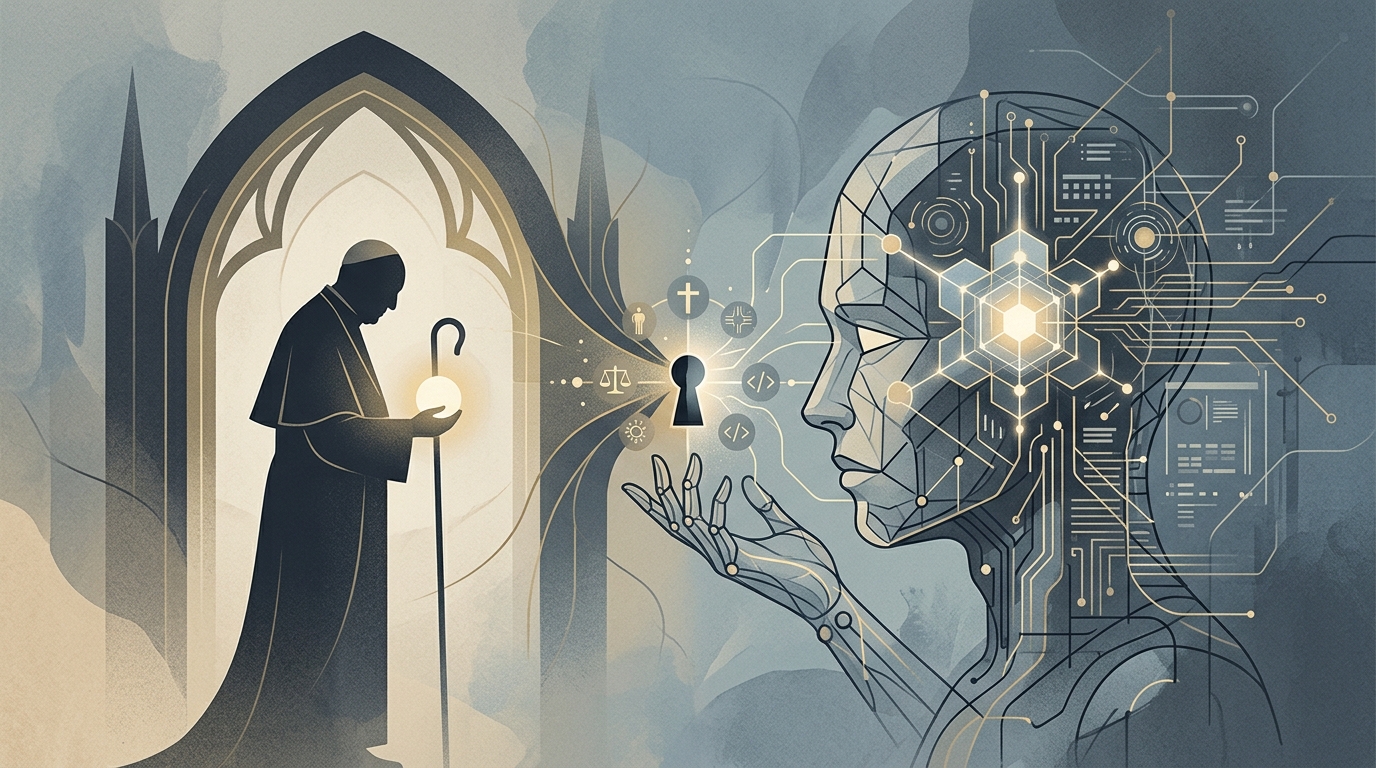
In a historic move that underscores the growing urgency surrounding the digital revolution, Pope Francis has announced the formation of a specialized study group on Artificial Intelligence (AI). Simultaneously, the Vatican is preparing to release the first-ever papal encyclical dedicated exclusively to the ethical challenges posed by algorithms. This initiative is far more than a theological exercise; it represents a concerted effort by the Catholic Church to position itself as a moral arbiter in an era where technology threatens to redefine the very essence of human dignity.
The Weight of a Papal Encyclical
An encyclical is the highest form of teaching document a Pope can issue. By choosing to dedicate such a text to AI, Francis signals that the Vatican views this technology not merely as a tool, but as an existential challenge on par with climate change, which was the subject of his landmark 2015 encyclical, *Laudato si'*. According to sources within the Holy See, the new document will focus on the necessity of a "human-centric" approach, warning against the dangers of alienation and the automation of moral judgment.
The Pope has frequently invoked the concept of "Algor-ethics," a term coined by the Vatican to describe the integration of ethical values into the design of algorithms. The encyclical is expected to dissect how AI could exacerbate social inequalities, manipulate public opinion, or lead to the proliferation of autonomous weapon systems—technologies the Pontiff has previously labeled as "unacceptable."
The Study Group: A Multidisciplinary Frontier
The newly formed study group is not composed solely of theologians. The Vatican has invited leading computer scientists, ethicists, sociologists, and representatives from the tech industry. The goal is to create a framework for dialogue that bridges the gap between rapid technological advancement and the slower pace of ethical and legal deliberation. The group will operate under the auspices of the Pontifical Academy for Life and the Dicastery for Culture and Education.
- Assessing the impact of AI on the labor market and social cohesion.
- Studying the implications of Generative AI for truth and information integrity.
- Advancing the "Rome Call for AI Ethics," an initiative already signed by giants like Microsoft and IBM.
"Technology is a human privilege, but it must never become its master. The human heart must guide the hand that writes the code," the Pope recently remarked during a meeting with IT specialists.
Social Justice and the Digital Divide
A central theme of the papal intervention is the risk of a new "digital apartheid." Pope Francis is concerned that the concentration of AI power within a handful of nations and corporations will widen the chasm between the global North and South. The encyclical is expected to call for guaranteed access to AI technologies for all, as well as the protection of marginalized groups from algorithmic bias.
Furthermore, the Vatican appears to be adopting a critical stance toward the "technocratic paradigm"—the belief that every problem can and should be solved through technology. For Francis, AI must serve the "common good" and not be used as a vehicle for profit maximization at the expense of human dignity. This intervention arrives as the European Union and the United States struggle to establish their own regulatory frameworks, offering a moral compass that transcends narrow geopolitical interests.
Conclusion: A Moral Beacon in the Silicon Age
Pope Francis’s initiative marks a new era for the Church, one that does not shy away from the most complex challenges of the 21st century. While many might view religion and technology as opposite poles, the Vatican is demonstrating that ethics is the only language capable of uniting these two worlds. The forthcoming encyclical will not just be a text for the faithful, but a call to the global community to preserve its humanity in a world increasingly governed by silicon.