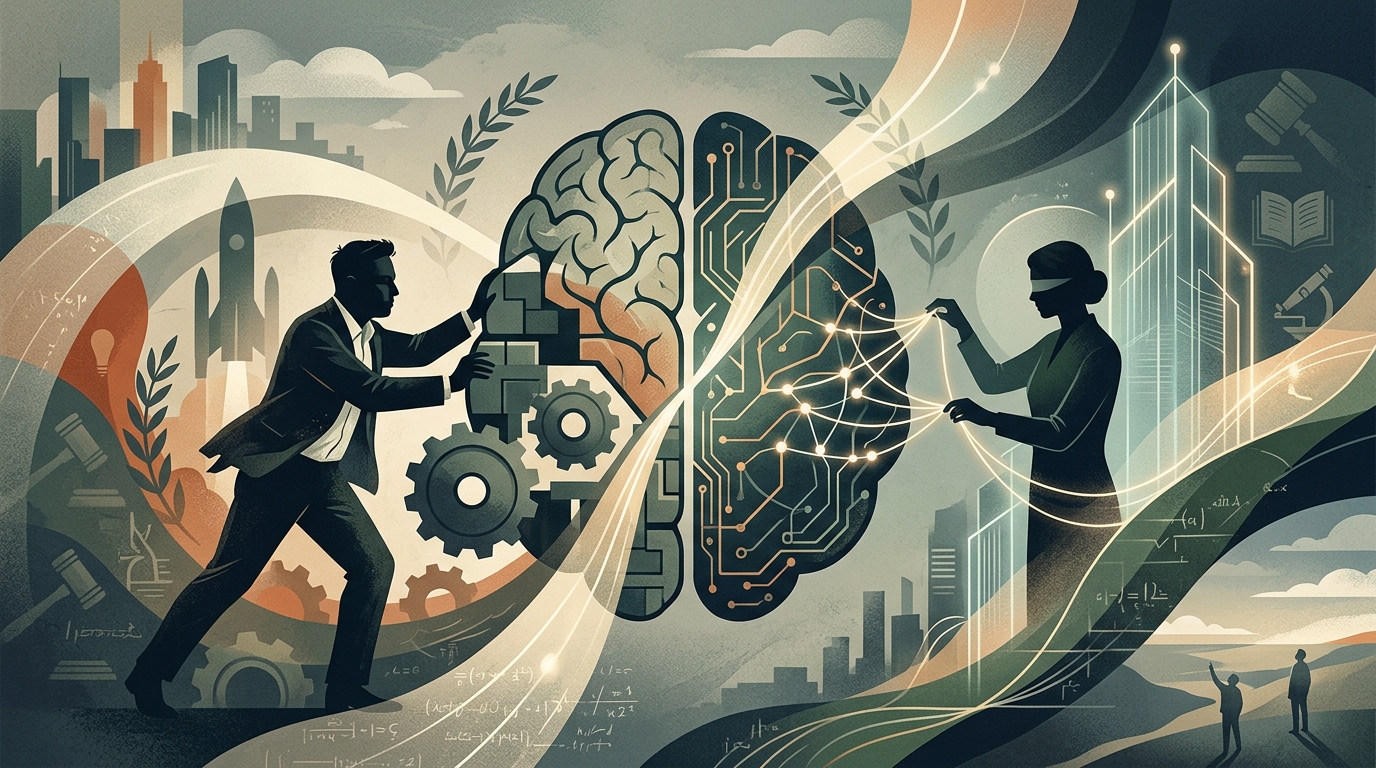
In the courtrooms of California, more than just a dispute between billionaires is being adjudicated; the future of technological evolution itself is on trial. Elon Musk’s lawsuit against OpenAI and its CEO, Sam Altman, has escalated into a high-stakes drama that centers on a pivotal question: Who has the right to control Artificial General Intelligence (AGI)? Musk, a co-founder of OpenAI who departed in 2018, alleges that the company betrayed its founding mission to develop AI for the benefit of humanity, opting instead for a path of profit under the stewardship of Microsoft.
The Transformation from Non-Profit to Corporate Giant
The core of the confrontation lies in the dramatic metamorphosis of OpenAI. Founded in 2015 as a non-profit organization with a commitment to "open source," the company argued that transparency was the best defense against the risks of AI. However, the need for massive computational resources led to the creation of a capped-profit arm and a multi-billion dollar strategic partnership with Microsoft. Musk claims that OpenAI has effectively become a "closed-source de facto subsidiary" of the tech giant, sacrificing safety at the altar of quarterly earnings.
On the other hand, OpenAI’s leadership dismisses the allegations as "revisionist history." In internal memos and public statements, the company suggests that Musk is attempting to co-opt OpenAI’s success to bolster his own competing venture, xAI. OpenAI’s legal team emphasizes that the complexity and cost of modern AI make the original 2015 model unsustainable, while safety now requires controlled access rather than total transparency.
Existential Risk as a Legal Argument
The most compelling element of the trial is the invocation of "existential risk." Musk has warned for years that AGI could pose a threat to human survival if not developed with strict ethical guardrails. In his lawsuit, he argues that OpenAI’s shift toward proprietary secrets increases the likelihood of a catastrophic scenario, as the technology is developed behind closed doors without public oversight. His lawyers are attempting to prove that GPT-4 already constitutes a form of AGI, which, according to the original charter, should not be licensed to Microsoft.
- The debate over whether GPT-4 reaches the threshold of General Intelligence.
- The impact of the Microsoft partnership on OpenAI's decision-making.
- The legal precedent for non-profits transitioning to for-profit entities.
- The balance between the need for capital and ethical responsibility.
A Clash of Ideologies and the Future of Governance
Beyond the legal maneuvering, this case highlights a deep ideological rift in Silicon Valley. On one side are the "accelerationists," who believe rapid AI development will solve the world's problems, and on the other are the "doomers" or safety advocates, who fear a loss of control. The Musk-OpenAI trial forces the public and regulators to ask whether the governance of the most powerful technology in history can be left in the hands of a few private corporations.
"OpenAI was created to be a bulwark against the dominance of big corporations, but it has ended up becoming their most powerful tool," the lawsuit states.
As the trial progresses, internal documents and communications are expected to come to light, revealing the true intentions of the protagonists. Whether this is a sincere effort by Musk to save humanity or a tactical move in a billionaire's war, the outcome will define the rules of the game for decades to come. Transparency, accountability, and ethics are no longer theoretical concepts; they are now subjects of judicial judgment.