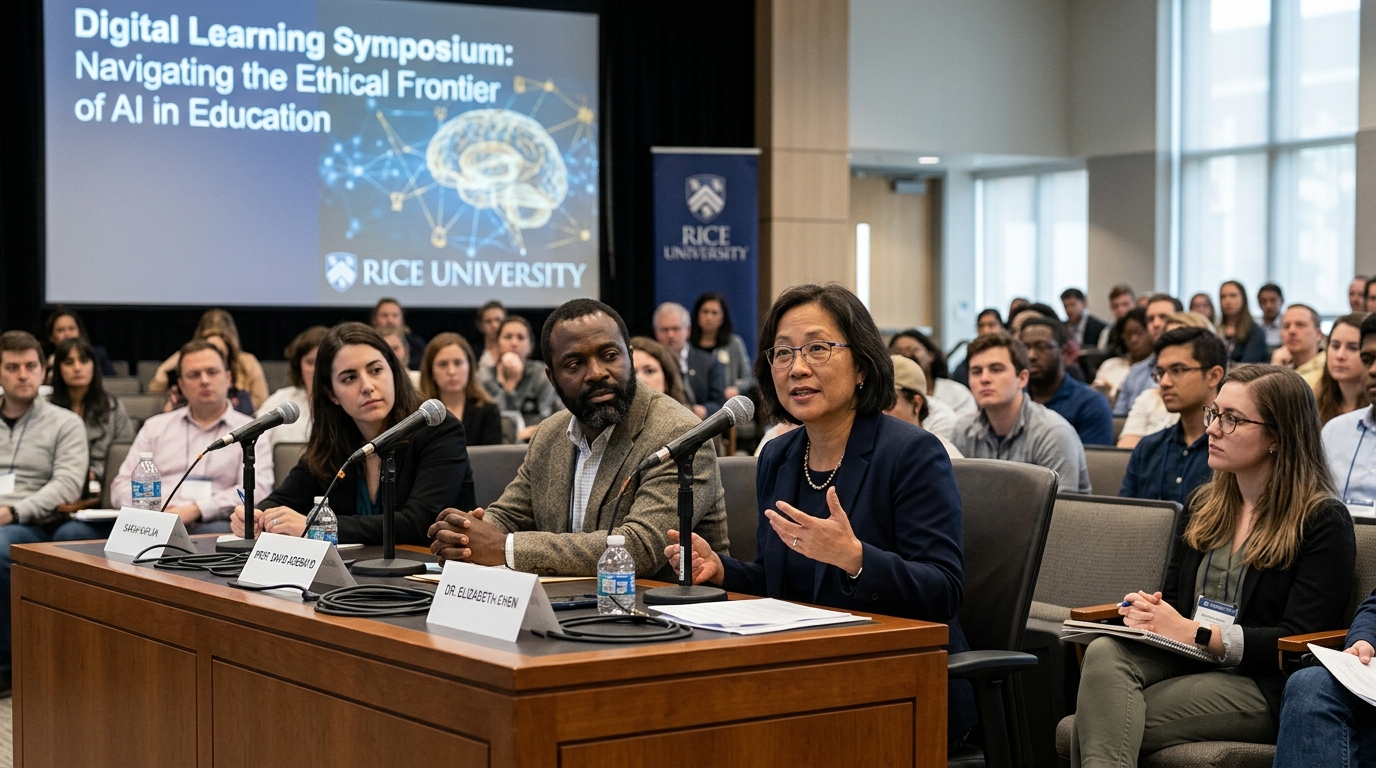
Education stands at a pivotal crossroads, much like the advent of the printing press or the internet, as Artificial Intelligence (AI) permeates the classroom. The recent Digital Learning Symposium hosted by Rice University in Houston was not merely a gathering of tech-enthusiasts; it was a profound exploration into the ethical and pedagogical challenges of a new era. The central message was clear: AI is no longer an optional tool, but a fundamental shift requiring responsible governance and a total reimagining of learning.
From Policing to Pedagogical Integration
For a significant period, the conversation surrounding AI in education was dominated by the specter of plagiarism. Educators were desperately seeking detection tools, attempting to maintain a crumbling status quo. However, speakers at Rice emphasized that this reactive stance is ultimately futile. The emphasis is now shifting from prohibition to integration. Responsible AI in this context means teaching students how to use these tools critically, ethically, and effectively.
According to the symposium participants, the challenge is not to stop students from using ChatGPT, but to redesign assessments so that simple text generation is insufficient for success. This implies a shift toward critical analysis, oral examinations, and evaluating the process of thinking rather than just the final product. Ethics in education translates to transparency: students must disclose where and how they used AI, fostering a relationship of trust with their instructors.
The Illusion of Equality and the Digital Divide
One of the most pressing concerns voiced at the symposium involves social justice. While AI promises to democratize knowledge by providing personalized tutors for every student, there is a looming risk that it will widen the existing gap. Students at wealthy institutions with access to premium models and specialized guidance will have a disproportionate advantage over those in underfunded schools.
"Responsible AI in education is not just about algorithms; it is about access and representation," a keynote speaker noted.
Furthermore, the issue of algorithmic bias remains central. If the AI systems used for grading, admissions, or tutoring are trained on data that reflects racial or socioeconomic prejudices, then education risks automating unfairness. Rice University highlighted the need for "algorithmic clarity," where educators and students alike understand the limitations and distortions inherent in the tools they employ.
Redefining Human Intelligence in the Co-Pilot Era
Perhaps the most philosophical question of the symposium was what it means to "learn" in a world where information is instantaneous and synthesis is automated. Responsible AI use requires us to protect higher-order human cognitive functions: creativity, empathy, and moral judgment. AI can write code or summarize a complex text, but it cannot (yet) grasp the cultural nuance or the human implications of a decision.
Educators are being called to become "architects of learning experiences" rather than mere transmitters of knowledge. This requires a radical retraining of faculty members themselves. The symposium concluded that responsible AI is not a destination but a continuous process of dialogue between technology and the humanities. Education must prepare citizens not only to work alongside AI but to challenge it when necessary.
Conclusions and Future Perspectives
The Rice Symposium serves as a blueprint for how higher education institutions should navigate the technological storm. Responsibility in AI is not achieved through top-down regulations alone, but through the cultivation of a culture of digital literacy. The challenge for the future is maintaining the human essence of education while simultaneously embracing the potential of machine learning to provide more inclusive and effective instruction. The roadmap is complex, but the goal remains the same: empowering the human mind.