In an era where Silicon Valley seems trapped in a perpetual cycle of "efficiency" drives and mass layoffs, the voice of Demis Hassabis—the man at the helm of Google DeepMind and a recent Nobel laureate in Chemistry—resonates as a necessary intervention of ethical and strategic logic. Speaking on the future of work in the age of artificial intelligence, Hassabis has forcefully argued that replacing humans with algorithms solely to reduce operating costs is not only socially callous but also a profound business error.
The Trap of Short-Term Profitability
Hassabis’s critique strikes at the heart of the current corporate narrative. Many tech giants, under pressure from shareholders for ever-higher margins, have begun using Generative AI as a justification for shrinking their workforces. However, for Hassabis, this approach lacks vision. As he points out, the true value of AI lies not in automating existing tasks to save on salaries, but in empowering people to solve problems that were previously deemed insurmountable.
“If you are using AI only to do the same things with fewer people, you are missing the greatest opportunity in human history,” seems to be the central message. Hassabis emphasizes that AI should function as a “force multiplier.” At DeepMind, for instance, technology was not used to replace scientists, but to give them the tools (like AlphaFold) to map proteins in weeks rather than decades. This acceleration of discovery is what creates new value, new markets, and ultimately, new jobs.
Innovation Requires Human Intuition
One of Hassabis’s strongest arguments concerns the nature of creativity itself. Despite the impressive progress of Large Language Models (LLMs), AI remains a tool based on statistical probabilities and existing data. The “spark” of original thought, the ability to connect disparate fields, and ethical judgment remain exclusively human traits.
- Human-Machine Collaboration: The optimal result comes from the synthesis of computational power and human critical thinking.
- Preservation of Institutional Knowledge: Mass layoffs lead to a loss of "institutional memory," which no AI can immediately replace.
- Ethical Leadership: Companies that invest in upskilling will have a competitive advantage in talent retention.
According to Hassabis, leaders who choose the path of layoffs are essentially admitting their inability to innovate. Instead of seeking new ways to grow using these new tools, they resort to the easy fix of cost-cutting. This creates a toxic work environment where fear replaces creativity, eventually leading to stagnation.
Towards a New Social Contract
The discussion initiated by the DeepMind chief is not confined to office walls; it has deep social and political implications. If AI leads to a massive transfer of wealth from labor to capital, social backlash will be inevitable and severe. Hassabis suggests a more holistic approach, where the benefits of increased productivity through AI are shared in a way that allows for personal growth and reduced workloads, without sacrificing the economic security of workers.
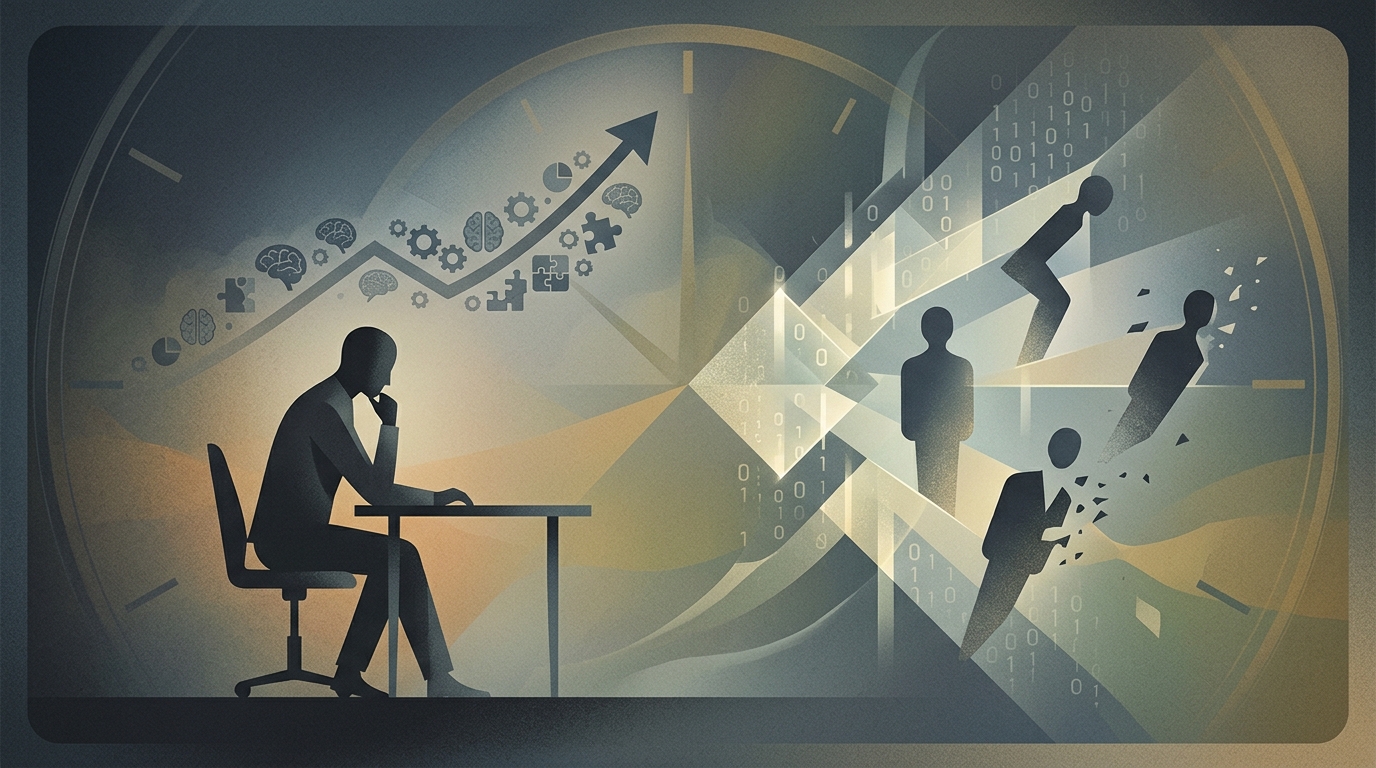
In conclusion, Demis Hassabis’s position is an invitation to redefine what "efficiency" means in the 21st century. The success of a business in the AI era will not be judged by how many employees it managed to replace, but by how high it managed to reach with them, using technology as a springboard rather than a gallows.