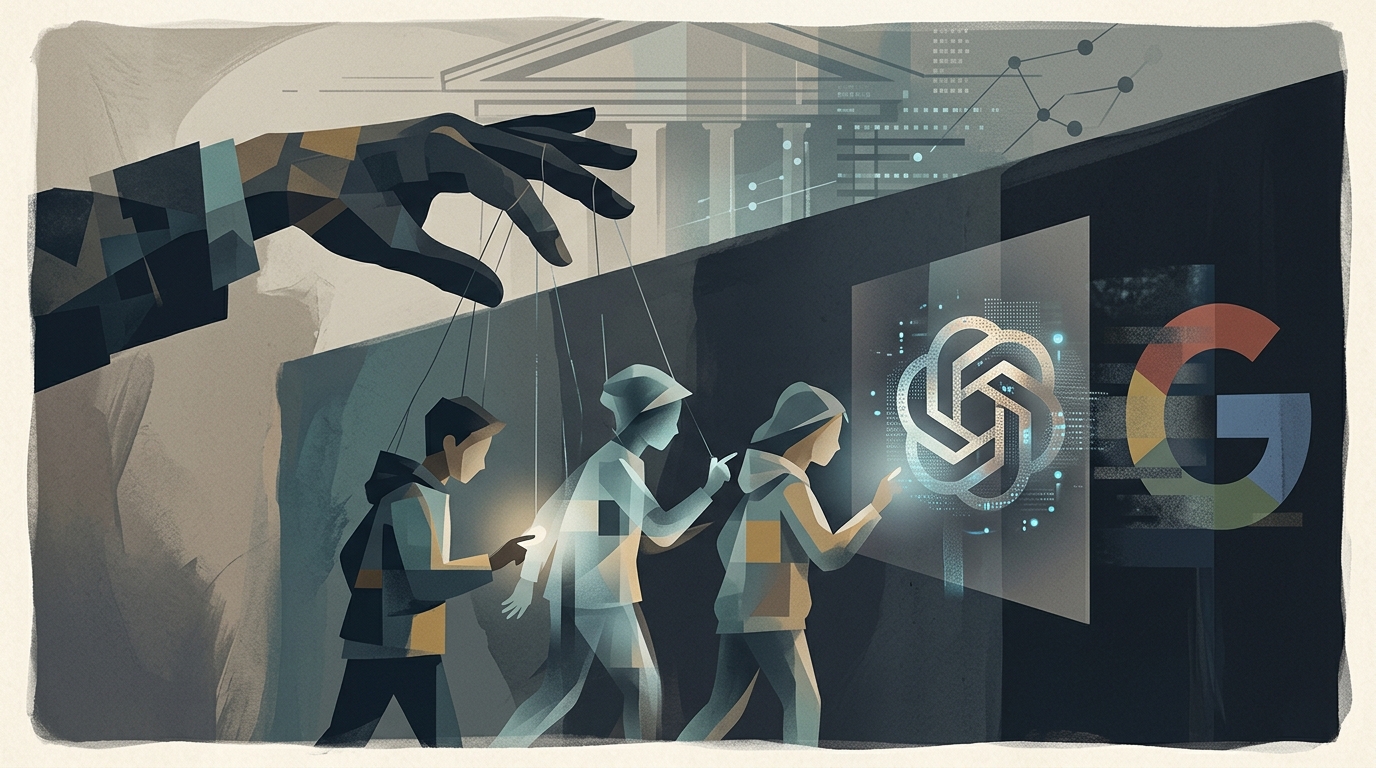
At the twilight of the first decade of generative AI's broad release, humanity stands at a crossroads that vividly mirrors classical tragedies. While algorithms promise a new utopia of efficiency, the lack of transparency in their inner workings—the notorious 'black box'—creates an ontological void. The search for guidance inevitably leads us back to the roots of Western thought, where wisdom was not merely data processing, but a lived virtue.
The Algorithmic Oracle and the Loss of Logos
In ancient Greece, the Oracle of Delphi provided prophecies that required interpretation, yet their source was considered sacred and the context socially accepted. Today, Large Language Models (LLMs) function as modern oracles, with the difference that their 'prophecies' are generated by statistical probabilities rather than any form of 'logos' (reason). Transparency is lost when the creators of these systems admit that they themselves do not fully understand the internal logic of neural networks.
The ancient concept of parrhesia—free and honest speech—stands in direct conflict with the proprietary nature of algorithms owned by Big Tech. When an AI system makes decisions regarding hiring, judicial rulings, or medical diagnoses without being able to explain the 'why,' it undermines the foundation of democratic accountability. Aristotle's concept of phronesis—practical wisdom that requires judgment and context—is the missing key in our digital age.
Plato's Cave in the Digital Era
Perhaps the most apt parable for the current state of AI is Plato's Allegory of the Cave. Users of artificial intelligence often see the shadows (AI outputs) and mistake them for ultimate reality. However, these shadows are products of data that often contain biases, historical injustices, and inaccuracies. The lack of transparency in model training means that the prisoners of the modern cave do not even know who is holding the objects in front of the fire.
- The necessity for Explainable AI (XAI) as a moral imperative.
- The reintroduction of the Socratic method in auditing algorithmic outputs.
- The distinction between information (data) and knowledge (episteme).
- Protecting human autonomy against algorithmic determinism.
Transparency is not merely a technical feature; it is an ethical stance. Without it, artificial intelligence becomes a tool of imposition rather than liberation. The ancient Stoics taught us that happiness comes from living in accordance with nature and reason. In a world where reason is outsourced to opaque machines, we risk losing touch with our own human nature.
Towards a Synthesis of Technology and Virtue
The question posed in this third part of the analysis is whether we can integrate ancient wisdom into code. The answer lies not in returning to the past, but in using the past as a compass for the future. Transparency must be enforced not only through legislation, such as the EU AI Act, but also through a cultural shift that demands technology serve the truth.
"Knowledge without justice ought to be called cunning rather than wisdom," Plato once said.
This quote resonates today more than ever. An AI that is extraordinarily intelligent but lacks transparency and ethical alignment is, in Platonic terms, a 'cunning' that threatens social cohesion. The challenge for engineers and philosophers of 2026 is to create systems that are not only efficient but also 'virtuous'—systems that allow humans to remain the ultimate judges and creators of their destiny.