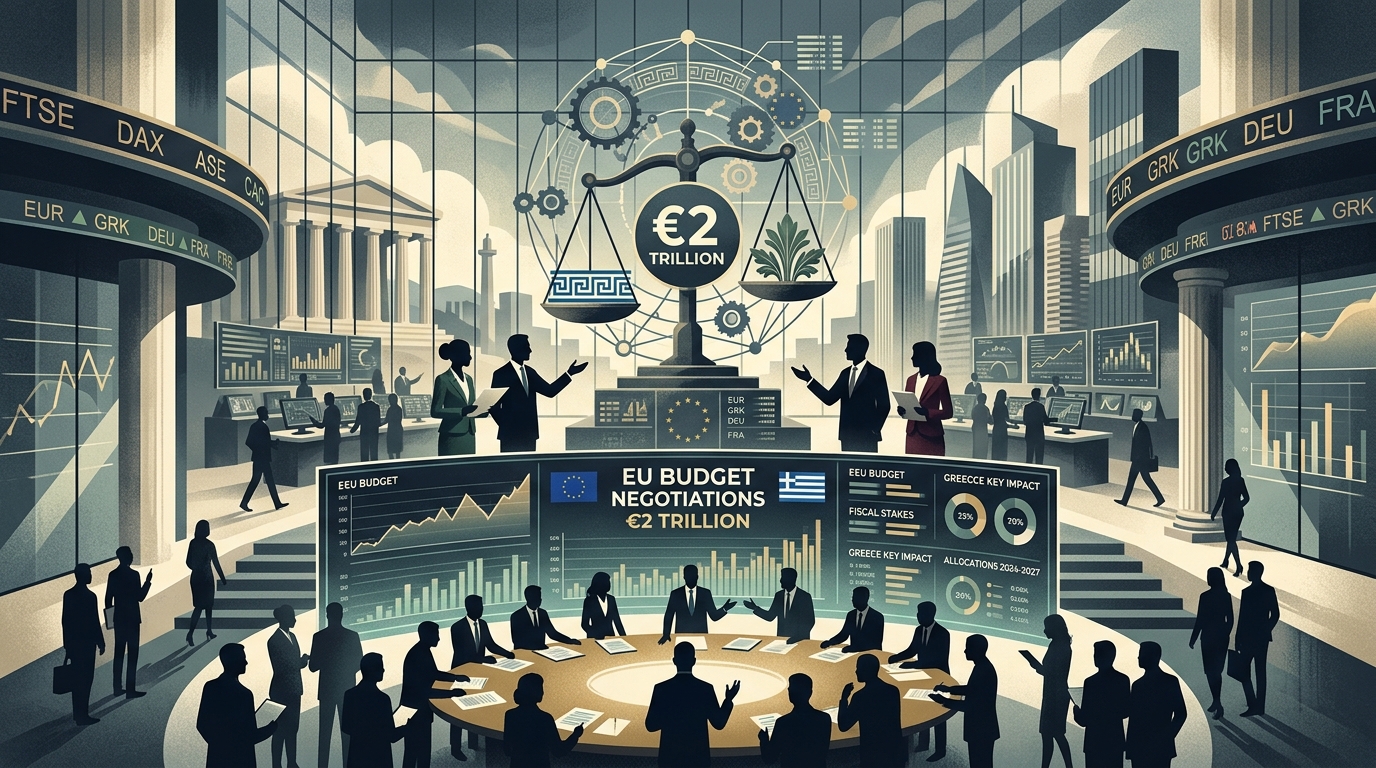
In the corridors of Brussels, the atmosphere is already thick with tension. Despite it being mid-2026, preparations for the next Multiannual Financial Framework (MFF), covering the 2028-2034 period, have begun with an intensity reminiscent of the Eurozone crisis's darkest days. The stakes are nothing less than the future of European integration, distilled into a staggering figure: €2 trillion.
The European Union is faced with the challenge of squaring the circle. On one hand, new geopolitical realities demand colossal investments in defense, security, and technological sovereignty. On the other, the so-called "frugal" Northern nations—led by the Netherlands, Denmark, Austria, and an increasingly hesitant Germany—are erecting walls around their national treasuries, demanding drastic cuts and a "rationalization" of spending.
The Return of the Frugals and the Clash of Philosophies
The frugal bloc is no longer a marginal voice. Bolstered by the rise of conservative and ethno-centric governments in several member states, these countries argue that the EU must learn to live within its means. Their argument is simple yet harsh: at a time when national budgets are strained by inflation and aging populations, Brussels cannot ask for a "blank check."
However, the opposing side, led by Southern and Eastern European nations, emphasizes that the challenges are existential. The Mario Draghi report on European competitiveness, published two years ago, remains the gospel for those seeking more collective action. Draghi was clear: Europe needs additional investments of €800 billion annually to avoid falling behind the US and China. Without a robust central budget, Europe risks becoming a "museum" of legacy industries.
"The EU budget is not a mere accounting exercise; it is the embodiment of our political priorities. If we choose introversion, we choose decline," states a senior Commission official.
What Lies Ahead for Greece: Cohesion vs. Innovation
For Greece, this battle is of vital importance. The country has traditionally been one of the largest net recipients of funds, primarily through Cohesion Policy and the Common Agricultural Policy (CAP). However, the frugals are targeting exactly these two funds, viewing them as "outdated tools of the 20th century."
The Greek government is forced to perform a balancing act. On one hand, it must defend Cohesion funds, which are essential for the convergence of Greek regions and infrastructure development. On the other, it must demonstrate the capacity to absorb funds for the "green" and "digital" transitions. The challenge is twofold: if the pie shrinks, Greece will have to compete with much more developed economies for funds that require high specialization and innovation.
- Common Agricultural Policy: Greece is pushing to maintain direct payments, as the primary sector remains a pillar of social cohesion in rural areas.
- Defense Industry: As a country with high defense spending, Greece seeks the creation of a European Defense Fund to finance joint procurement programs, easing the national budget.
- Climate Change: Recent natural disasters in Thessaly and Evros make a strong Solidarity Fund and climate adaptation funding imperative.
Defense as the New Catalyst
A significant shift in the new negotiations is the elevation of defense to a top priority. Following the Russian invasion of Ukraine and uncertainty in transatlantic relations, Europe is realizing it cannot rely solely on NATO. Proposals for "defense eurobonds" or a permanent funding mechanism for the defense industry are on the table.
The frugals, however, oppose any idea of new common borrowing, similar to what was used for the Recovery and Resilience Facility (NextGenerationEU). They argue that defense should be funded by reallocating existing resources—meaning cuts to social policy and agriculture. This approach meets fierce resistance from Athens and other Southern capitals, which warn that there can be no security without social peace.
Conclusion: A Test of Hegemony and Solidarity
The negotiation for the €2 trillion will not be decided solely by numbers, but by Europe's ability to define its role in the 21st century. If the EU yields to pressures for a "small and humble" budget, it risks undermining its own ambitions for the Green Deal and technological leadership. For Greece, the next two years will be a continuous exercise in diplomacy, where it must prove that European solidarity is not "charity," but a strategic investment in the continent's stability.