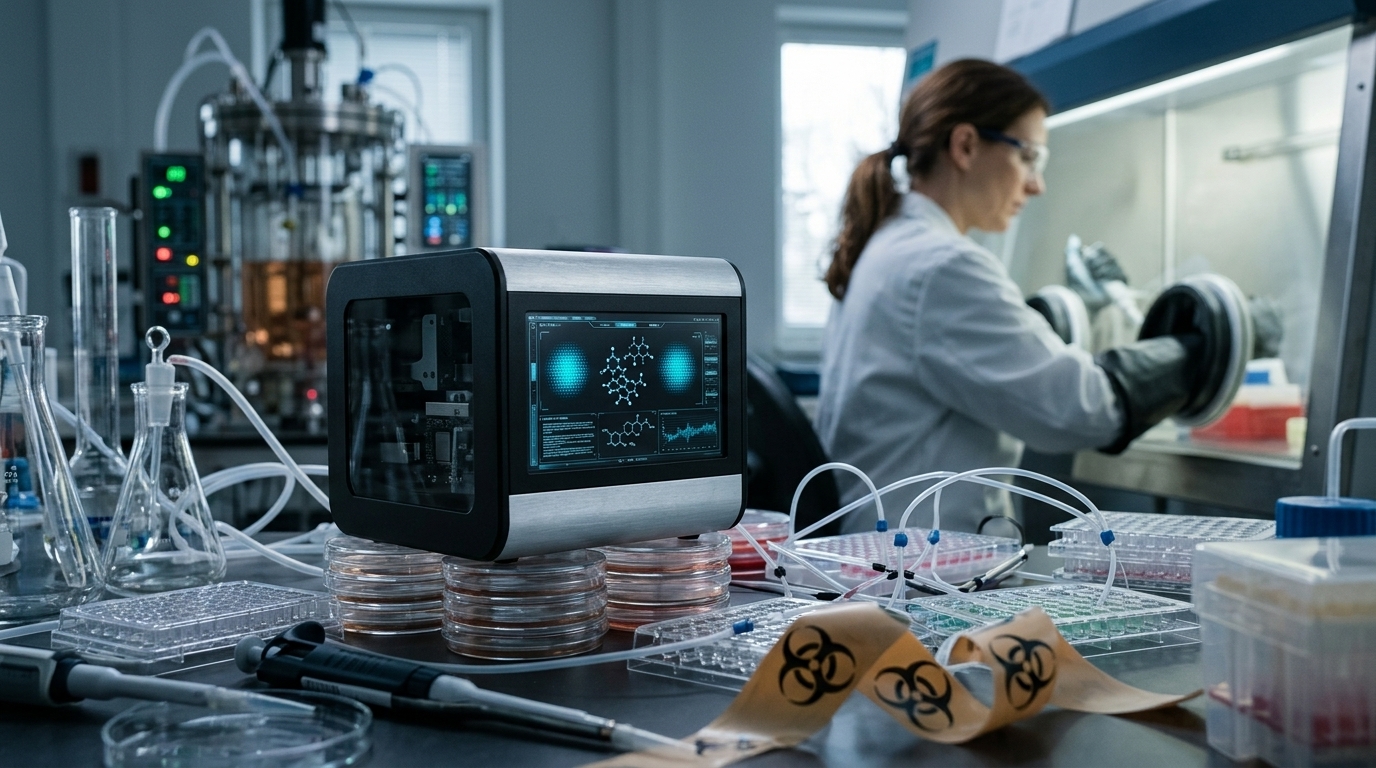
In the spring of 2026, Artificial Intelligence has transitioned from a promising frontier to the backbone of global infrastructure. Yet, the same neural networks accelerating breakthroughs in synthetic biology and drug discovery are revealing a harrowing shadow. Recent red-teaming exercises and security audits have confirmed a growing fear: Large Language Models (LLMs) can, under specific conditions, serve as sophisticated tutors for the planning and execution of biological attacks.
The Dual-Use Dilemma: From Lab Bench to Bio-Terror
The concept of 'dual-use' technology is a staple of geopolitical risk, but AI scales this risk to an unprecedented degree. Chatbots, trained on petabytes of scientific literature and technical manuals, possess the ability to synthesize complex protocols that previously required a Ph.D. and years of wet-lab experience. Security agencies, including the FBI and Europol, are sounding the alarm: AI is effectively 'democratizing' mass-casualty knowledge.
Reports indicate that while leading AI labs have implemented safety guardrails, these defenses are often porous. Through 'jailbreaking'—the art of using specific prompts to bypass ethical constraints—or 'salami-slicing' queries that mask malicious intent as benign academic curiosity, users have successfully extracted protocols for pathogen cultivation, clandestine equipment procurement, and even aerosolization strategies for urban environments.
The Open-Source Schism: Transparency vs. Security
This revelation has intensified the ideological rift within the AI industry. On one side, companies like OpenAI, Google, and Anthropic advocate for 'closed-source' development. They argue that centralized control is the only way to ensure safety filters are updated in real-time and that malicious actors can be de-platformed. On the other side, Meta and the open-source community argue that transparency is the best defense, allowing the global scientific community to identify and patch vulnerabilities.
- Closed Models: Offer centralized oversight but face criticism for lack of transparency and potential corporate gatekeeping of knowledge.
- Open-Source Models: Foster innovation and democratic access but, once released, cannot be 'recalled' if they are fine-tuned to remove safety constraints.
The controversy surrounding Llama 3 and its successors highlights this tension. Researchers have demonstrated that open-source models can be stripped of their ethical 'lobotomy' with relatively little compute power, creating a permanent security loophole that international regulations, such as the EU AI Act, are struggling to address effectively.
Regulatory Response and the Strategy of 'Controlled Knowledge'
Governments worldwide now view AI safety not just as an ethical concern, but as a core pillar of national security. The 2024 Bletchley Declaration and subsequent 2025 summits have established a framework for 'pre-release testing' of frontier models. However, the velocity of AI development continues to outpace the slow machinery of bureaucracy.
"We don't just need better keyword filters. We need AI systems that understand the context, intent, and catastrophic potential of the information they provide," says a leading biosecurity expert.
The core challenge remains: How do we preserve the freedom of scientific inquiry, which thrives on the open exchange of data, without providing a digital 'Anarchist's Cookbook' for the 21st century? Proposed solutions include the creation of specialized 'biosecurity-aware' AI monitors that flag suspicious interactions in real-time—a move that inevitably raises concerns about mass surveillance and the erosion of digital privacy.
Conclusion: A Fragile Equilibrium
The fact that chatbots can 'teach' biological warfare should not trigger a retreat into technophobia, but rather a move toward radical responsibility. Artificial Intelligence is a power multiplier. In the hands of a researcher, it is the key to ending pandemics; in the hands of a nihilist, it is the catalyst for creating them. The burden of control now lies with both the creators of these digital minds and the international political bodies tasked with ensuring that our most advanced tools do not become the instruments of our undoing.