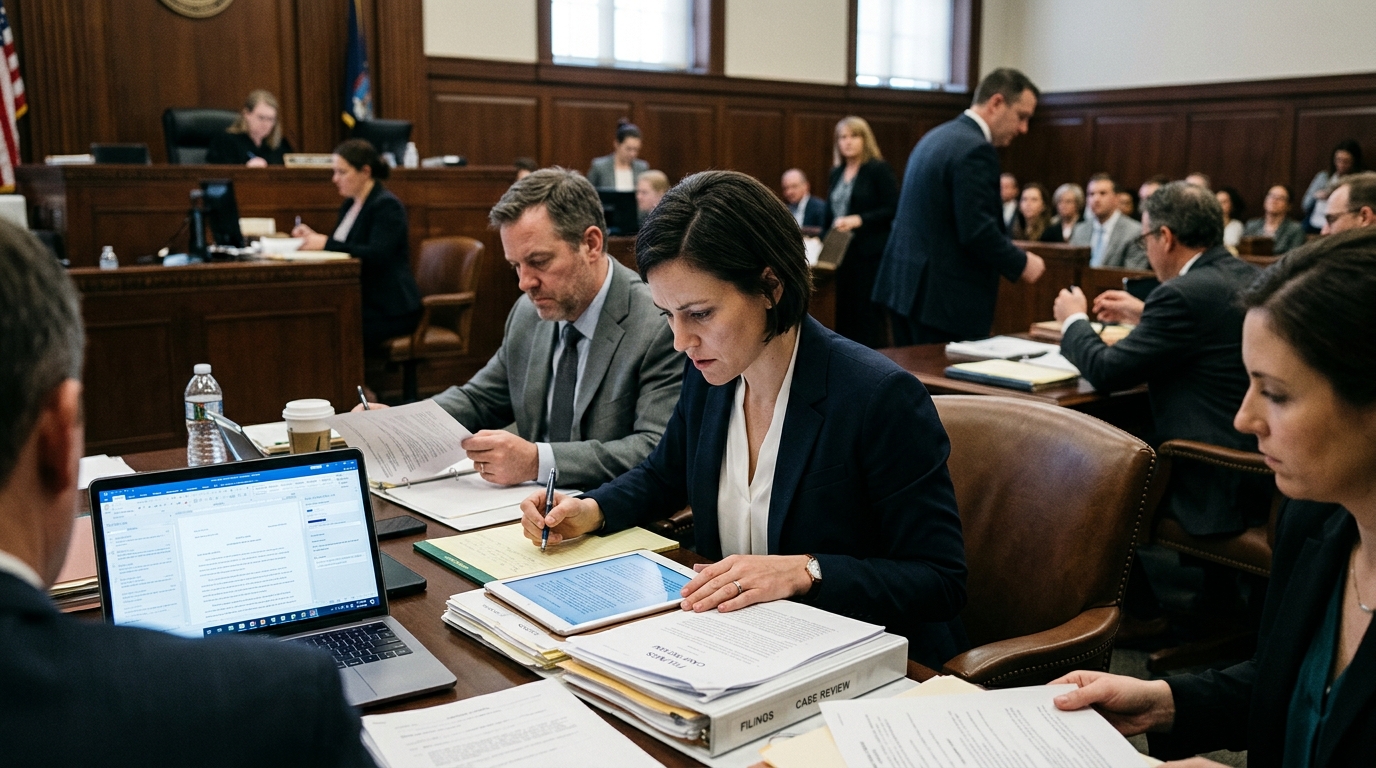
The revelation that one of the world's most prestigious law firms submitted court filings containing non-existent legal citations, fabricated by Artificial Intelligence, is more than a technical glitch; it is a profound warning for the future of the legal profession. These so-called AI 'hallucinations' have crossed the threshold of high courts, proving that neither the prestige nor the traditional safeguards of elite firms are immune to the dangers of over-reliance on algorithms.
The Anatomy of a Legal Hallucination
Hallucinations in AI occur when a Large Language Model (LLM), in its attempt to satisfy a user's request, generates text that appears authoritative and well-documented but lacks any basis in reality. In this specific case, the AI invented entire judicial opinions, complete with judge names, docket numbers, and internal logic, none of which ever existed. Lawyers, lured by the speed of content generation, failed to perform the fundamental task of cross-referencing, resulting in a humiliating exposure before the bench.
The root of the problem lies in the very nature of LLMs. These systems are effectively 'stochastic parrots'—trained to predict the next most likely word in a sequence, not to verify truth or legal validity. When a lawyer asks for a precedent that supports a specific legal theory, the AI will 'stitch' together a response that sounds like a legal brief, even if it has to invent the facts out of thin air.
Ethics and Professional Responsibility
Using AI for legal research is not inherently illegal, but blind trust in its output violates core ethical mandates. Under established rules of professional conduct, an attorney bears sole responsibility for the accuracy of any document they sign. The excuse 'the AI wrote it' is increasingly rejected by judges, who view such practices as a breach of the duty of candor toward the court, even if the error was unintentional.
- The Duty of Competence: Lawyers must understand the tools they employ. If they do not grasp the limitations of AI, they should not use it for high-stakes litigation.
- Supervision of 'Assistants': AI should be treated like an inexperienced junior associate whose work requires meticulous human oversight.
- Systemic Integrity: Submitting fabricated data erodes public trust in the judiciary and burdens the courts with the unnecessary task of verifying phantom citations.
Implications for the Legal Industry
This incident is expected to accelerate the implementation of stricter regulations. Several federal judges have already issued standing orders requiring attorneys to disclose the use of generative AI in their filings and to certify that every citation has been manually verified. For top-tier firms, the stake is their most valuable asset: their reputation. The 'economy of speed' promised by AI is in direct conflict with the 'economy of precision' demanded by the law.
"Artificial Intelligence can be an excellent servant, but it is a dangerous master. In law, detail is not a luxury; it is the very essence of justice."
In an era of immense pressure to reduce billable hours and increase productivity, lawyers are forced to redefine their value proposition. The worth of a legal counselor no longer lies in the ability to find information—AI can do that—but in the ability to evaluate, synthesize, and guarantee its accuracy. The failure of this prominent firm serves as a lesson for the entire industry: technology can automate writing, but it cannot automate judgment or ethical accountability.