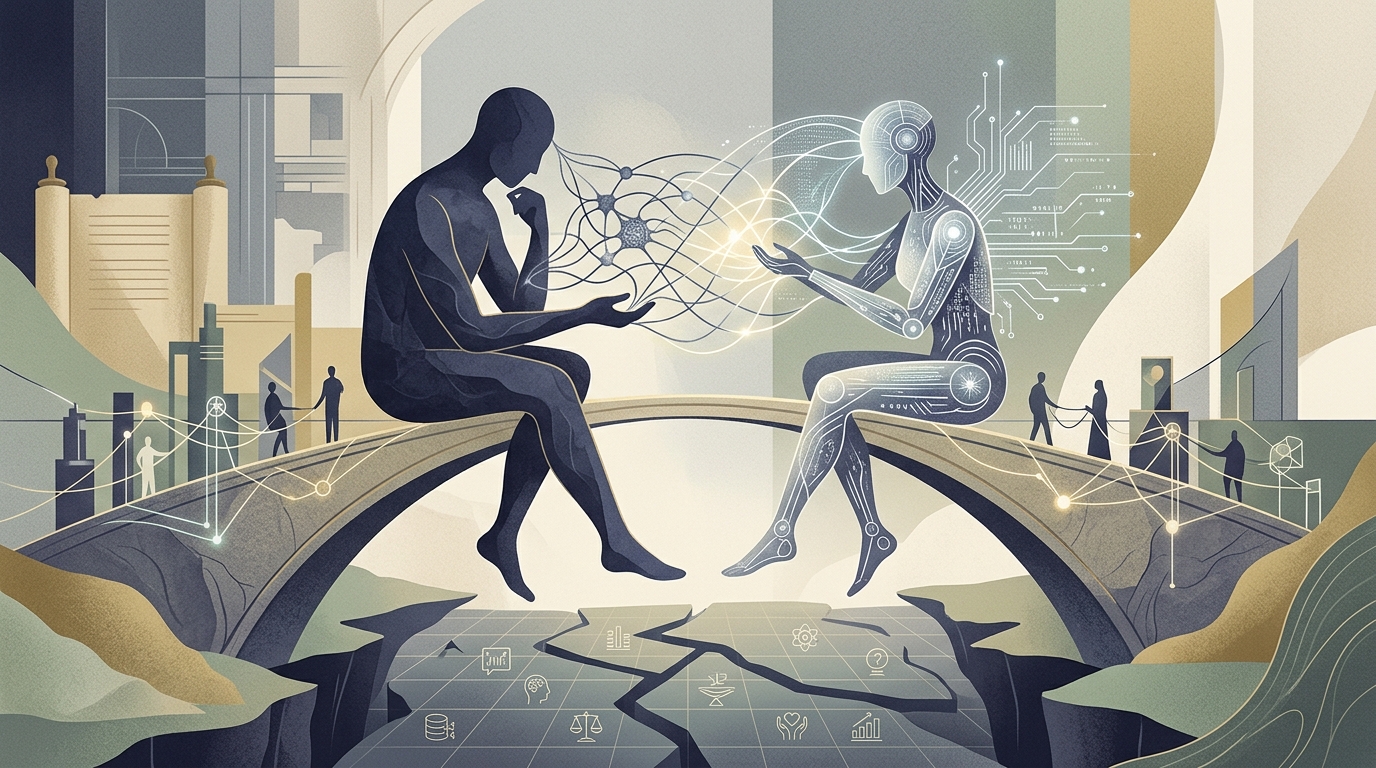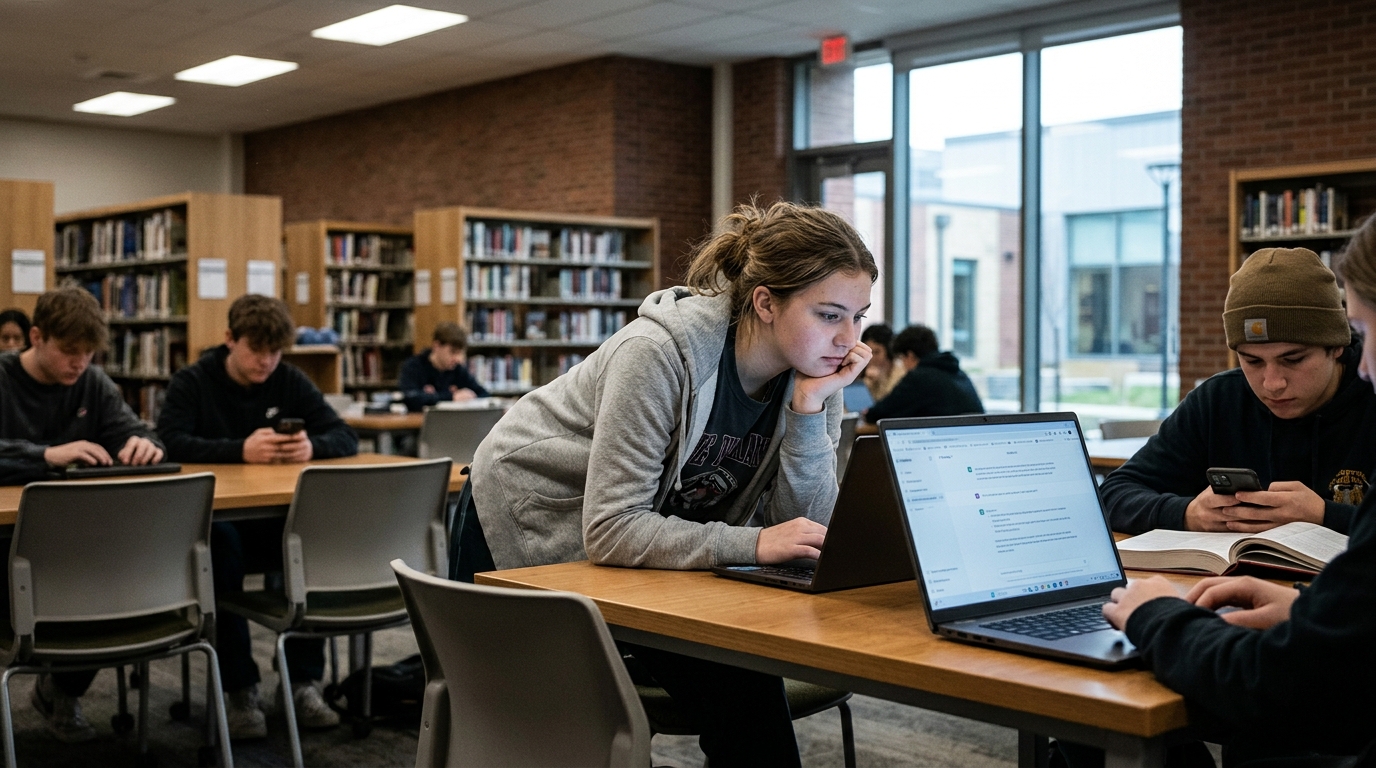
Education in the 21st century faces an existential challenge that goes far beyond the mere introduction of new technologies in classrooms. The rapid proliferation of Large Language Models (LLMs), such as ChatGPT, has created a new reality where information is instantly accessible, yet knowledge seems to be slipping through students' fingers. The phenomenon described as 'de-knowledge-ization' is not just about the ease with which students submit assignments they never wrote; it is about a profound shift in how the human brain processes reality.
Convenience as the Enemy of Learning
For decades, learning was understood as a process requiring effort, time, and repetition. The difficulty in grasping a mathematical problem or synthesizing an essay was the 'laboratory' where neural connections were forged. Today, Artificial Intelligence offers the finished product without the process. Students, often under the pressure of an exam-centric system that rewards only the outcome, are increasingly choosing the path of least resistance.
The result is a gradual atrophy of cognitive skills. When an algorithm can summarize a 400-page book into three paragraphs, the student loses the opportunity to develop analytical skills, synthesis, and, most importantly, patience. 'De-knowledge-ization' does not necessarily mean that young people are becoming less intelligent; rather, they are becoming less capable of managing knowledge without the mediation of a machine.
Understanding 'De-knowledge-ization'
The term 'de-knowledge-ization' refers to the individual's disconnection from the process of acquiring knowledge. This is not mere plagiarism; it is a structural change in our relationship with truth and information. In the past, the pursuit of knowledge required a critical evaluation of sources. In the age of AI, the machine presents an answer with such confidence that the user tends to accept it as an absolute truth.
- Loss of Research Methodology: Students stop searching for the source of information, settling for the chatbot's output.
- Decline in Verbal Fluency: The constant use of text generation tools limits vocabulary and the ability for structured expression.
- Crisis of Authenticity: The difficulty for educators to distinguish original work from AI-generated content creates a climate of suspicion.
"Learning is a process that requires friction. If we remove the friction, we remove the learning," note experts in cognitive psychology.
The Educator's Dilemma
The role of the teacher is undergoing a violent transformation. From being a 'source of knowledge,' they are now called to be an 'orchestrator of critical thinking.' However, the educational system remains tethered to traditional assessment methods (exams, homework) that are now highly vulnerable to AI. The need for oral examinations, in-class work without device access, and an emphasis on the thinking process rather than the final paper has become imperative.
Teacher frustration is palpable. Many feel they are fighting a losing battle against an invisible opponent. 'De-knowledge-ization' is further fueled by the fact that the labor market now demands 'AI literacy,' pushing youth to use these tools without having first mastered the foundational knowledge that would allow them to verify the accuracy of AI results.
Towards a New Pedagogy
The solution is not prohibition—which is practically impossible—but the refoundation of the value of knowledge. We must convince students that learning is not an obstacle to a degree, but a process of self-construction. AI usage should be integrated as a tool for dialogue rather than a tool for replacing thought. For instance, a student could ask an AI to write an argument and then be tasked with deconstructing it or finding its logical fallacies.
In a world where machines will know everything, the true value of a human will lie in the ability to ask the right questions and maintain an ethical compass. If we allow 'de-knowledge-ization' to prevail, we risk creating a generation of 'information managers' instead of thinking citizens. The battle for education is, in reality, the battle for human nature itself in the age of algorithms.