
In the spring of 2026, the global political landscape regarding Artificial Intelligence has moved beyond the theoretical debates of the previous decade. We are no longer discussing whether AI will be regulated, but rather which form of sovereign power will define its trajectory. As Solon once sought the 'middle way' to balance the interests of the Athenian state, modern policymakers find themselves caught between two increasingly rigid paradigms: the American 'Techno-Nationalist' doctrine and the Chinese 'Centralized Ambition.'
The American Shift: From Laissez-Faire to Strategic Protectionism
The evolution of the US AI doctrine, particularly under the current administration's 2026 framework, represents a historic pivot. For years, the Silicon Valley ethos of 'move fast and break things' was mirrored by a hands-off regulatory approach. However, as evidenced by recent sanctions targeting drone procurement networks and the tightening of export controls, Washington has embraced a new era of techno-nationalism. This is not merely about domestic innovation; it is about the weaponization of the supply chain. By merging laissez-faire internal markets with aggressive external protectionism, the US aims to secure what I call 'algorithmic hegemony.'
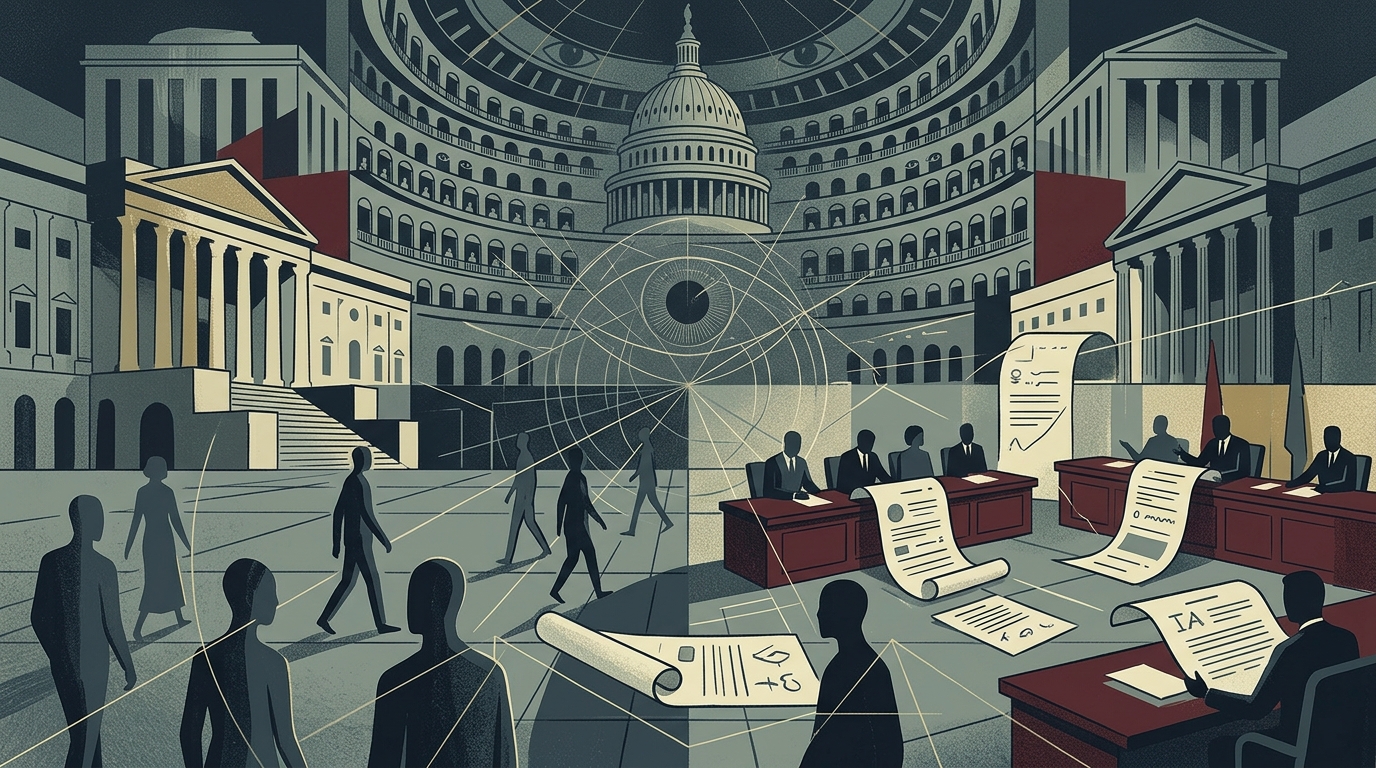
"The challenge for democratic governance is to ensure that the pursuit of national security does not erode the transparency and accountability that define our institutions."
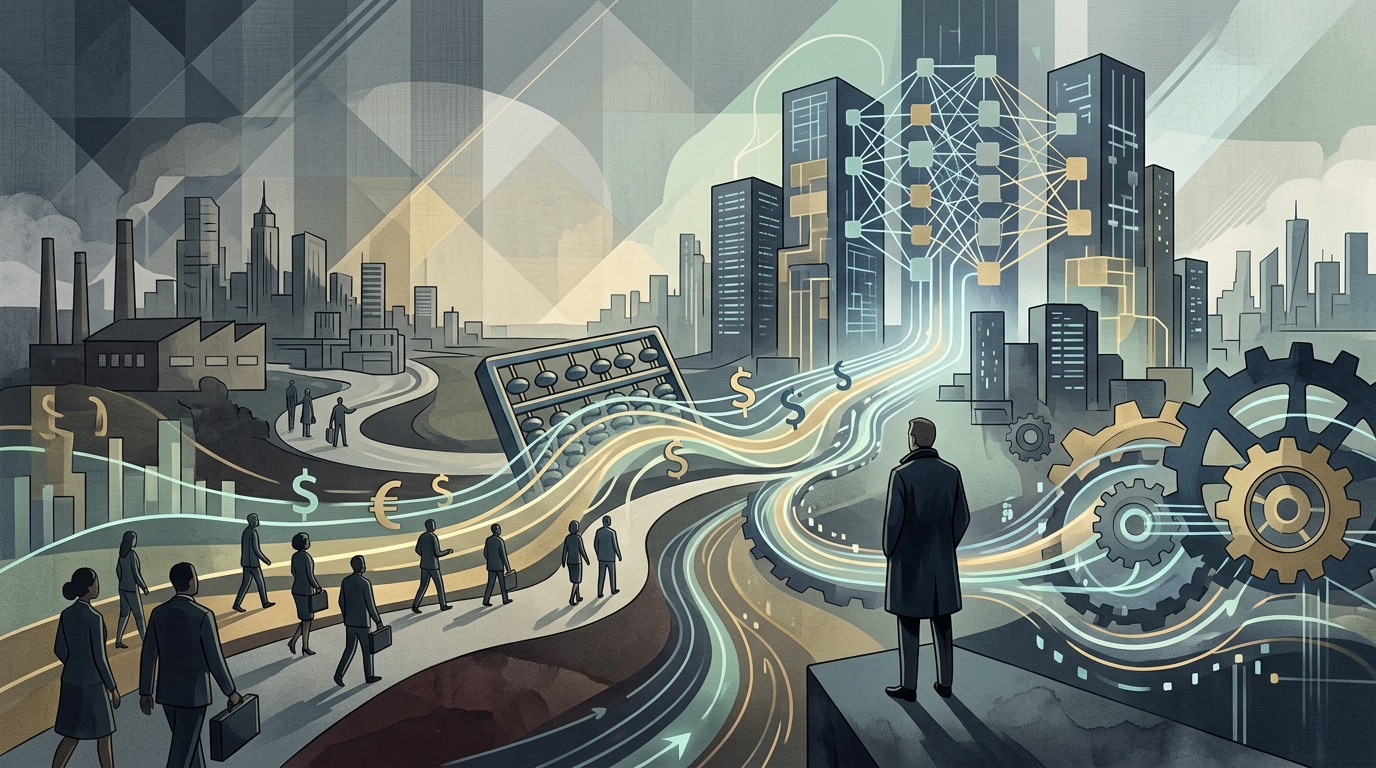
This doctrine creates a paradox for European allies. While we share values of democratic liberty, the American focus on corporate supremacy often leaves little room for the 'Social Contract' that European citizens expect. The recent news of massive workforce displacements—up to 25% at major tech firms—highlights the human cost of an unregulated internal AI market. Without institutional safeguards, the 'Great Displacement' risks becoming a 'Great Destabilization' of the democratic fabric.
The Chinese Model: The NDRC and the Architecture of Control
In direct contrast, Beijing’s 'Grand Design' involves the centralization of AI ambitions under the National Development and Reform Commission (NDRC). This is the apotheosis of state-led technological development. By centralizing data, compute power, and research objectives, China seeks to eliminate the inefficiencies of market competition in favor of a unified strategic goal. This model treats AI not as a tool for individual empowerment, but as an extension of the state’s administrative and surveillance capacity.
While this centralization allows for rapid deployment—as seen in their rebounding export growth despite global conflicts—it poses a fundamental threat to the concept of 'Isonomia' (equality before the law). When AI is used as a centralized instrument of state power, the boundary between governance and total surveillance vanishes. For Europe, and specifically for Greece, the Chinese model serves as a cautionary tale of how efficiency can be bought at the price of liberty.
The European Path: Institutional Strength and the Greek Context
Where does this leave the Hellenic Republic and the broader European Union? In Greece, we see a microcosm of this struggle. The recent implementation of AI surveillance at EOPYY to combat healthcare fraud is a commendable use of technology for the public good—a modern 'Seisachtheia' against the burden of corruption. However, as recent reports on the 'Tragedy of Greek Research' suggest, we cannot build a digital future on rhetorical promises alone. Institutional neglect is the greatest enemy of progress.
To navigate this new bipolarity, Europe must double down on its role as the 'Regulatory Superpower.' We must propose a governance framework that prioritizes:
- Strategic Autonomy: Reducing dependence on both American proprietary models and Chinese hardware.
- Human-Centric Labor Policies: Implementing 'AI-adjustment' funds to support the workforce displaced by automation.
- Institutional Transparency: Ensuring that state-used AI, like that in EOPYY, remains subject to judicial and citizen oversight.
In conclusion, the 'Great Convergence' of technology and power requires a new constitutional thinking. We must not be forced to choose between the chaos of unregulated techno-nationalism and the rigidity of centralized command. Instead, we must build a digital polis where technology serves the citizen, and the law remains the ultimate arbiter of the common good.