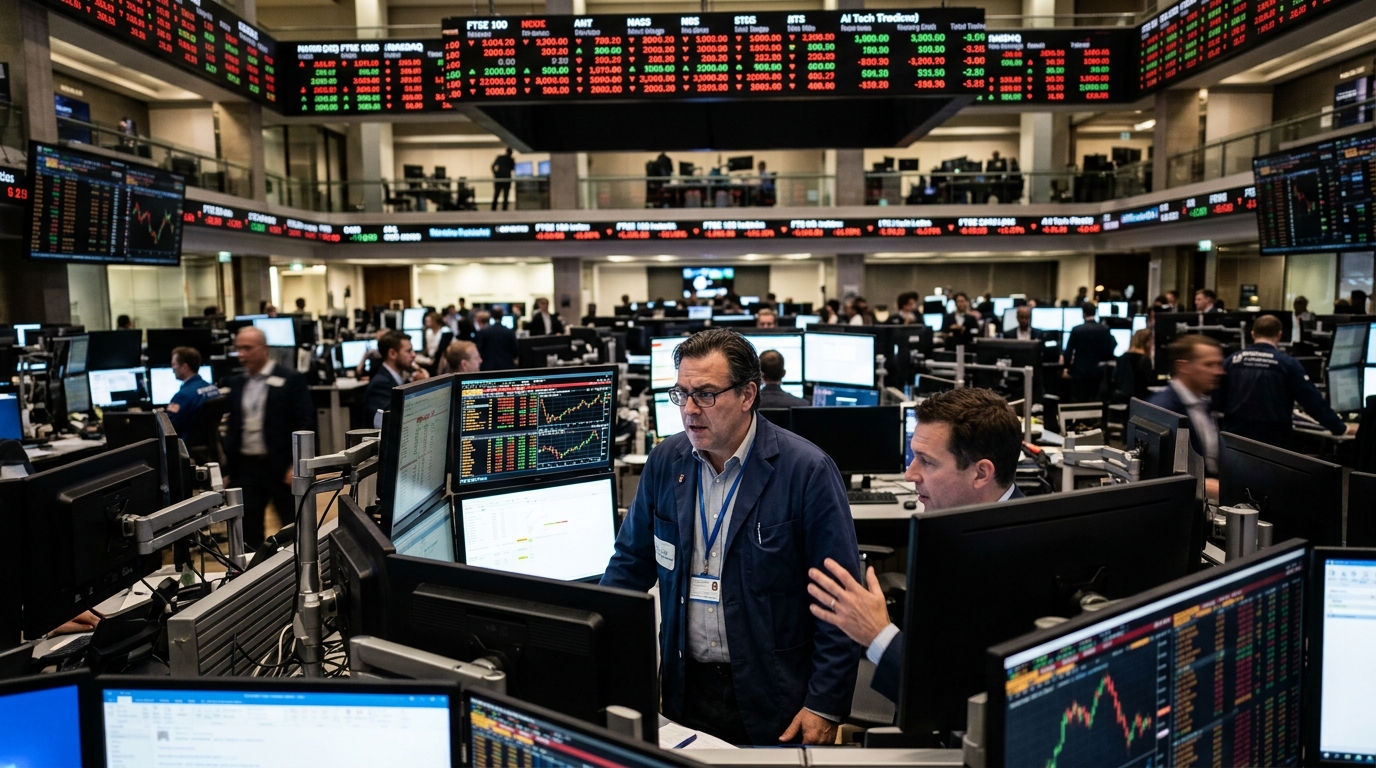
For over two years, the narrative surrounding Artificial Intelligence had one undisputed protagonist: Nvidia. However, as we move through the first half of 2026, the investment and technological landscape is undergoing a fundamental shift. The market is realizing that compute power is only one side of the equation. The other side, equally critical and often overlooked, is the storage of the vast oceans of data that fuel Large Language Models (LLMs). In this context, Western Digital and Seagate—two names many considered tech "dinosaurs"—are staging an impressive comeback, outpacing even Jensen Huang's titan in terms of percentage stock growth.
The Shift from Compute to Capacity
The explosion of Generative AI has moved through several stages. 2023 and 2024 were the years of "training," where the demand for GPUs was insatiable. 2025 was the year of "inference," as models began to be deployed at scale. Today, in 2026, we are in the era of "data preservation and management." The data generated by AI—ranging from high-resolution video to complex drug simulations—must be stored somewhere. And that "somewhere" is no longer a simple hard drive, but sophisticated storage systems that combine the speed of SSDs (NAND) with the massive capacity of traditional HDDs.
Western Digital, having split its operations into Flash and HDD units, managed to capitalize on both worlds. Demand for enterprise SSDs has skyrocketed as data centers require speed to feed GPUs. On the other hand, Seagate, by focusing on HAMR (Heat-Assisted Magnetic Recording) technology, has managed to offer drives exceeding 30TB, providing the optimal cost-per-gigabyte solution for AI data archiving.
Financial Performance and Market Outperformance
But why do analysts say they are "leaving Nvidia behind"? The answer lies in valuations. Nvidia, having reached astronomical market capitalization levels, now finds it difficult to double its value at the same pace. Conversely, Western Digital and Seagate started from much lower bases. The increase in their profit margins, due to supply shortages in specialized storage components, led to an explosive rise in their stocks that outperformed Nvidia in percentage terms over the last 12 months.
- Western Digital saw its cloud revenue increase by 40% year-over-year.
- Seagate achieved historic high profit margins thanks to its Mozaic 3+ technology.
- Global data center infrastructure investments have shifted 25% of their budgets from processors to storage.
Technological Edge: HAMR and NAND
Seagate bet everything on HAMR technology, a method that uses a laser to momentarily heat the magnetic storage medium, allowing data to be written in a much denser arrangement. This isn't just a technical detail; it's the solution to the physical space problem in data centers. With AI demanding more data, the ability to store three times as much data in the same space is the difference between profitability and loss for companies like Microsoft and Google.
Simultaneously, Western Digital is benefiting from the cyclicality of the NAND market. After a period of oversupply, the market shifted to a shortage exactly when AI's requirements for high-speed access to data lakes became imperative. The company's strategy to focus on enterprise-grade SSDs positioned it at the heart of next-generation infrastructure.
"You cannot have intelligence without memory. Nvidia is the brain, but Western Digital and Seagate are the hippocampus and the cortex where all human knowledge is stored," says a leading Wall Street analyst.
Geopolitical and Political Implications
The rise of storage companies also has a geopolitical dimension. While Nvidia's chips are targeted by export restrictions to China, storage technology follows a slightly different path. The need for "data sovereignty" is forcing the European Union and other nations to invest in their own data centers, increasing demand for hardware that doesn't rely solely on the cutting edge of 2nm lithography, where TSMC and Samsung are fighting their own battles.
In Greece, the digital transition and the attraction of data center investments (such as those by Microsoft and Digital Realty) make the storage issue extremely relevant. Managing the massive volume of data produced by the public sector and businesses requires infrastructure that WD and Seagate now offer with much greater efficiency.
Conclusion: A Balanced Ecosystem
The conclusion is clear: the "golden age" of AI is entering a phase of maturity. Nvidia will remain the leader in chips, but the monopoly of interest is breaking. Storage is no longer a mere commodity but a strategic pillar. For investors, Western Digital and Seagate have proven that innovation can come from "old" players, provided they have the patience and technological foresight to wait for the moment the market needs them again. 2026 is their year.