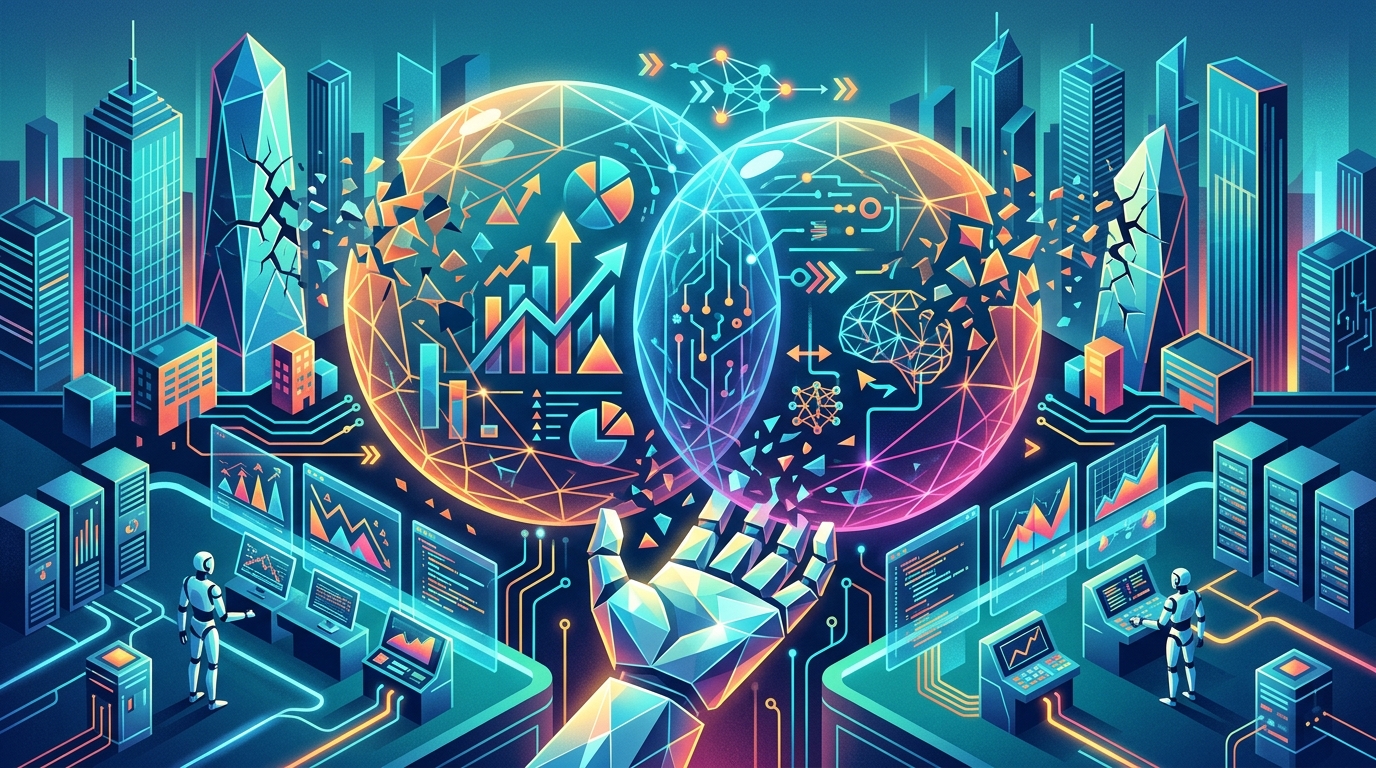
In an era where digital sovereignty is increasingly defined by raw computational power, ByteDance, the Chinese titan behind TikTok and Douyin, is making a strategic move that reshapes the global tech landscape. According to recent reports, the company is targeting a significant 25% increase in Artificial Intelligence (AI) infrastructure spending for the current year. This decision underscores a fierce determination to remain at the vanguard of innovation, even as international trade restrictions mount.
The Quest for Computational Supremacy
This 25% surge is far more than a mere budgetary adjustment; it is an existential necessity for ByteDance. As AI becomes the central nervous system of every service it offers—from its legendary content recommendation algorithms to its emerging Large Language Models (LLMs)—the demand for data centers and specialized semiconductors has reached unprecedented levels. This investment is primarily focused on securing the Graphics Processing Units (GPUs) required to train next-generation models like Doubao, which has already gained significant traction in the Chinese market.
ByteDance is effectively mirroring the strategy of American giants like Meta and Microsoft, both of whom have dramatically increased their capital expenditures (CapEx) to fuel the AI boom. However, the challenge for the Beijing-based company is unique: it must compete technologically while navigating a geopolitical minefield of US export controls that restrict access to NVIDIA’s most advanced chips, such as the H100 and the newer Blackwell series.
Silicon Geopolitics and Domestic Alternatives
A substantial portion of this fresh capital is expected to be funneled into purchasing NVIDIA’s H20 chips—processors specifically designed for the Chinese market to comply with US export regulations. Although these chips offer lower performance compared to their unrestricted counterparts, ByteDance is reportedly purchasing them in massive volumes to compensate through sheer scale. Simultaneously, the company is deepening its ties with domestic suppliers like Huawei, investing in the Ascend series of AI processors to hedge against further Western technological decoupling.
- Expansion of proprietary data center footprints in Southeast Asia and Europe.
- Internal development of customized ASICs (Application-Specific Integrated Circuits) for algorithm optimization.
- Integration of generative AI into TikTok Shop to revolutionize social commerce.
This strategy indicates that ByteDance views AI not just as a tool for enhancing existing feeds, but as the foundation for a new ecosystem of e-commerce and productivity tools that could eventually challenge the global dominance of players like Amazon and Google.
Economic Implications and Long-term Risks
Financially, a 25% increase in infrastructure spending is a high-stakes gamble. ByteDance remains the world’s most valuable private tech company (unicorn), but its future valuation will depend on its ability to convert these massive capital outlays into scalable revenue. Investors and market analysts are closely watching whether the company can maintain its profit margins as infrastructure costs begin to outpace advertising revenue growth in certain saturated markets.
"The future of ByteDance is no longer being decided on the screens of smartphones, but in the server racks of its data centers. Whoever controls the infrastructure controls the intelligence of the next decade," notes a senior technology analyst.
In conclusion, ByteDance’s move to ramp up AI spending is a clear signal that the technological cold war is entering a new, more capital-intensive phase. The company shows no sign of backing down, choosing instead to double down on its technological stack to ensure its algorithms remain the most sophisticated in the world, regardless of the political headwinds in Washington or Beijing. As we move further into 2026, the success of this 25% spending hike will determine if ByteDance can evolve from a social media giant into a diversified global AI powerhouse.