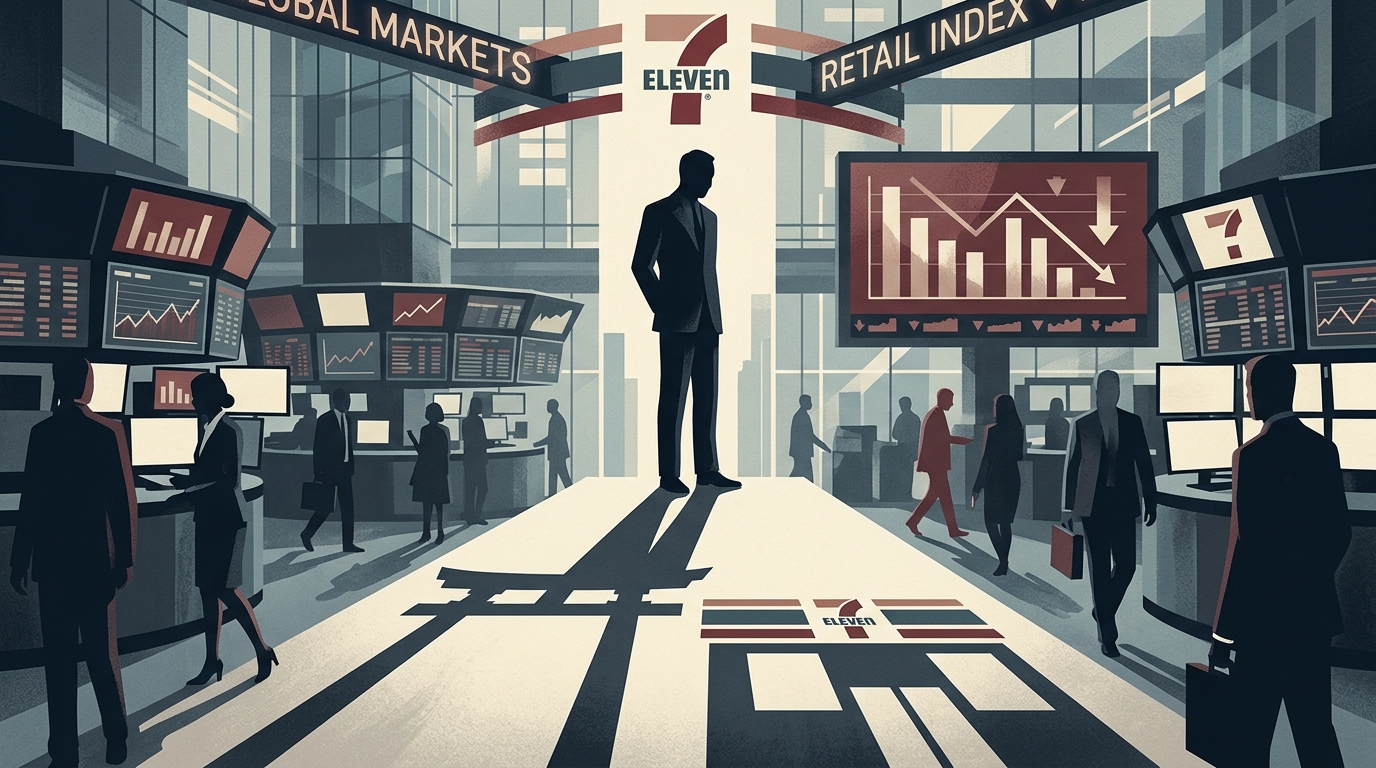
The news of the passing of Toshifumi Suzuki, the honorary chairman of Seven & i Holdings, represents more than just a loss for the Japanese business world; it marks the closing of a significant chapter in global retail history. Suzuki, who passed away at the age of 93, was the man who did not merely introduce the convenience store model to Japan but reinvented it so profoundly that it became an indispensable part of the modern urban fabric. Under his leadership, 7-Eleven evolved from a struggling American franchise into a behemoth with over 80,000 stores worldwide.
The Birth of the Japanese 'Conbini'
The story began in 1973, when Suzuki, then an executive at the supermarket chain Ito-Yokado, traveled to the United States. He was struck by the small stores operated by the Southland Corporation that stayed open from 7 a.m. to 11 p.m. Despite opposition from colleagues who believed small stores could never compete with large supermarkets, Suzuki persisted. The first 7-Eleven opened in Toyosu, Tokyo, in 1974.
However, Suzuki did not settle for a carbon copy of the American model. He quickly realized that success in densely populated Japan required absolute efficiency. He introduced the 'tanpin kanri' (item-by-item management) system, a revolutionary method of tracking sales in real-time. This allowed stores to adjust their inventory several times a day, ensuring shelves were always stocked with exactly what consumers wanted—from hot oden in the winter to chilled onigiri in the summer.
Technological Revolution and Supply Chain Mastery
Suzuki is widely regarded as a pioneer in data-driven retail. He was among the first to adopt Point of Sale (POS) systems in the 1980s, turning every cash register into a data collection terminal. This obsession with information allowed Seven-Eleven Japan to develop a logistics system that remains a gold standard today. Delivery trucks didn't just drop off goods; they followed routes optimized by early algorithms, ensuring product freshness and minimizing storage costs. This 'just-in-time' delivery system became the heartbeat of the Japanese economy.
The greatest irony and triumph of Suzuki’s career occurred in 1991. The American parent company, Southland Corp, found itself on the brink of bankruptcy. The Japanese subsidiary, under Suzuki’s guidance, acquired a majority stake, saving the brand and moving the center of strategic decision-making from Texas to Tokyo. It was a classic case of the student surpassing the master, reshaping the company's global trajectory and proving that the Japanese adaptation was superior to the original concept.
Culture, Society, and a Bitter Departure
For the Japanese, the 'conbini' (short for convenience store) became much more than a shop. It evolved into a social infrastructure: a place to pay utility bills, pick up mail, and find refuge during natural disasters. Suzuki viewed the store as a public service. However, his relentless pursuit of efficiency came at a cost. The 24/7 operating model placed immense pressure on franchise owners, leading to labor disputes and burnout in recent years, which cast a shadow over his final decade at the helm.
Suzuki’s career ended somewhat unceremoniously in 2016. Following a public clash with activist investors, including ValueAct Capital, and a failed attempt to install his son as his successor, Suzuki resigned as CEO. Nevertheless, his legacy is undeniable. He left behind the world's largest retailer by store count, having forever changed how people consume and how cities function. He proved that convenience is not just about location, but about the surgical precision of supply and demand.
The Future Without the Patriarch
Today, Seven & i Holdings stands at a crossroads, facing takeover bids from foreign entities like Canada’s Couche-Tard. Suzuki’s death ends the era of 'personal governance' and forces the group to consider whether the model he built can survive an age of digital transformation and Japan’s shrinking demographic. Suzuki’s uncanny ability to anticipate consumer needs before they even realized them remains the 'holy grail' for any modern entrepreneur. His story is a testament to the power of adaptation and the belief that even the smallest shop can conquer the world.