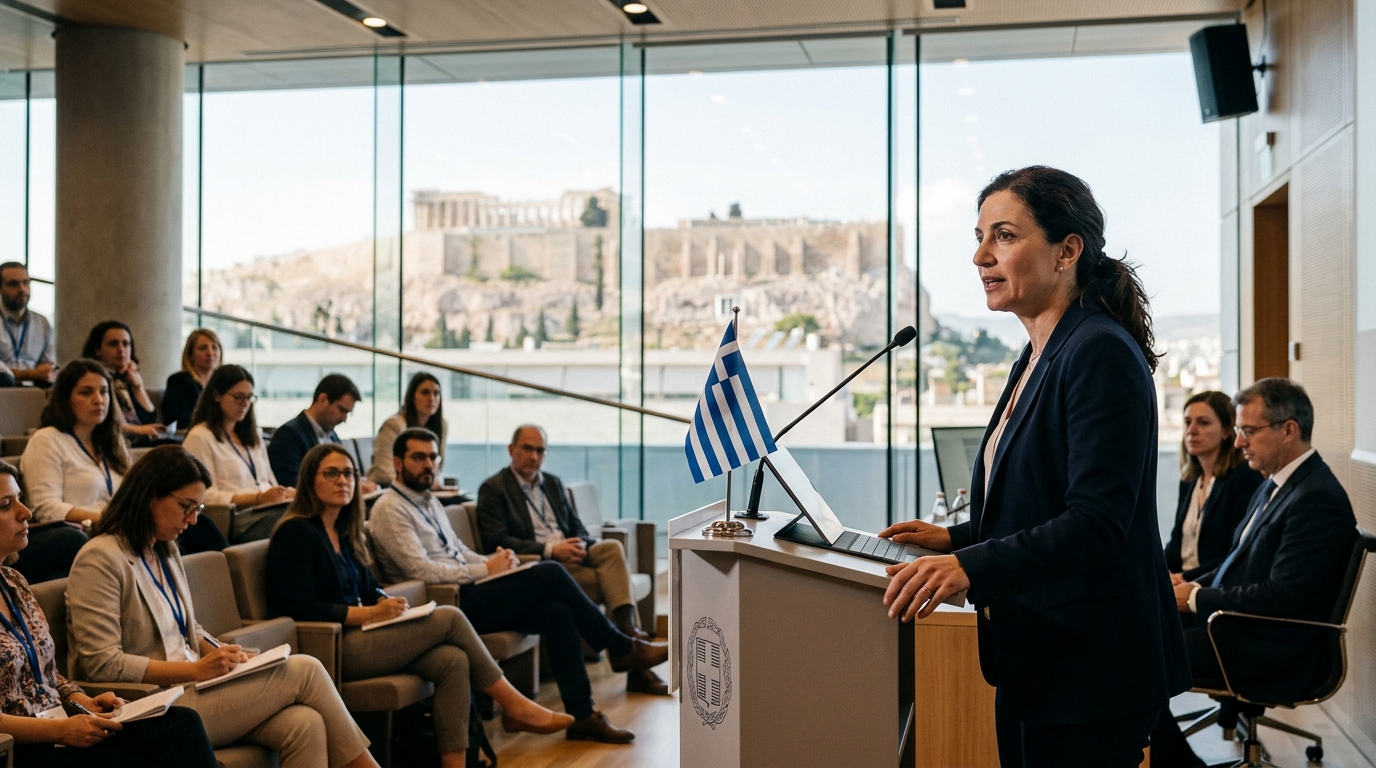
The image of Georgios Stassis ringing the opening bell at the Athens Stock Exchange was more than a ceremonial moment for Greece’s largest utility. It was the culmination of a three-year effort to reverse the fortunes of a company that, just a few years ago, stood on the brink of collapse. The listing of 228 million new shares, following a highly successful €1.35 billion Share Capital Increase (SCI), marks the definitive transition of PPC (Public Power Corporation) into a new era.
A Strategy of 'Aggressive' Growth
PPC is no longer merely seeking survival; it is aiming for dominance. The transformation championed by Stassis’s management is built on three central pillars: full decarbonization, rapid development of Renewable Energy Sources (RES), and the digitalization of networks. The capital raised through the SCI serves as the 'war chest' for an investment plan exceeding €9 billion over a five-year horizon.
The strategic choice for the early retirement of lignite-fired plants, though it sparked intense political and social debate, is viewed by the market as inevitable. As carbon emission costs skyrocketed, lignite shifted from a national asset to a financial liability. PPC is now betting on green hydrogen, massive solar parks in Western Macedonia, and wind energy, aiming to become the largest producer of clean energy in Southeast Europe.
Internationalization and the Balkan Vision
One of the most intriguing elements of the new strategy is its outward-looking focus. The acquisition of Enel’s operations in Romania was the first move in a chess game intended to see PPC control an energy corridor stretching from Greece to the Black Sea. This move holds not only economic but also geopolitical significance, as interconnecting the region's energy markets enhances the energy security of the entire Balkan peninsula.
- Enel Romania Acquisition: Access to 3 million new customers.
- Investments in Bulgaria: Targeting cross-border RES synergies.
- Network Integration: Creating a unified regional market.
Mr. Stassis has repeatedly emphasized that PPC must operate based on private-sector criteria, freed from the constraints of the past. This means improving customer experience, introducing new products (such as e-mobility and smart home services), and, above all, fostering a culture of efficiency that has historically been lacking in state-controlled entities.
Challenges and Social Impact
Despite market optimism, the road ahead is not without obstacles. The energy crisis of recent years has pressured households, and PPC, as the primary provider, must balance profitability with social responsibility. The 'Just Transition' in the regions of Kozani and Megalopolis remains an ongoing challenge, as the loss of lignite-related jobs must be replaced by new, sustainable economic activities.
"PPC is no longer a company that follows developments, but a force that shapes them," Mr. Stassis stated during the Stock Exchange ceremony.
In conclusion, the success of the SCI and the acceleration of the transformation indicate that PPC has convinced international investors of its narrative. The remaining question is whether this growth will translate into lower prices for the final consumer and a truly green and independent national energy strategy.