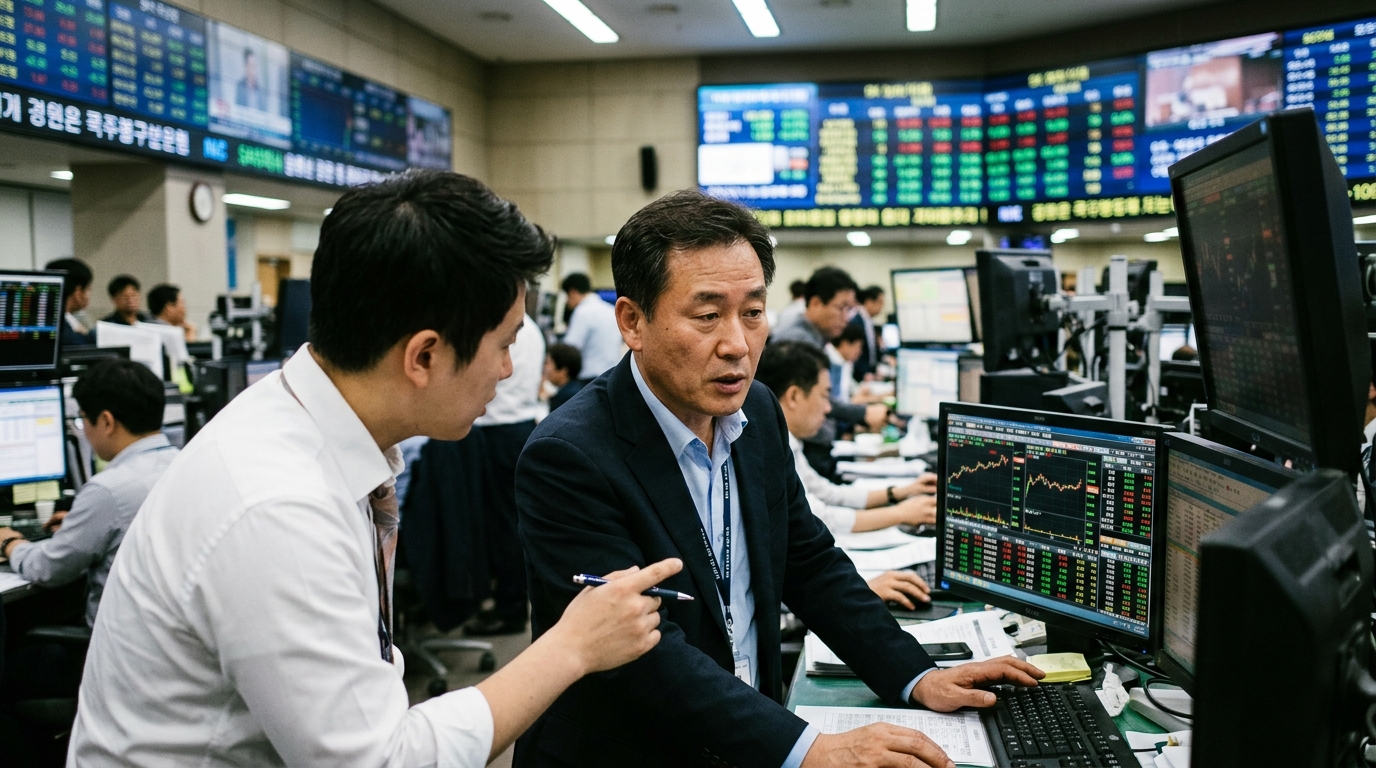
In the heart of Seoul, where the headquarters of Samsung and SK Hynix dominate the skyline, a new economic revolution is unfolding. South Korea, a traditional semiconductor powerhouse, is no longer just a supplier of components for smartphones and PCs. In the era of Generative Artificial Intelligence, the nation has transformed into the indispensable pillar upon which the future of global technology is built. Recent performances on the Korea Composite Stock Price Index (KOSPI) reflect this tectonic shift, with chipmaker stocks soaring to heights that leave investors both exhilarated and cautious.
The High Bandwidth Memory (HBM) Revolution
The key to understanding this surge lies not in general-purpose processors, but in a specialized technology: High Bandwidth Memory (HBM). As AI models like GPT-4 grow increasingly sophisticated, they require vast amounts of data to be processed at lightning speeds. This is where SK Hynix has seized a definitive lead over its rivals, establishing itself as the primary supplier for Nvidia, the undisputed king of AI hardware.
SK Hynix has seen its market capitalization swell as demand for its HBM3E chips exceeded even the most optimistic forecasts. The company’s early strategic bet on chip-stacking technology has paid off handsomely, creating a bottleneck in the global supply chain that effectively funnels profits toward Seoul. Without Korean memory, Nvidia’s high-end GPUs would be little more than expensive pieces of silicon, incapable of training the digital minds of tomorrow.
A Giant Awakens: Samsung’s Counter-Strike
While SK Hynix enjoys the rewards of its early lead, Samsung Electronics—the world’s largest memory chip producer—is not content to remain a bystander. Following a period of relative stagnation and internal restructuring, Samsung is aggressively retooling its production lines to reclaim lost ground. Rumors regarding the imminent certification of its own HBM chips by Nvidia have sent ripples of optimism through the markets, driving its stock price on a steady upward trajectory.
Samsung’s approach is holistic. It doesn't just aim for memory dominance; it is also expanding its foundry services, attempting to challenge Taiwan’s TSMC. Samsung’s ability to offer a "one-stop-shop" solution—encompassing design, memory production, and advanced packaging—is its strongest card in attracting clients like Google and Amazon, who are increasingly designing their own proprietary AI silicon.
The Geopolitical Chessboard and "Chip Diplomacy"
However, the ascent of Korean chip stocks is driven by more than just technological prowess; it is deeply entwined with delicate geopolitical balances. South Korea finds itself caught in the crossfire of the "chip war" between Washington and Beijing. The administration of President Yoon Suk-yeol has responded with an aggressive industrial policy, the so-called "K-Chips Act," offering generous tax breaks and incentives to build the world’s largest semiconductor cluster near Seoul.
Korea’s strategic importance to the United States is undeniable as Washington seeks to limit China’s access to advanced AI capabilities. Simultaneously, Korean firms must navigate their massive investments on Chinese soil—a balancing act that requires supreme diplomatic skill. Investors are watching closely, knowing that any shift in U.S. trade policy or Chinese retaliation could immediately impact the profit margins of Samsung and SK Hynix.
Challenges and the Market’s Future
Despite the current euphoria, some voices warn of an "AI bubble." The South Korean economy’s reliance on a single sector is legendary, and any downturn in the demand for AI infrastructure could send shockwaves through the entire nation. Furthermore, competition from U.S.-based Micron Technology, which is also ramping up HBM production, threatens the Korean duopoly’s market share.
In conclusion, South Korea is not merely experiencing a stock market rally; it is redefining its role in the global digital economy. We are moving from the era of commodity DRAM to the era of cognitive infrastructure, where Seoul holds the keys to processing power. For investors, the message is clear: Artificial Intelligence is no longer a future scenario, but the primary engine driving today’s global financial growth.