In an era where Artificial Intelligence (AI) is radically transforming the global economy, South Korea is embarking on a bold social and economic experiment. The government in Seoul, faced with rapid automation and an unprecedented demographic crisis, has officially put the proposal for an 'AI Dividend' on the table. This is a redistribution mechanism where a portion of the hyper-profits generated by tech giants through AI would be returned directly to the citizens.
This move is not merely a tax reform; it is a fundamental reassessment of the social contract. As algorithms replace an increasing number of jobs—from manufacturing to services—South Korea recognizes that traditional labor taxation may no longer suffice to maintain the social fabric. The 'AI Dividend' aims to be the antidote to the growing inequality that threatens to widen due to the technological superiority of the few.
From Silicon to Social Welfare: The Mechanism of the Dividend
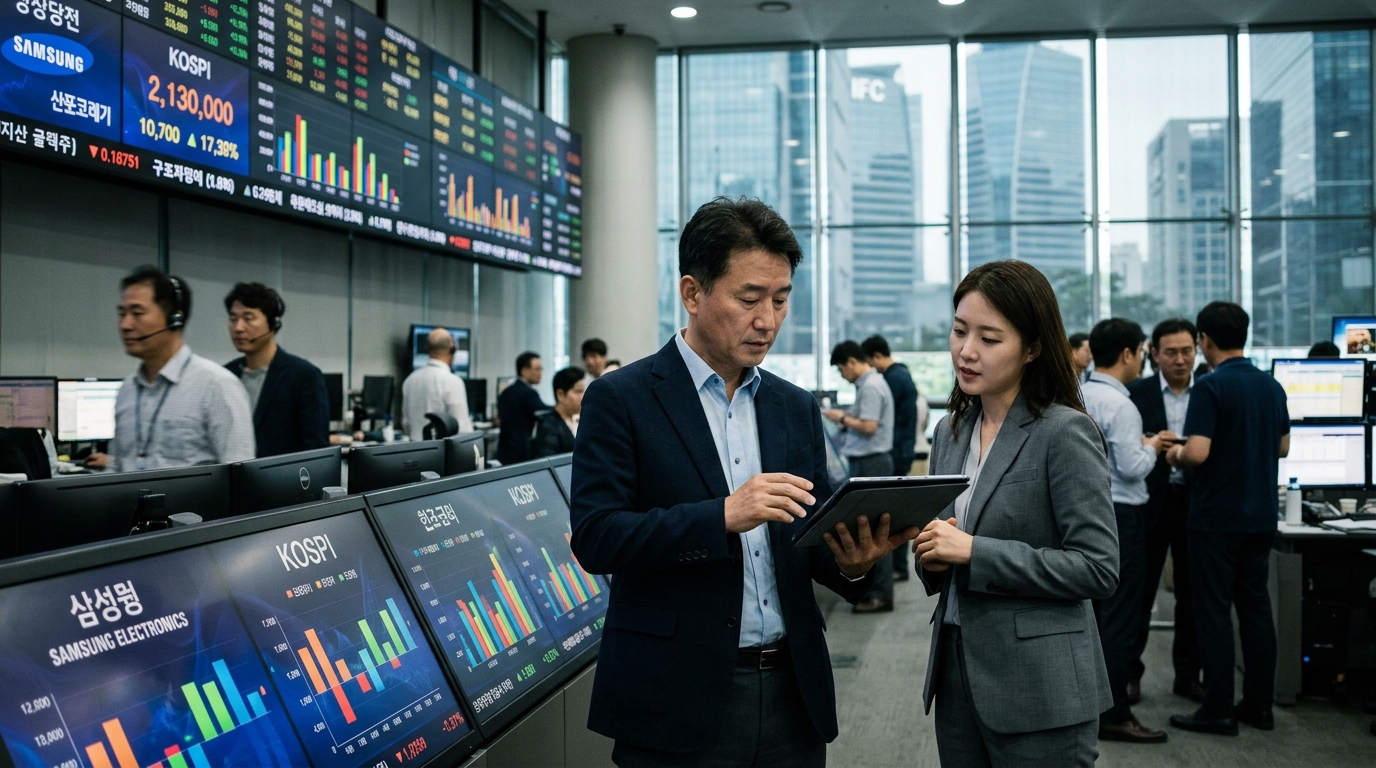
The proposal focuses on imposing a special levy or tax on companies that utilize large-scale AI infrastructure. The targets include both semiconductor manufacturers, such as Samsung and SK Hynix, and providers of cloud services and generative AI. The logic is straightforward: since AI models are trained on vast amounts of data generated by society as a whole, society is entitled to a share of the surplus value created.
According to the draft, revenue from this tax would be channeled into a dedicated fund. From there, it would be distributed to citizens in the form of a basic income or used to fund retraining programs for those affected by automation.
"We cannot allow technological progress to become a tool for exclusion," said a senior official from the Ministry of Finance in Seoul. "The AI Dividend is the guarantee that the prosperity of the future will be shared."
Demographic Pressure and the Necessity of Automation
South Korea did not choose this moment for such a proposal by chance. The country has the lowest birth rate in the world and one of the fastest-aging populations. A labor shortage makes AI and robotics necessary to maintain productivity. However, this necessity creates a paradox: the technology that saves the economy could simultaneously lead to mass unemployment for younger generations or undermine social security funds that rely on worker contributions.
The AI Dividend acts as a bridge. It allows businesses to fully automate while maintaining the purchasing power of consumers. Without such a mechanism, the risk of a 'humanless economy' could lead to a collapse of domestic demand. Seoul is betting that taxing 'machine intelligence' will gradually replace the taxation of human effort.
International Reactions and the Risk of Capital Flight
Naturally, the proposal has sparked strong reactions in the business world. Critics argue that such a tax could harm the competitiveness of Korean companies against American and Chinese giants. There is a fear that investments in data centers and AI research will move to countries with more favorable tax regimes.
However, South Korea hopes to set an international precedent. Already, discussions at the OECD and G20 levels have begun to touch upon the issue of global digital economy taxation. If Seoul manages to implement this model successfully without stifling innovation, it could provide the blueprint for a global 'AI tax.' The stakes are enormous: if AI concentrates global wealth into very few hands, social instability will be inevitable.
Conclusion: Toward an Ethics of Abundance
South Korea's experiment forces us to ask difficult questions. What does 'work' mean in a world where machines think and create? Who owns the fruits of artificial intelligence? The AI Dividend is a first, perhaps imperfect, answer. It is an attempt to transform the technological revolution from a threat into an opportunity for a society of abundance, where technology serves humanity and not the other way around. Seoul's success or failure will largely determine humanity's course in the 21st century.