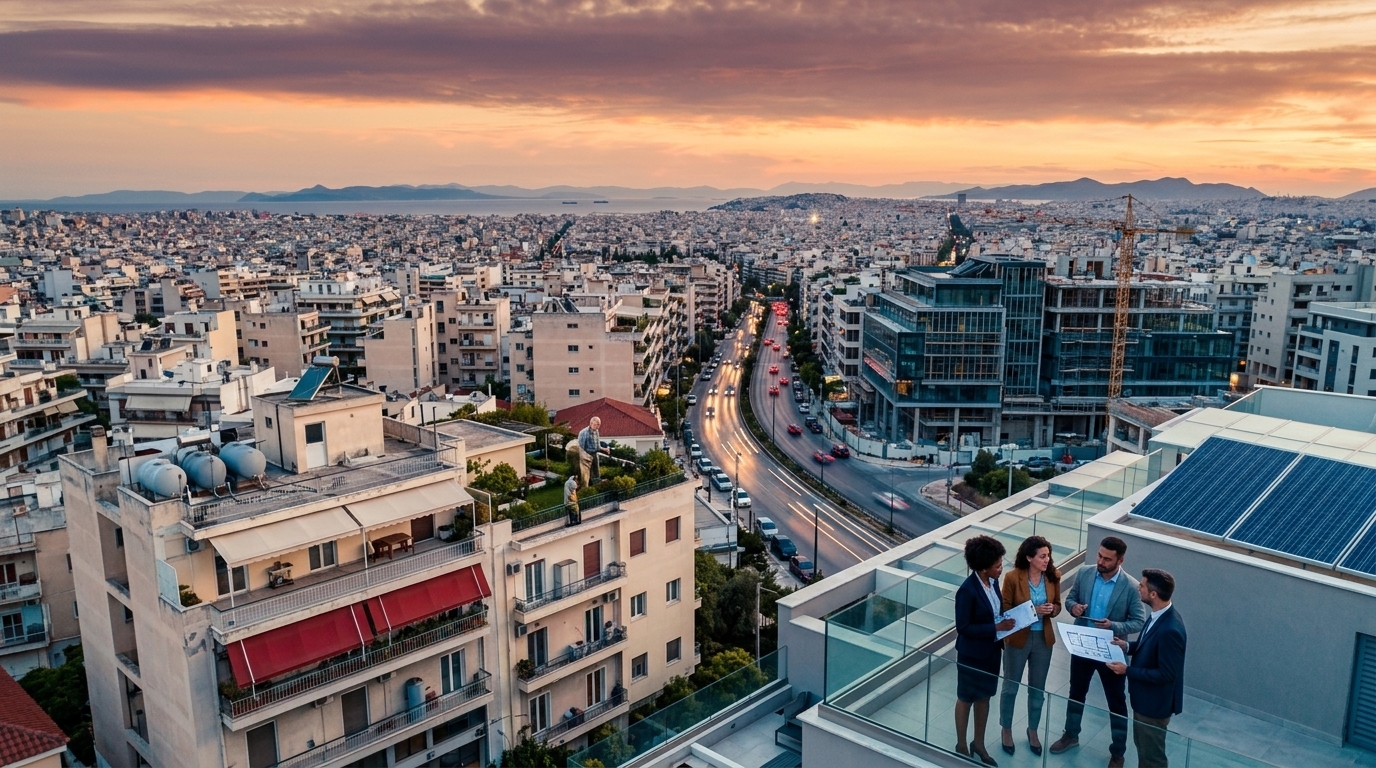
As we move through the first half of 2026, the Greek real estate market bears little resemblance to its traditional past. The concept of a "multi-speed market" has become fully established, creating a stark divide between premium, energy-upgraded properties and older buildings that struggle to keep up with modern demands. Demand is no longer driven solely by location, but by efficiency, sustainability, and innovative ownership models that allow a broader range of investors to enter the real estate game.
The ESG Revolution and Green Offices
The most significant shift observed this year is the absolute dominance of ESG (Environmental, Social, and Governance) criteria. For institutional investors and major multinationals, leasing or purchasing office spaces that lack certifications such as LEED or BREEAM has become practically prohibited. This has led to a price surge for "green" offices, while simultaneously devaluing older buildings in central Athens that cannot undergo radical renovation.
According to market analysts, the premium for a zero-emissions building can reach 20-25% compared to a conventional building in the same area. This trend is not just about the environment; it is also about operational economics, as energy costs remain a critical factor for corporate profitability. Athens, centered around the Ellinikon project and the Syngrou Avenue axis, has transformed into a construction site for sustainable infrastructure, attracting international capital.
Fractional Ownership: Democratizing Luxury
One of the most intriguing trends that emerged in 2025 and is peaking in 2026 is fractional ownership. The ability to own a share of a luxury holiday home in Mykonos, Crete, or the Athenian Riviera, without bearing the full cost of purchase and maintenance, has changed the landscape. This model allows mid-scale investors to gain exposure to high-end real estate, enjoying both the usage and the capital appreciation of their investment.
"Real estate is ceasing to be a closed club for the few. Through technology and new legal frameworks, ownership is being fragmented and made accessible, increasing liquidity in a traditionally rigid market," market executives note.
This trend is closely linked to the rise of luxury tourism. Foreign investors, primarily from Central Europe and the US, are seeking safe havens for their capital, and Greece remains at the top of their preferences due to its climate and infrastructure improvements.
Logistics and Data Centers: The New "Golden" Category
Beyond residential and office spaces, the Logistics and Data Centers sector represents the cutting edge for 2026. Greece's geopolitical position as a gateway to Europe has attracted tech and trade giants. High-specification storage facilities in Attica and Thessaloniki show the lowest vacancy rates in history, with yields remaining exceptionally attractive for investment funds.
The digitalization of the economy requires infrastructure, and real estate housing servers (data centers) are now considered the "plots of the future." Strategic investment in such assets requires specialized knowledge but offers stability and long-term contracts that shield investors from the fluctuations of the residential market.
The Challenge of the Housing Crisis
Despite the investment boom, the Greek market faces a serious social challenge: the lack of affordable housing. The shift toward luxury properties and short-term rentals has squeezed the available stock for the average household. In 2026, the government and private investors are called upon to find solutions through "social housing" and the reconstruction of old buildings with state subsidies to balance the market.
In conclusion, real estate in Greece is moving rapidly toward modernization. Investors who focus on quality, sustainability, and new technologies will be the big winners, while those who remain stuck in outdated models risk finding themselves with "trapped" capital in properties with no future.