In an era where the climate crisis is no longer a distant threat but a daily reality for the Greek economy, Olympic Brewery is emerging as a pioneer in sustainable development. The release of its 2025 Annual Sustainability Report is not merely a formal corporate governance obligation, but a manifesto for how heavy industry can undergo a radical transformation. The company, a member of the Carlsberg Group, has managed to combine profitability with a drastic reduction in its environmental footprint, setting new standards for the domestic food and beverage sector.
Decarbonization as a Business Necessity
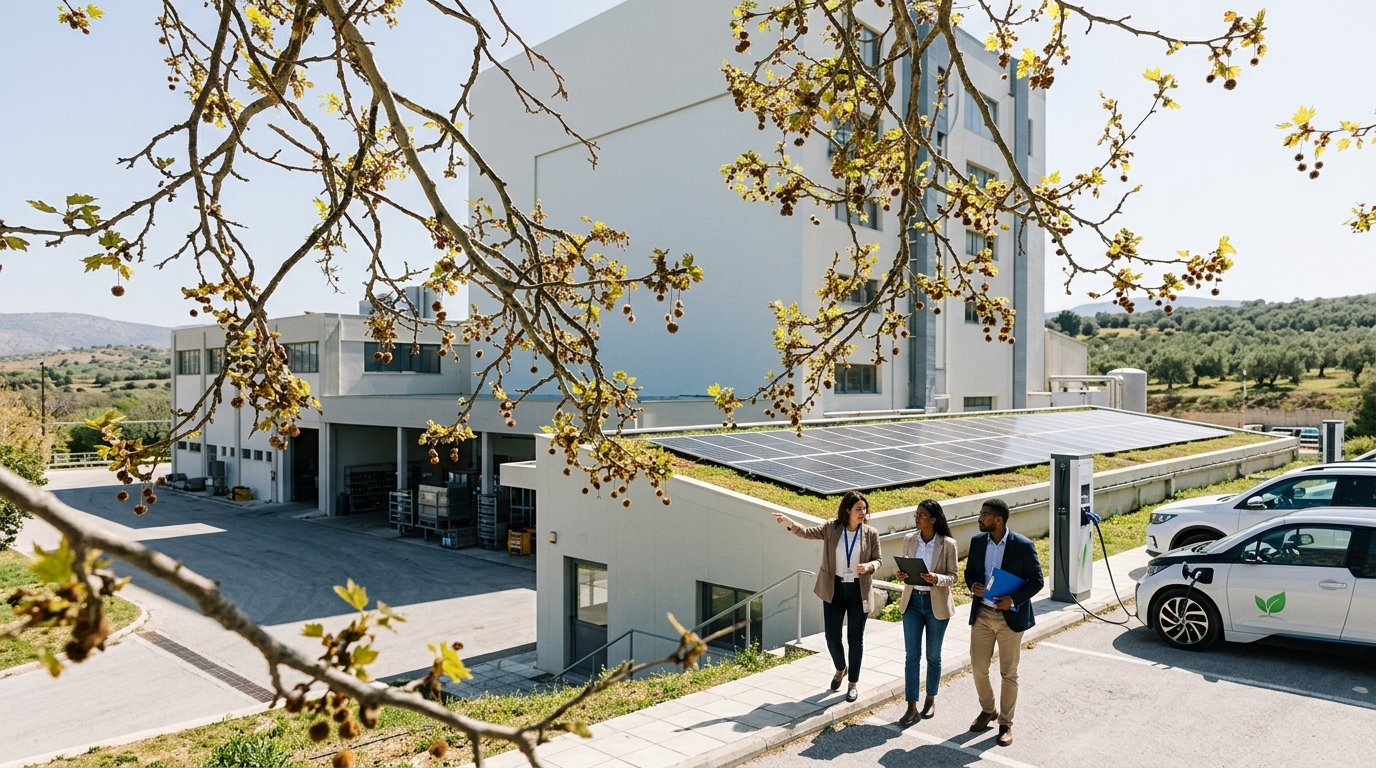
2025 was a milestone year for Olympic Brewery in its pursuit of a zero-carbon footprint. According to the report's data, the company achieved a significant reduction in CO2 emissions at its production units in Sindos and Ritsona. This performance is not accidental but the result of targeted investments in renewable energy sources and the energy upgrading of equipment. The use of photovoltaic systems and the shift towards biogas have reduced dependence on fossil fuels, while simultaneously shielding the company from fluctuations in international energy prices.
However, the company's strategy extends beyond the factory gates. The supply chain, which often constitutes the most difficult part of decarbonization (Scope 3), was at the center of attention. Cooperation with local barley producers through contract farming programs not only strengthens the Greek countryside but also reduces the mileage traveled by raw materials, limiting transport emissions. Olympic Brewery systematically invests in training farmers in regenerative agriculture practices, ensuring long-term soil health and production sustainability.
Water Resource Management: The Battle for Every Drop
In a country like Greece, where water scarcity threatens entire regions, water management is a critical ESG indicator. In 2025, Olympic Brewery managed to reduce water consumption per hectoliter of beer produced to levels that rank the Greek plants among the most efficient in the Carlsberg Group worldwide. The adoption of water recycling and reuse technologies in cleaning processes has yielded spectacular results.
- Implementation of closed-loop cooling systems that minimize losses.
- Investments in modern wastewater treatment plants.
- Collaboration with local authorities to protect aquifers in the areas of operation.
This approach is not just about cost savings. It is an ethical commitment to local communities. As stated in the report, the company recognizes that access to clean water is a fundamental right, and industrial use must not come at the expense of citizens' needs.
Social Impact and Corporate Governance
The "Social" pillar of Olympic Brewery's ESG strategy in 2025 focused on employee safety and the promotion of diversity. The company achieved zero accidents at its facilities, the result of a culture of prevention that permeates all hierarchical levels. At the same time, the increase in female representation in leadership positions and the implementation of inclusion programs show an organization that evolves alongside society.
"Sustainability is not a destination, but a continuous journey of transformation. At Olympic Brewery, our beer tastes like the future we are building today," the management characteristically states in the introduction of the report.
On the front of responsible consumption, the company continued to invest in the non-alcoholic product category. The development of Fix Anef and other zero-alcohol offerings is not just a commercial trend but part of the commitment to promoting a healthy lifestyle. Through information campaigns, Olympic Brewery aims to raise consumer awareness against drink-driving, strengthening its profile as a responsible corporate citizen.
Conclusions and Outlook
The 2025 report proves that Olympic Brewery has managed to integrate sustainability into its DNA. This is not "greenwashing," but a measurable and transparent effort that is bearing fruit. The challenge for the future remains maintaining this pace in an environment full of uncertainties. However, with the support of the Carlsberg Group and a commitment to the Greek market, the company seems ready to lead developments, proving that "green" beer is the only choice for a sustainable tomorrow.