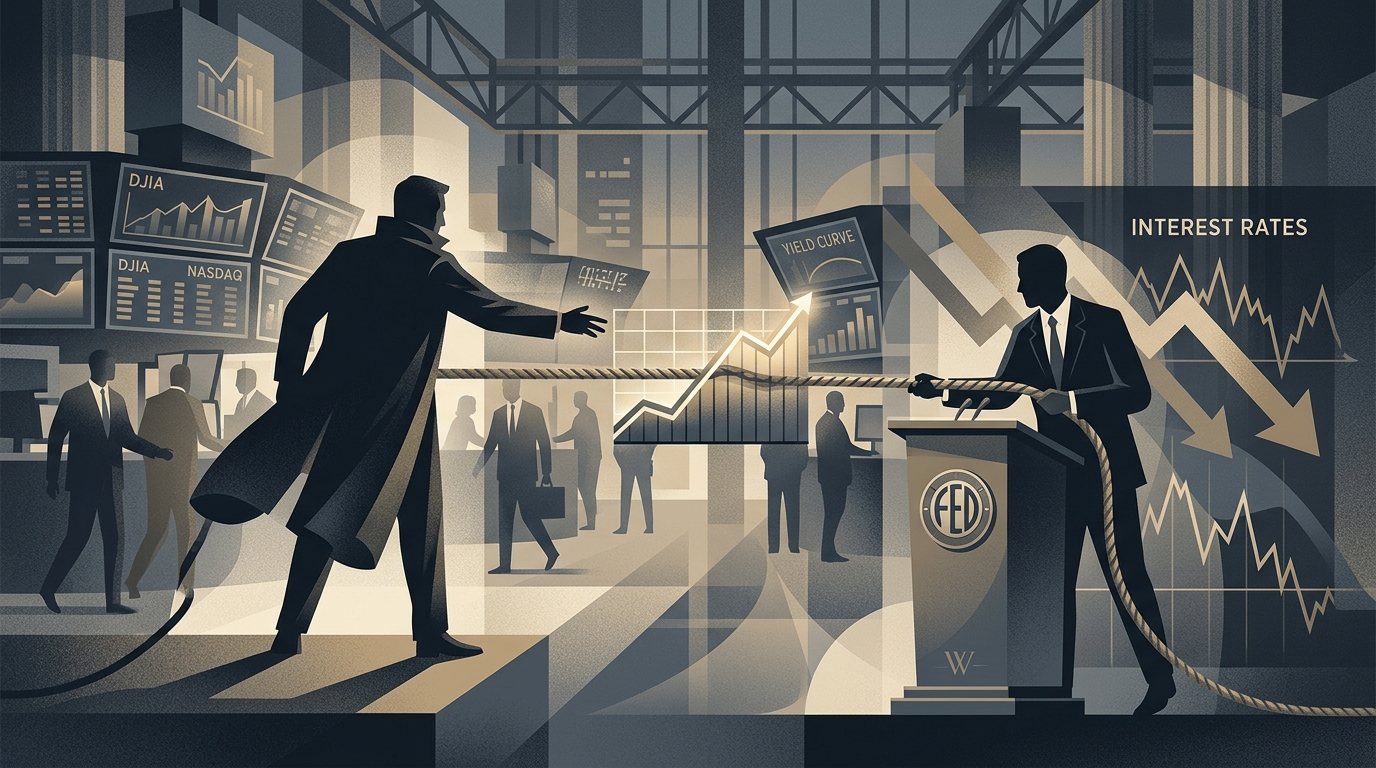
The stock market euphoria that characterized 2024 and early 2025 appears to be giving way to a more sober, if not alarming, reality. Nvidia, the undisputed leader of the semiconductor revolution, is seeing its meteoric stock rise stall. Microsoft, the software giant that bet billions on OpenAI, is facing skepticism over the pace at which its investments are translating into bottom-line growth. At the same time, the Federal Reserve remains hawkish, refusing to implement the long-awaited rate cuts that would provide breathing room for growth stocks. However, beneath the surface of market noise, the case for Artificial Intelligence (AI) remains stronger than ever.
The Nvidia Paradox and Valuation Fatigue
For many analysts, Nvidia’s recent cooling is not a sign of failure but a necessary correction. When a company sees its market capitalization soar into the trillions within a short span, "investor fatigue" is inevitable. The market has already priced in perfection, and any news that falls short of the most optimistic forecasts is treated as a setback. Nevertheless, demand for Blackwell chips remains at record levels. Tech giants (Hyperscalers) continue to commit vast capital to building data centers, as the race for dominance in Generative AI leaves no room for retreat.
The issue isn't a lack of demand, but rather the difficulty of supply keeping pace and the complexity of the global supply chain. Investors focused on the next quarter may be spooked, but those looking at a five-year horizon realize that Nvidia is not just a chip company; it is the bedrock of the new computing paradigm. As a Goldman Sachs executive recently noted, "We are in the infrastructure phase, and this infrastructure is essential before we see the world-changing applications emerge."
Microsoft: The Challenge of Converting Hype into Revenue
Microsoft is at a different but equally critical juncture. After integrating Copilot across the Office and Azure ecosystems, investors are now demanding tangible proof of profitability. The stock's "stumble" reflects concerns that capital expenditures (CapEx) are rising faster than direct AI revenues. However, this perspective overlooks the strategic importance of locking customers into the Microsoft ecosystem.
- Azure AI adoption is growing steadily as enterprises move workloads to the cloud to leverage OpenAI’s models.
- Copilot, though in its early stages, is beginning to show signs of productivity gains in sectors like software development and customer service.
- Microsoft possesses the cash flow to sustain a long investment period, something its smaller competitors simply cannot match.
Current market skepticism mirrors the early 2010s when many questioned Microsoft’s pivot to the Cloud. History has taught us that those who remained patient were handsomely rewarded.
The Macroeconomic Drag: The Fed and Interest Rates
Perhaps the greatest enemy of tech stocks right now is not the technology itself, but Jerome Powell. With inflation remaining sticky, the Fed seems unwilling to cut rates anytime soon. High rates increase borrowing costs and reduce the present value of future earnings, particularly hitting growth-oriented companies. Yet, AI offers a unique escape from this macroeconomic malaise: productivity growth.
"In an environment of high interest rates and labor shortages, Artificial Intelligence is the only tool that can provide deflationary pressure through automation and efficiency," says a Wall Street financial analyst.
This is why major corporations are not stopping their AI investments, even when capital is expensive. Investing in AI is no longer a luxury; it is a necessity for survival in a global economy moving at breakneck speeds.
Why the "Buy the Dip" Strategy Remains Valid
Investing in AI today requires nerves of steel and a long-term perspective. Market dips offer entry points into companies that will dominate the next decade. This is not a bubble akin to the 2000 dot-com crash; today's tech leaders have real earnings, massive cash reserves, and products already being used by millions.
AI is transforming healthcare, energy, defense, and education. The short-term volatility of Nvidia or Microsoft shares is merely noise in a long-term upward trajectory. As Warren Buffett famously said, "The stock market is a device for transferring money from the impatient to the patient." In the case of AI, patience is not just a virtue; it is the most profitable strategy.