

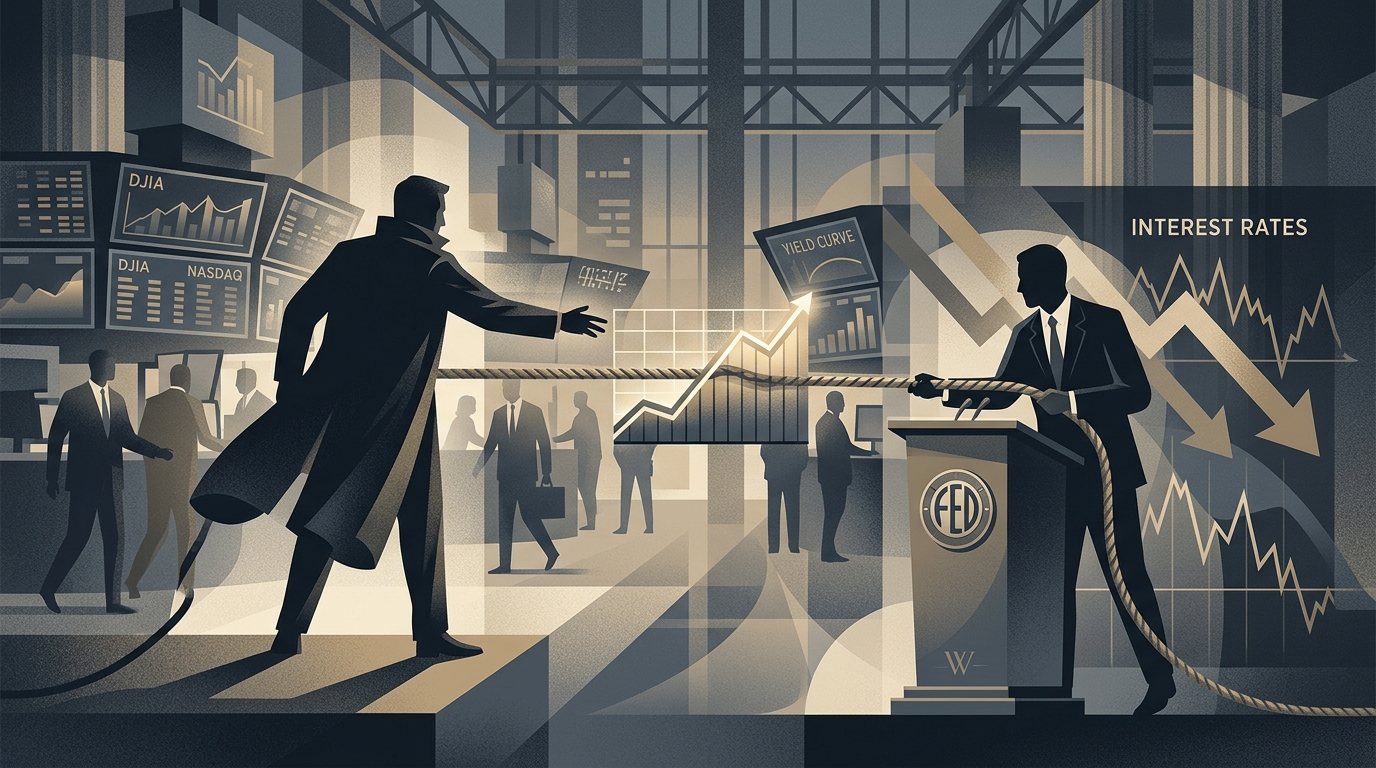
In a move poised to rattle the foundations of the Federal Reserve's traditional independence, President Donald Trump has launched a preemptive strike against monetary tightening, just days before Kevin Warsh's official debut at the FOMC. Trump’s assertion that a country doing well should not be "penalized" by immediate interest rate hikes is more than a mere economic observation; it is a political salvo aimed at the heart of central banking strategy in 2026.
The Collision of Politics and Monetary Discipline
The history of Trump’s relationship with the Fed is one of persistent friction, but the current juncture is particularly volatile. With the U.S. economy exhibiting remarkable resilience and unemployment at historic lows, the Fed—now under the burgeoning influence of Warsh—appears to be considering a preemptive rate hike to stave off overheating. However, for the White House, such a move is viewed as a "brake" on growth that Trump claims as his own signature achievement.
Kevin Warsh, a man for whom Trump has expressed high regard, now finds himself in an untenable position. On one hand, he must maintain the Fed's credibility as a data-driven, independent institution. On the other, public pressure from the executive who appointed or championed him creates an environment of politicization that global markets historically punish. Trump’s rhetoric of "penalizing" the country suggests a worldview where low rates are a birthright of growth rather than a tool for inflation management.
The Warsh Factor: Hawk or Dove?
Kevin Warsh is no stranger to the corridors of power. As a former member of the Fed Board of Governors and a veteran of Wall Street, he is seen by many as a "practical academic." His reputation leans toward the "hawkish" side—those more concerned with price stability than short-term stimulus. The fact that Trump chose to publicly warn him before he even took his seat at the table highlights the high stakes for the administration.
- Warsh’s Strategy: A focus on long-term price stability and preventing asset bubbles.
- Market Reaction: Bond yields have already begun to show volatility as investors gauge whether the Fed will buckle under political pressure.
- The Inflation Dilemma: If the Fed fails to act and inflation surges, the cost to the average American family will be catastrophic.
Trump’s intervention revives a debate many thought settled since the era of Paul Volcker: how "independent" can a central bank truly be in an era of extreme political polarization? If Warsh yields, the Fed risks losing the trust of international investors. If he resists, he faces the wrath of the world’s most powerful executive.
Economic Implications and the Future of the Dollar
Persisting with low interest rates in a robust economy may yield short-term euphoria in equity markets, but it poses significant risks to the U.S. Dollar. A currency backed by a central bank perceived to be taking orders from the executive branch tends to lose its status as a reliable global reserve. U.S. allies in Europe and Asia are watching closely, as their own monetary policies are often tethered to the Fed's trajectory.
"Fed independence is not a luxury; it is the guarantee that the economy will not be sacrificed on the altar of the next election cycle," say Wall Street analysts.
In conclusion, Kevin Warsh's debut will not be a mere technical exercise in rate-setting. It will be a stress test for American institutions. Trump has set the stage: for him, the Fed is a partner in "winning," not an impartial referee. Whether Warsh accepts this role or chooses the path of institutional defiance will define the U.S. economic trajectory for the remainder of the decade.





