The Greek retail market continues to demonstrate remarkable resilience, despite an environment of persistent inflationary pressures and the compression of household disposable income. According to the latest report by NielsenIQ, organized retail in Greece recorded an increase of 7.4% during the first quarter of the year, a performance that reflects both rising prices and a gradual shift in the consumption habits of Greeks.
The Dominance of Food and the Consumer Psychology
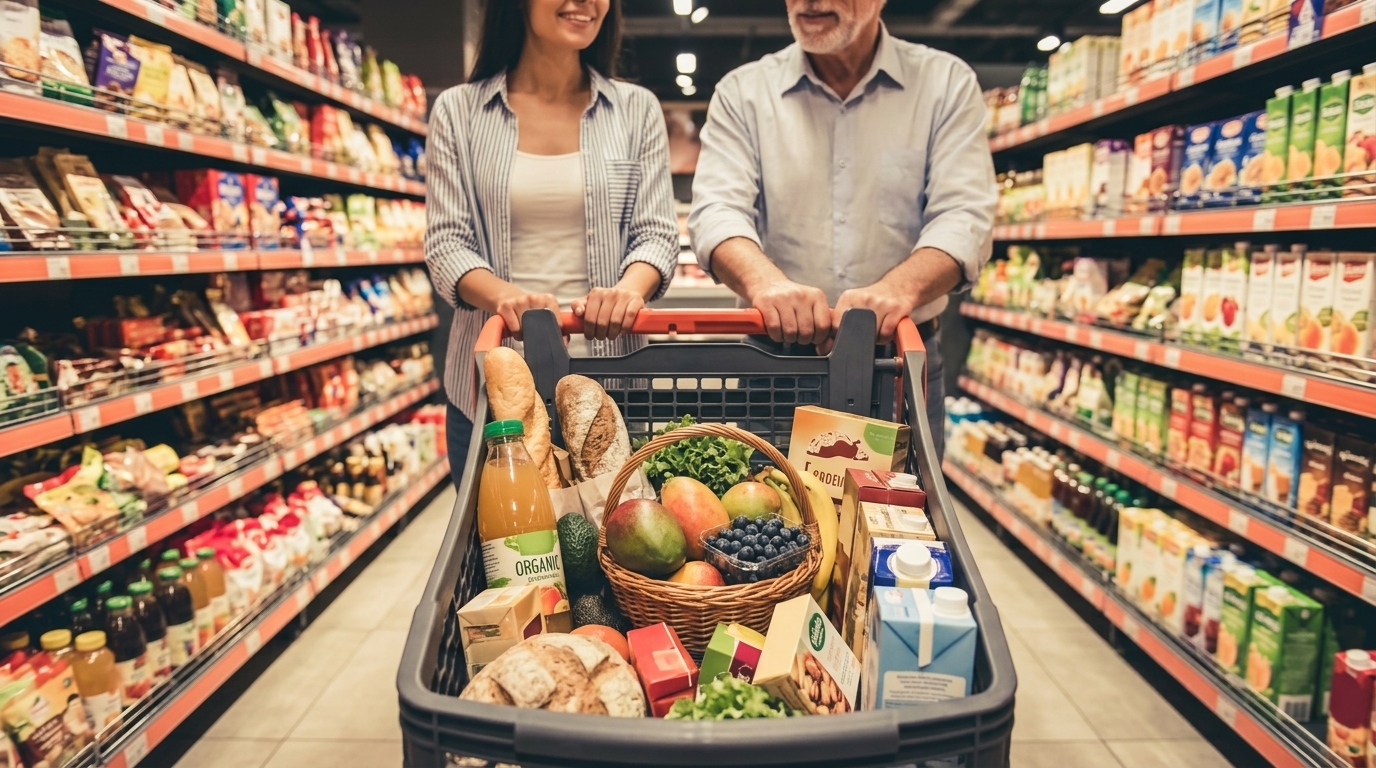
The core finding of the research is that the food and beverage sector remains the engine of growth. In a period where consumers are cutting back on secondary expenses, the need for essential goods maintains market momentum. However, NielsenIQ's analysis reveals an interesting duality: while turnover is increasing, sales volume does not always follow at the same pace. This suggests that a significant portion of the growth is due to price hikes, although there is a trend of returning to the consumption of specific categories that had declined in the previous period.
Greek consumers now appear more "educated" and strategic in their purchases. Searching for offers and turning to private label products have become the norm rather than the exception. Private label products continue to gain market share as supermarket chains invest in their quality, making them a reliable alternative to branded products hit by increased production costs.
The Return of Hypermarkets and the Digital Transition
One of the most notable trends of the first quarter is the dominance of large stores (hypermarkets, over 2,500 sq.m.). Consumers seem to be returning to large retail floors, seeking greater variety and, most importantly, the more aggressive promotions often hosted in these spaces. The possibility of "one-stop shopping," where the customer can find everything in one visit, saving time and fuel, is proving decisive.
At the same time, the online channel continues its upward trajectory. Despite the return to physical store visits, online supermarket sales are showing double-digit growth rates. Investment by major industry players in logistics and user experience (UX) is paying off, as younger generations of consumers integrate digital food shopping into their daily lives. The electronic "basket" tends to be more planned and less impulsive, which helps households control their spending.
Challenges and Outlook for the Remainder of the Year
Despite the positive signs, the road remains paved with challenges. Operating costs for retail businesses—from energy to transport—remain high, squeezing profit margins. Furthermore, uncertainty in the international geopolitical environment continues to affect raw material prices, making it difficult to predict the path of food inflation.
- Maintaining consumer purchasing power is the big bet for government policy and the market.
- Further concentration of the sector, with acquisitions and mergers of smaller local chains by major players, is expected to continue.
- Sustainability and the reduction of the environmental footprint are now dynamically entering the retailers' agenda, as consumers begin to evaluate these criteria as well.
In conclusion, the 7.4% growth is a breath of optimism, but it hides a constant struggle for adaptation. The Greek retail market is maturing, becoming more digital and more rational, trying to balance profitability and social responsibility in an era of great change.