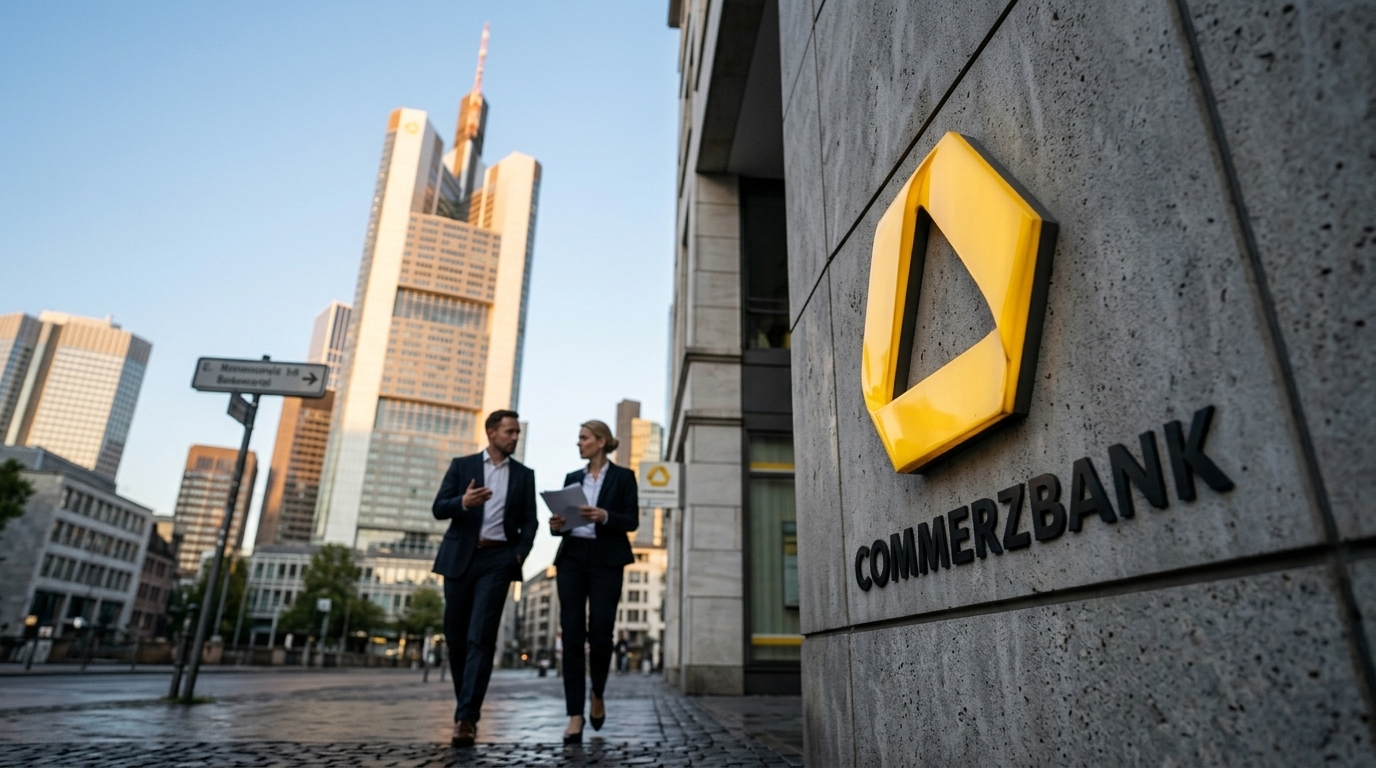
The European banking landscape is witnessing one of its most intense dramas in a decade. UniCredit, led by the charismatic yet controversial Andrea Orcel, has launched a strategic 'assault' on Commerzbank, Germany's second-largest lender. What began as a simple share purchase has rapidly evolved into a high-stakes tug-of-war that transcends balance sheets, touching the very core of European economic integration.
Andrea Orcel’s Strategy: A Masterclass in Investment Banking
Andrea Orcel is no ordinary banker. Often dubbed the 'Cristiano Ronaldo of M&A,' he utilized a highly sophisticated derivatives strategy to increase UniCredit's stake in Commerzbank to 21%, making the Italian bank the largest shareholder, surpassing even the German state. This move blindsided Berlin, triggering a furious reaction from Olaf Scholz’s government.
UniCredit is not merely seeking expansion; it is emphatically highlighting Commerzbank’s structural weaknesses. With a cost-to-income ratio that remains stubbornly high and profitability lagging behind European peers, the Italian side argues that a merger would create a true European champion capable of competing with American giants.
"Europe needs banks that can support its economy at scale, not national players confined by their borders,"seems to be Milan’s central message.
German Resistance: Protectionism or National Sovereignty?
Germany’s reaction was swift and fierce. From the Chancellery to the labor unions, the message was clear: Commerzbank must remain independent. Chancellor Scholz characterized 'hostile takeovers' as inappropriate for Europe, a statement that caused unease in Brussels. For many analysts, this stance represents a form of economic nationalism that directly contradicts the principles of the free movement of capital within the EU.
The German arguments focus on three main pillars:
- Protecting jobs, as a merger would inevitably lead to significant layoffs.
- Ensuring the financing of the 'Mittelstand' (small and medium-sized enterprises), which form the backbone of the German economy.
- The fear that decision-making power would shift away from Germany to Milan.
The Draghi Factor and the Future of the Banking Union
The UniCredit-Commerzbank clash coincides with the publication of Mario Draghi’s report on European competitiveness. Draghi was unequivocal: Europe suffers from fragmentation. Without strong, cross-border banks, the EU will never be able to finance the green and digital transitions required to compete with the US and China.
The European Central Bank (ECB), while officially neutral, has repeatedly advocated for banking sector consolidation. The Commerzbank case is the ultimate litmus test. If Berlin succeeds in blocking the deal for political reasons, the vision of a unified Banking Union will suffer a devastating blow. Conversely, if UniCredit succeeds, it could pave the way for a new wave of consolidation that will reshape the continent’s financial map.
Conclusion: A Race Against Political Hurdles
The showdown between Milan and Frankfurt is more than a business move. It is a battle over the kind of Europe we want: a Europe of national champions protected by their states, or a truly single market where efficiency and scale trump borders. The coming months will be decisive as UniCredit awaits regulatory approval while the German government seeks ways to fortify its bank. The outcome of this saga will define the continent’s economic power for the next twenty years.