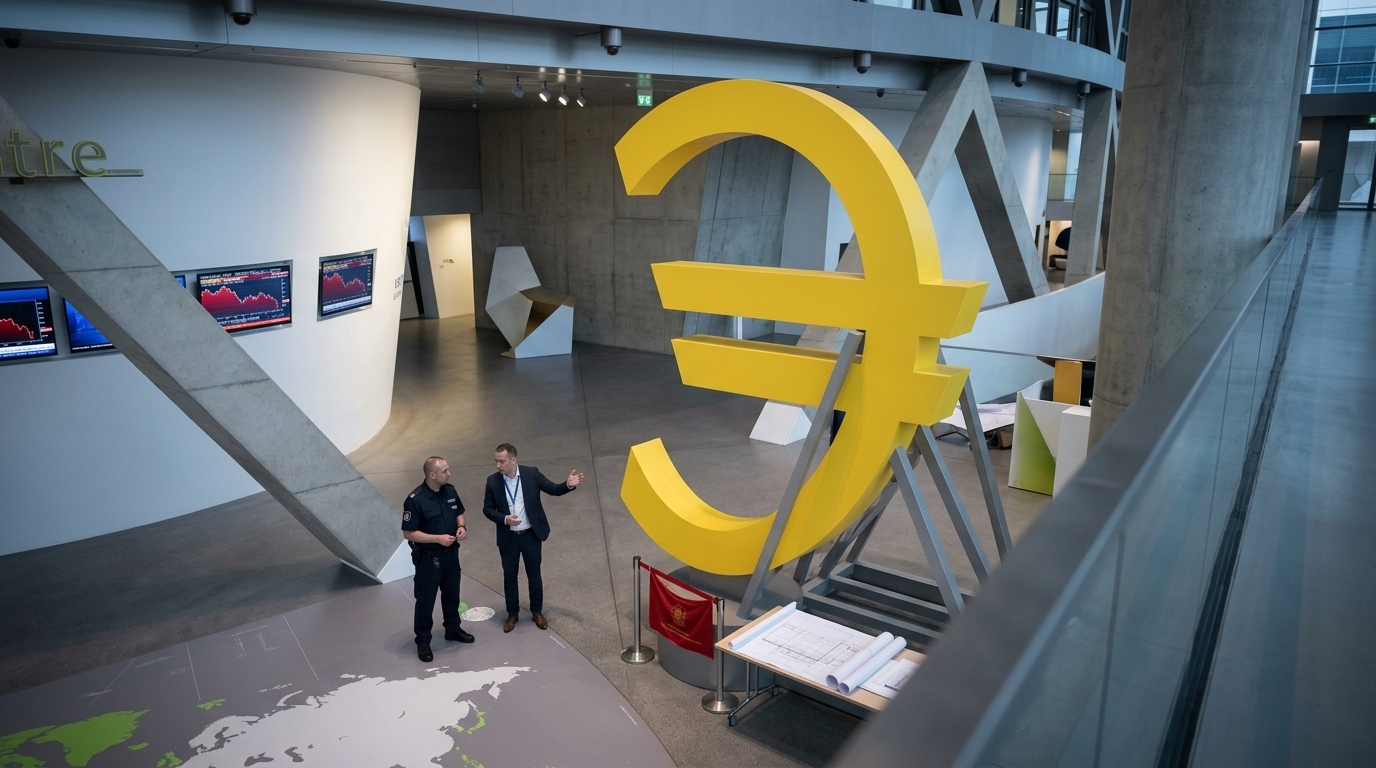
The Eurozone finds itself at a critical juncture once again, as the latest business activity data for May 2026 reveals a deeply concerning picture. The Composite Purchasing Managers' Index (PMI), widely regarded as the most reliable barometer of economic health, has slumped to its lowest level in 18 months, suggesting that the long-awaited post-crisis recovery remains an elusive dream.
The Anatomy of the Crisis: Manufacturing vs. Services
The decline is not uniform, but the trends are universally downward. The manufacturing sector continues to be the weak link in the European economy, particularly in Germany, where industrial output is grappling with high energy costs and fierce competition from China. However, the most alarming aspect of the recent report is the slowdown in the services sector, which had until recently been the backbone of growth.
Falling demand is the primary driver of this negative development. Consumers, squeezed by a cost of living that remains high despite the nominal decline in inflation, are cutting back on spending. At the same time, businesses are facing an explosive cocktail of increased borrowing costs and wage pressures, leading them to freeze hiring and postpone investment plans.
- PMI dropping below the 50-point mark, separating expansion from contraction.
- Significant decrease in new orders for the third consecutive month.
- Rising input costs partially passed on to consumer prices.
The German Question and French Stagnation
There can be no strong Eurozone without a strong Germany, and currently, Europe's engine seems to have run out of steam. The German economy is suffering from structural problems that transcend the current economic cycle: an aging population, a lack of digital infrastructure, and an over-reliance on exports in an era of increasing protectionism. France, on the other hand, faces its own political and fiscal uncertainty, which is directly reflected in business confidence.
"Europe is not just facing a cyclical downturn, but a structural competitiveness challenge that monetary policy alone cannot solve," notes an analyst at the European Central Bank.
This situation puts the ECB in a difficult position. While the economy needs lower interest rates to breathe, inflationary pressures in the services sector remain stubborn. A premature rate cut could reignite inflation, while a delayed intervention risks turning a mild contraction into a deep and painful recession.
Labor Market Implications and the Road Ahead
So far, the Eurozone labor market has shown remarkable resilience. However, the May data shows the first cracks. Businesses, in an effort to protect their profit margins, are beginning to reassess their staffing needs. If business activity does not recover in the next quarter, rising unemployment will be the next inevitable stage, further dampening consumer confidence.
The solution is not simple. It requires a combination of targeted fiscal incentives, accelerated investment in green and digital transitions, and, above all, a coordinated European response that transcends national egoisms. The Eurozone must prove it can remain competitive in a rapidly changing world, or it risks sliding into a long period of stagnation, similar to what Japan experienced in previous decades.