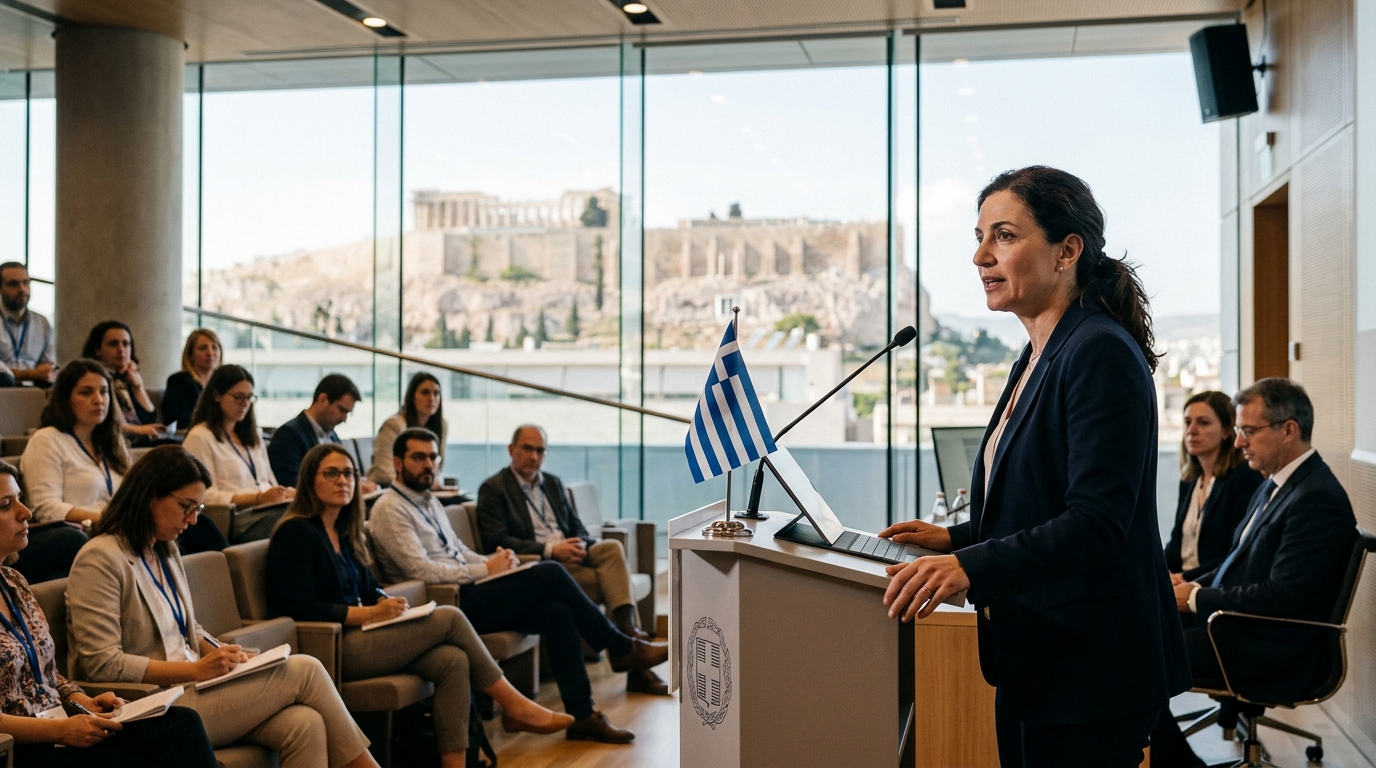
For more than a decade, the global banking sector, particularly in Europe, operated under the dogma of absolute efficiency. Following the 2008 financial crisis, banks focused almost obsessively on reducing operational costs, streamlining staff, and closing physical branches. However, as George Poulopoulos of EY Greece points out, the paradigm is shifting. The new reality demands a combination of efficiency and resilience, creating a new operating model that aims not just for profit, but for survival in an environment of perpetual crises.
From Austerity to Strategic Fortification
The concept of efficiency in banking is no longer a mere exercise in accounting cuts. In the past, an "efficient" bank was one with the lowest cost-to-income ratio. Today, efficiency translates into agility. Banks are investing in cloud computing and automation not just to lower expenses, but to adapt their services in real-time. Resilience, on the other hand, refers to an organization's ability to absorb shocks—whether they stem from a geopolitical crisis, a massive cyberattack, or a sudden shift in interest rates.
Resilience is now categorized into three main pillars: financial, operational, and digital. Financial resilience concerns capital adequacy and liquidity—areas where Greek banks have made significant strides in recent years. Operational resilience involves processes that allow a bank to continue serving its customers even when part of its infrastructure fails. Finally, digital resilience is perhaps the most critical, as the sector essentially transforms into a technology industry that manages money.
Artificial Intelligence as a Transformation Catalyst
In this new strategy, Artificial Intelligence (AI) and Generative AI (GenAI) play a key role. Efficiency is enhanced through the automation of complex back-office processes, such as Anti-Money Laundering (AML) checks and credit risk assessment. Instead of analysts spending weeks reviewing files, AI models can identify risk patterns in seconds, allowing banks to make faster and more accurate decisions.
At the same time, AI bolsters resilience through prediction. Predictive models can simulate thousands of economic crisis scenarios (stress testing) with much greater accuracy than traditional methods. In the field of cybersecurity, AI acts as a continuous patrol, detecting anomalies in network behavior that could indicate an imminent attack before it causes damage. A bank's ability to "predict" rather than just "react" is the defining difference in this new era.
The Greek Reality and the European Framework
For the Greek banking system, the challenge is twofold. After a long period of isolation due to non-performing loans (NPLs), Greek banks are now in a phase of profitability and consolidation. However, they do not have the luxury of time. They must adopt the principles of resilience while simultaneously completing their digital transformation. The European Union's new DORA (Digital Operational Resilience Act) sets strict frameworks for how financial institutions must manage digital risks.
Greek banks are called upon to invest significant capital in upgrading legacy systems, which often represent the greatest barrier to efficiency. Replacing these systems with modern microservices architectures allows for greater resilience, as a failure in one area does not paralyze the entire organization. Furthermore, the emphasis on ESG (Environmental, Social, Governance) criteria adds another layer to the concept of resilience: protection against risks related to climate change and social responsibility.
Conclusion: Balance is the New Success
In conclusion, banking strategy for 2026 and beyond cannot be one-dimensional. Efficiency without resilience is fragile, while resilience without efficiency is economically unsustainable. Market winners will be those organizations that manage to integrate technology not as an additional cost, but as the foundation upon which customer trust and systemic stability are built. Banking is returning to its roots—safety and trust—but equipped with the tools of the 21st century.