At a time when global public opinion is watching the rapid evolution of Artificial Intelligence with bated breath, David Solomon, the powerful head of Goldman Sachs, has stepped in to calm the waters. The rhetoric of a "labor market apocalypse," where machines will mass-replace the human workforce, does not seem to resonate with one of the world's most influential bankers. On the contrary, Solomon views AI as a catalyst for economic growth and productivity enhancement, rather than an existential threat to employment.
Historical Perspective and the Productivity Paradigm
Solomon bases his argument on a historical review of technological revolutions. From the steam engine to the advent of personal computers and the internet, every major innovation initially sparked fears of job losses. However, history has proven that these technologies ultimately created more jobs than they destroyed, often in sectors that were unimaginable at the time of transition. According to the Goldman Sachs CEO, Artificial Intelligence will follow the same trajectory.
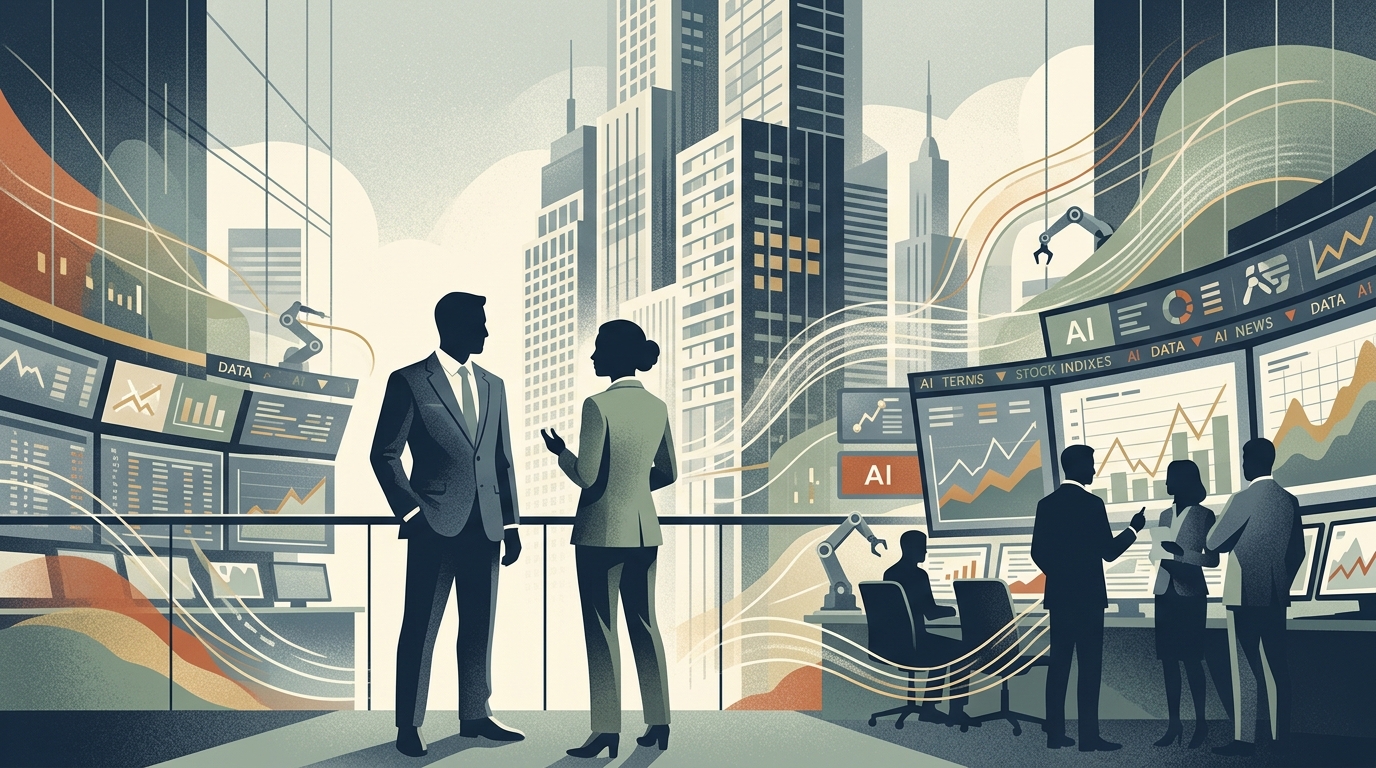
The core argument is the "productivity boost." When workers are equipped with AI tools, they can handle routine tasks in fractions of a second, allowing them to focus on more complex, creative, and strategic duties. This efficiency translates into lower costs for businesses and increased economic activity, which in turn generates new demand for labor. For Goldman Sachs, AI is not a replacement but a "co-pilot" that enhances human capabilities.
From Replacement to Augmentation
A significant distinction Solomon makes concerns the difference between "replacing" a job and "automating" specific tasks. While it is true that many tasks—especially in data analysis, basic copywriting, or coding—will be automated, this does not necessarily mean that entire job roles will disappear. Instead, the nature of work will evolve.
"Technology always changes the way we work, but it rarely eliminates the need for human judgment, ethics, and strategic thinking," Solomon noted in recent remarks.
In the financial sector, for instance, AI can analyze thousands of balance sheets in seconds, but the final investment decision or building a relationship of trust with a client remains a deeply human affair. Goldman Sachs is already investing billions in AI, not to fire its staff, but to make them more efficient in a highly competitive environment.
The Real-World Constraints of the AI Revolution
Despite his optimism, Solomon acknowledges that the transition will not be without challenges. However, he points out that there are physical and economic constraints that will slow down the "apocalypse" many fear. Infrastructure shortages, such as limited chip processing power and the massive electricity requirements for operating data centers, act as a brake on the instantaneous adoption of AI on a global scale.
Furthermore, the regulatory framework will play a decisive role. Governments in Europe and the US are already trying to establish rules that will protect workers' rights and ensure the ethical use of technology. This "institutional friction" will give labor markets time to adapt, retrain their workforce, and absorb the shocks of change.
Conclusion: A New Era of Economic Growth?
David Solomon's stance reflects a broader belief in Wall Street circles: that AI is the "holy grail" of productivity that could pull the global economy out of its low-growth slump. While concern for workers caught in the transition is justified, history and economic logic suggest that the "apocalypse" is likely a myth fueled by the uncertainty of the unknown. The challenge for policy and business is not to stop AI, but to manage the transition in a way that benefits society as a whole.