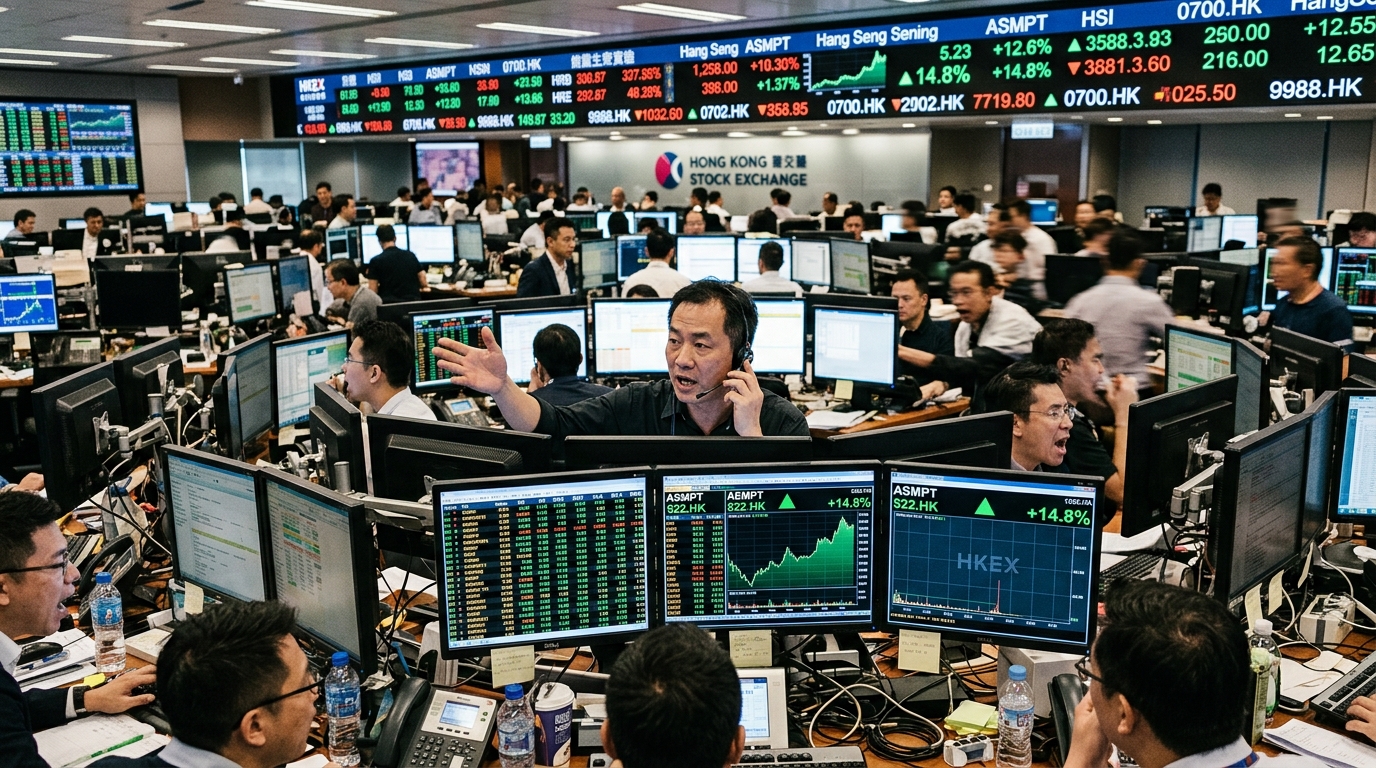
In an era where the global economy grapples with stubborn inflation and escalating geopolitical tensions, the semiconductor technology sector continues to serve as a beacon of growth. ASMPT Ltd., a Hong Kong-based leader in chip manufacturing equipment, announced today a striking revenue forecast for the second quarter of 2026 that significantly outpaces market expectations. The engine driving this surge is none other than the relentless demand for Artificial Intelligence (AI) infrastructure.
The Critical Role of Advanced Packaging
To understand ASMPT's current success, one must delve into the technology that makes modern AI models, like GPT-5 and its successors, possible. Traditional monolithic chips are hitting their physical limits. The industry's solution has been "Advanced Packaging"—a process where multiple chips are stacked vertically or placed in extreme proximity to increase communication speeds and drastically reduce power consumption.
ASMPT holds a dominant position in Thermocompression Bonding (TCB) and Hybrid Bonding technologies. These methods are indispensable for manufacturing High Bandwidth Memory (HBM) and the specialized Graphics Processing Units (GPUs) that power data centers for giants like Nvidia and AMD. According to the company's report, the demand for these specific solutions has more than offset the persistent sluggishness in other sectors, such as consumer electronics and smartphones.
A Tale of Two Markets
Despite the optimism surrounding the semiconductor segment, ASMPT presents a picture of a bifurcated market. While equipment for AI chips is booming, the SMT (Surface Mount Technology) segment—which involves placing components onto circuit boards for everyday devices—remains in a slow recovery phase. Global consumers are exercising more caution with their discretionary spending on new gadgets, which in turn affects orders from mass-market manufacturers.
"Artificial Intelligence is no longer a future promise; it is the primary revenue driver reshaping the entire semiconductor supply chain," a senior industry analyst told Bloomberg.
ASMPT's strategic pivot toward advanced packaging appears to be paying off handsomely as major semiconductor foundries invest billions to expand their back-end capacity. The company expects second-quarter revenue to range between $420 million and $490 million, a figure that comfortably exceeds the analyst consensus of approximately $410 million.
Geopolitics and the Supply Chain Tightrope
ASMPT's headquarters in Hong Kong places it at the center of a complex geopolitical chessboard. As the United States continues to tighten export controls on advanced technology to China, ASMPT manages to navigate these murky waters by serving both Western tech giants and the domestic Chinese market, which is desperately striving for technological self-sufficiency. The company's ability to maintain technological leadership in critical bonding tools makes it a "necessary partner" for players on both sides of the Pacific.
However, risks remain on the horizon. A further escalation of trade sanctions could impact the company's access to specific high-end components or restrict its customer base in key regions. For now, the "AI Gold Rush" provides a substantial safety cushion, allowing ASMPT to reinvest in R&D for the next generation of bonding machines that will support even more powerful neural networks.
Conclusion and Future Outlook
The case of ASMPT serves as a clear signal to investors: the AI revolution is not just about software and algorithms. Without the specialized hardware equipment that enables the physical construction of these super-computers, progress would grind to a halt. As we move into the second half of 2026, the focus will be on whether AI demand can sustain these levels and whether the consumer electronics sector will finally rebound to provide the company with a more balanced growth trajectory.
In summary, ASMPT is not merely a machine manufacturer; it is an architect of the physical foundation of digital intelligence. Its success reflects the broader shift of the global economy toward automation and high-speed data processing—a trend that appears to have significant runway left.