In a move that fundamentally resets the financial scale of the global technology landscape, Alphabet, Google’s parent company, has announced an upsizing of its equity offering to an astronomical $84.75 billion. This decision, coming just two days after the initial $80 billion announcement, highlights not only the market’s insatiable appetite for AI investments but also Alphabet’s urgent need to fortify its dominance against surging competition from Microsoft, OpenAI, and Meta.
The Strategy of 'Hyper-Scale'
The decision to increase the raise by nearly $5 billion in less than 48 hours is no coincidence. According to Bloomberg Intelligence analysts, institutional demand far exceeded expectations, reflecting a widespread belief that we are on the threshold of a new industrial revolution. These funds are not intended for mere maintenance; they are earmarked for building an infrastructure the likes of which humanity has never seen.
The bulk of the $85 billion will be directed toward three core pillars:
- Custom Silicon: Developing next-generation Tensor Processing Units (TPUs) is vital to reducing dependence on Nvidia and improving energy efficiency.
- Energy Autonomy: As data center power consumption skyrockets, Alphabet is investing in Small Modular Reactors (SMRs) and renewable energy to ensure the uninterrupted operation of its systems.
- Global Data Center Networks: Expansion into regions like Southeast Asia and the Middle East is essential for reducing latency and complying with increasingly localized data sovereignty laws.
The Model Shift: From Advertising to Infrastructure
For decades, Google relied on an advertising-centric model. However, 2026 finds the company transforming into an infrastructure titan. Artificial Intelligence is no longer a "feature" of the search engine; it is the foundation upon which every service, from YouTube to Google Cloud, is built. Choosing equity over debt for this capital raise indicates a strategic preference to keep the balance sheet clean of liabilities in a period where interest rates remain unpredictable.
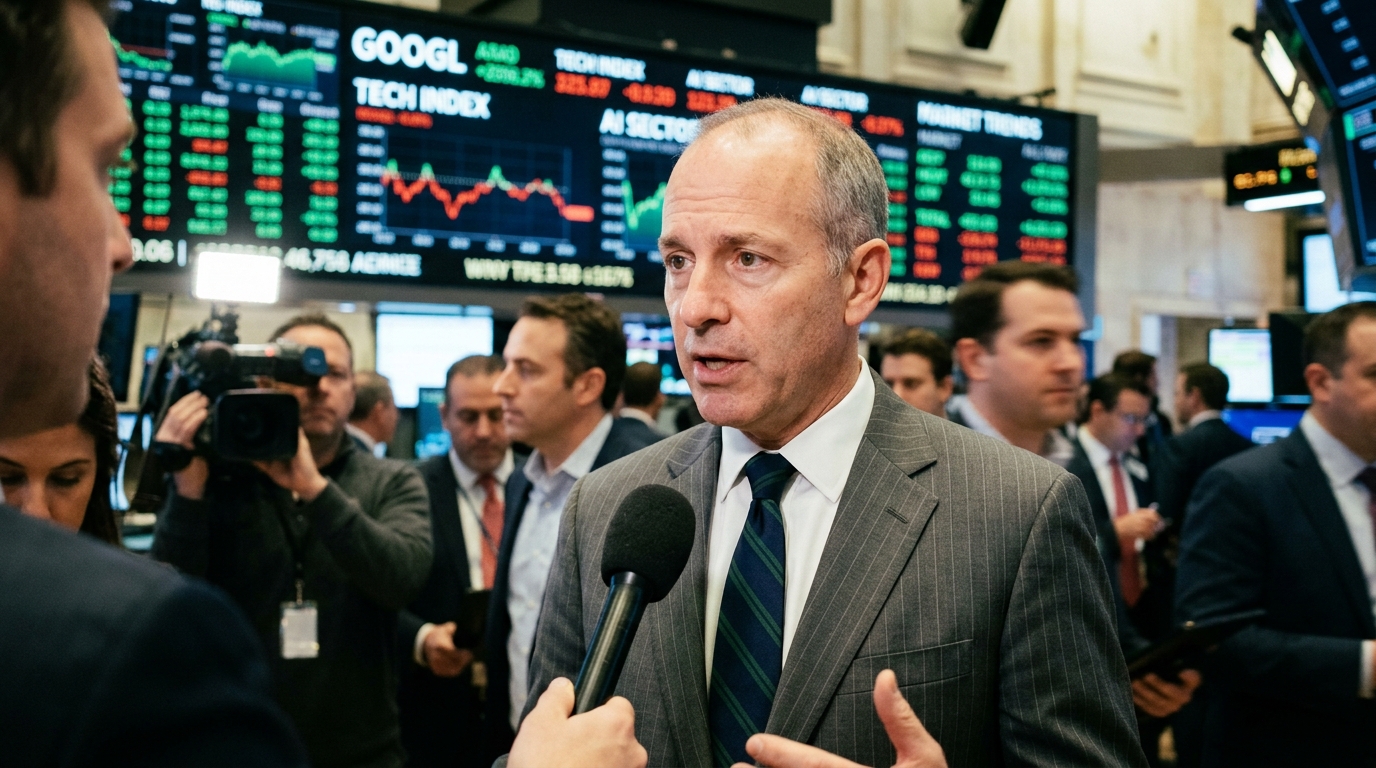
"We aren’t just seeing a company spend money; we are seeing Alphabet buy the future of computing before anyone else can," noted Bloomberg’s Scarlet Fu during the broadcast.
Challenges and the Risk of Dilution
Despite the excitement, this move is not without risk. Issuing new shares on such a scale inevitably causes dilution for existing shareholders. However, the market seems to accept this "price" as a necessary evil. The fear of being left behind in the race for Artificial General Intelligence (AGI) is far more potent than concerns over short-term earnings-per-share dips. Furthermore, Alphabet must prove it can translate these colossal investments into steady revenue streams, especially as regulators in the US and EU continue to scrutinize monopolistic practices in the AI sector.
Conclusion
Alphabet’s move to raise $85 billion is a declaration of power. In the world of 2026, power is no longer measured solely in code, but in megawatts and qubits. Google is betting that whoever controls the infrastructure of intelligence will control the global economy for decades to come. The question is no longer whether the investment is large, but whether it will be enough to keep Alphabet at the summit of a world changing at the speed of light.