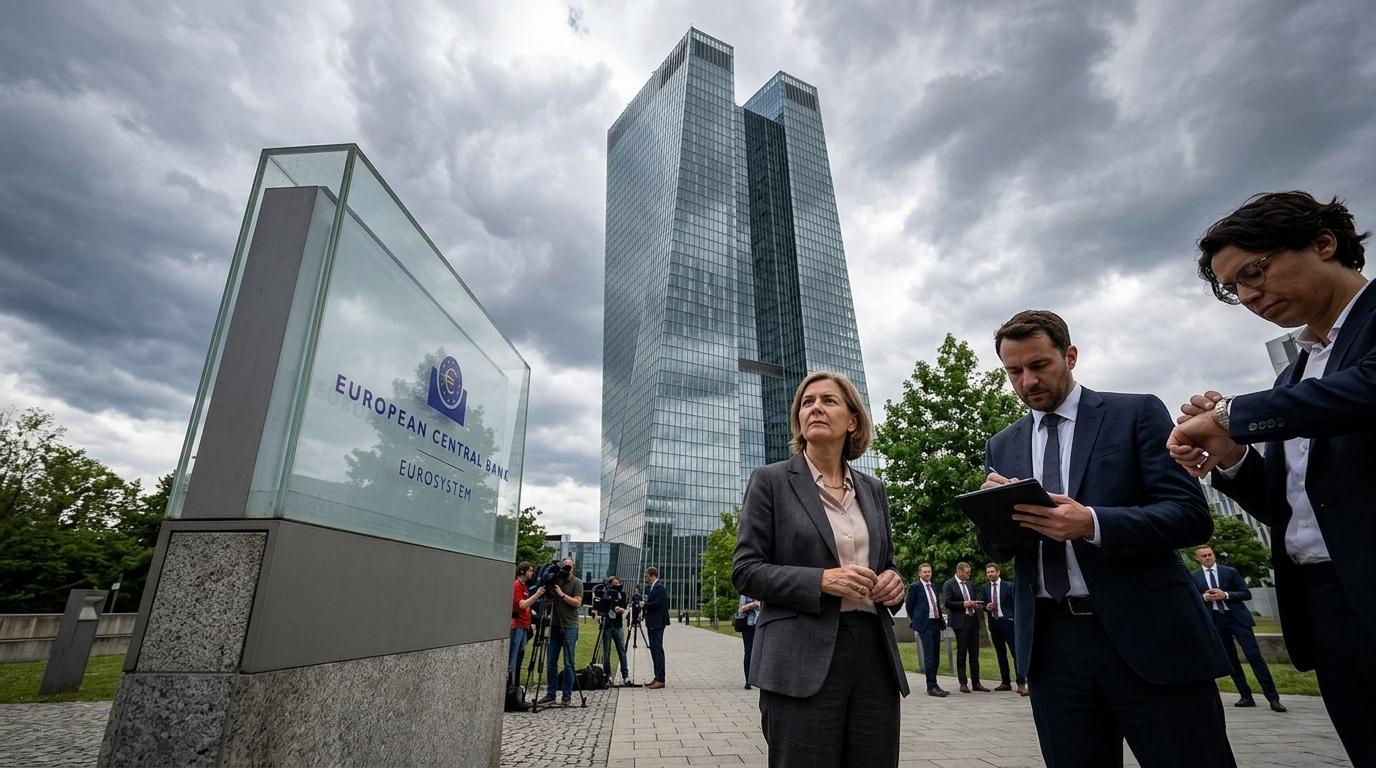
The economic architecture of the Eurozone is once again at a critical crossroads. The latest Eurostat data for May 2026 has sent ripples of concern through markets and households alike, as annual inflation climbed to 3.2%, up from 3% the previous month. This represents the highest level since September 2023, a development that upsets expectations for a smooth and rapid return to the European Central Bank's (ECB) 2% target.
The Greek Paradox and Domestic Market Pressure
For Greece, the news is even more unsettling. While the country has demonstrated remarkable fiscal discipline and growth rates above the EU average, inflation remains a persistent foe. High prices in food, energy, and services continue to erode the disposable income of Greek citizens. The peculiarity of the Greek market, characterized by a high dependence on imports and a specific retail structure, makes the transmission of international pressures faster and the persistence of high prices more 'sticky'.
Analysts point out that core inflation—which excludes volatile energy and food prices—also remains at elevated levels, suggesting that inflationary pressures are now deeply rooted in the services sector. This is partly due to wage increases granted to compensate for the loss of purchasing power in previous years, creating a risk of the so-called 'wage-price spiral'.
Frankfurt's Strategy: Interest Rates and Balancing Acts
Christine Lagarde and the ECB Governing Council are now under suffocating pressure. Until a few months ago, the narrative was that interest rates had peaked and the conversation was about when the easing would begin. However, the new data is forcing policymakers to rethink their stance. Maintaining rates at high levels for longer (the 'higher for longer' scenario) now seems the most likely path.
- Monetary Tightening: The ECB may delay the planned rate cuts for the second half of 2026.
- Liquidity Management: The ongoing reduction of the ECB's balance sheet (Quantitative Tightening) serves as a complementary pressure tool.
- Communication Strategy: The need for clear messaging to markets to contain inflationary expectations.
The challenge is immense: if the ECB acts too aggressively, it risks driving the Eurozone into a deep recession, hurting employment and investment. If it acts too loosely, inflation could spiral out of control, destroying the credibility of the Euro.
Geopolitical Instability and the AI Factor
We cannot ignore the broader context. Geopolitical tensions in the Middle East and Ukraine continue to affect supply chains and energy costs. Furthermore, the transition to a green economy ('Greenflation') requires massive investments that, at least in the short term, are inflationary in nature.
"Inflation is no longer just a monetary phenomenon; it is the result of a global realignment of production forces and geopolitical balances," says a leading economist.
In this environment, Artificial Intelligence (AI) is emerging as a potential long-term deflationary factor. The productivity gains promised by AI could reduce production and service costs. However, for 2026, this effect is not yet strong enough to offset the immediate pressures on consumer prices.
Conclusions and Outlook
The battle against inflation will be long and painful. For Greece, the challenge is twofold: maintaining fiscal stability without stifling growth, and protecting the most vulnerable social groups who are disproportionately affected by high prices. The ECB is called upon to demonstrate surgical precision in its movements, as the margin for error has narrowed dangerously. The coming months will determine whether Europe manages to achieve a 'soft landing' or enters a period of prolonged economic stagnation.