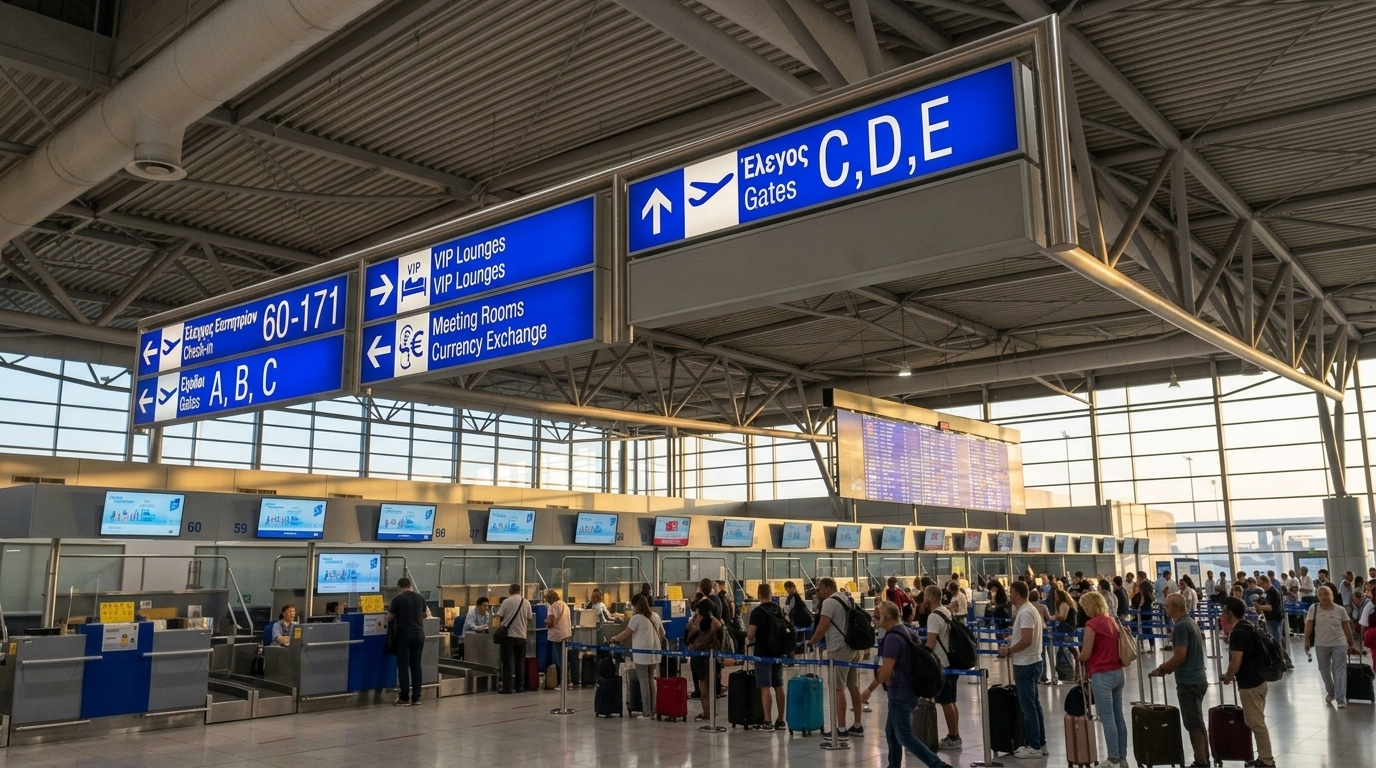
Athens International Airport (AIA) "Eleftherios Venizelos" continues its impressive trajectory in both the stock market and the corporate world, announcing robust results for the first quarter of 2026. The picture emerging from the official data is not just about the health of an organization; it serves as the most reliable barometer for the state of the Greek economy and the country's attractiveness as a year-round destination.
According to the official announcement, passenger traffic in the first quarter of the year reached 6.3 million passengers, marking an 8.1% increase compared to the same period in 2025. This fact is particularly significant, as the first quarter is traditionally considered the "low" season for Greek tourism. This rise suggests that the strategy of "deseasonalization" is bearing fruit, with Athens establishing itself as a top destination for city breaks and business travel.
Financial Analysis: Profits and Revenue Streams
On the financial front, AIA recorded net profits after tax of €18.9 million. This profitability reflects improved operational efficiency and increased revenue from both aeronautical activities and commercial uses within the airport (retail, dining, parking). Non-aeronautical revenues continue to grow at a faster pace than passenger traffic, demonstrating the successful utilization of the airport's commercial spaces.
The growth in international traffic was the primary driver of this surge. International passengers increased by 10.4%, while domestic traffic showed a more moderate but steady rise of 3.2%. The strengthening of connections with markets in North America, the Middle East, and Asia, combined with increased frequencies from low-cost carriers, has created a potent growth mix.
Expansion Strategy and Impending Challenges
In light of these results, AIA's management is accelerating the investment plan for the expansion of the airport's infrastructure. With current capacity approaching its limits during the summer months, the planned expansion of the Main Terminal Building is deemed imperative. The goal is to increase capacity to 33 million passengers annually by 2028, an investment expected to exceed €650 million.
- Upgrading security screening systems for faster service.
- Expanding aircraft parking stands and boarding gates.
- Further digitalization of passenger services through AI and biometric data.
However, challenges remain. Rising energy costs and inflationary pressures affect operating expenses, while international competition from other regional hubs, such as Istanbul and Rome, requires constant vigilance and competitive pricing policies.
Environmental Sustainability and Social Footprint
Also of interest is the airport's commitment to the "Route 2025" program, which aims for zero carbon emissions. AIA is systematically investing in solar parks and the electrification of its vehicle fleet, seeking to become the first airport in Europe to achieve this goal. Sustainable development is no longer an option but a prerequisite for maintaining the trust of investors and society.
"The first-quarter results confirm that AIA is not just a gateway, but a powerful pillar of growth transforming Athens into a global hub," market sources state.
In conclusion, 2026 begins with the best possible conditions for Athens International Airport. The combined increase in profits and passengers, during a period of global economic uncertainty, highlights the robustness of its business model and the indisputable dynamics of the Greek tourism product.