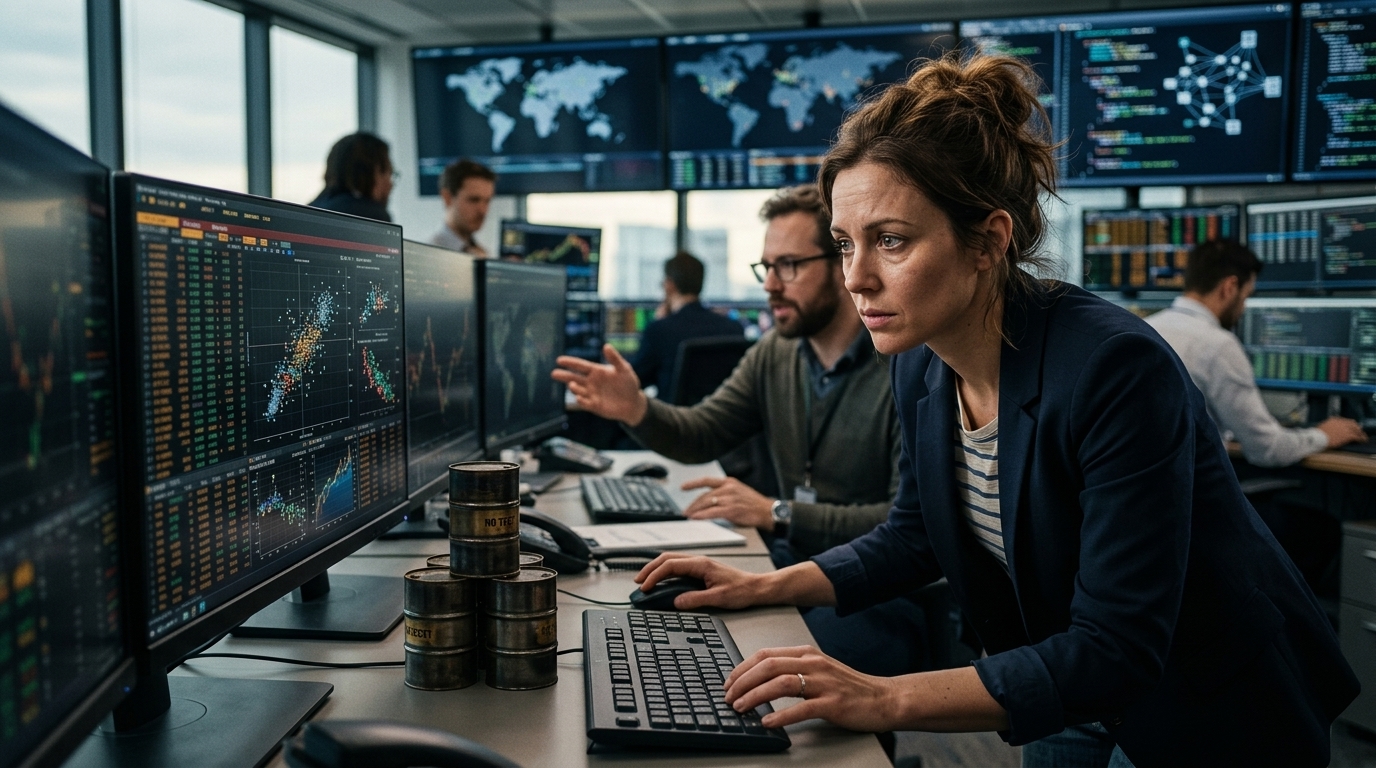
As we navigate through June 2026, the global economic landscape presents a striking dichotomy. On one side, the MSCI Emerging Markets Index is hitting new all-time highs, fueled by an insatiable hunger for semiconductors and Artificial Intelligence infrastructure. On the other, geopolitical instability in the Middle East, centered around the strategic Strait of Hormuz, is exerting severe pressure on oil prices and, consequently, on the national currencies of energy-dependent nations.
The Supremacy of Silicon: South Korea and Taiwan Take Center Stage
The current rally in emerging markets is not driven by traditional commodity powerhouses but by the technological prowess of East Asia. Taiwan and South Korea have emerged as the ultimate arbiters of the global economy. Companies like TSMC and SK Hynix are no longer mere corporations; they are the pillars upon which the Fourth Industrial Revolution is being built.
According to analysts, the demand for High Bandwidth Memory (HBM) chips and advanced AI processors has created a "firewall" for these markets. Despite threats to global supply chains, investors seem to prefer the security offered by technological innovation, viewing AI as a long-term source of deflationary growth that can offset rising energy costs.
"Artificial Intelligence is functioning as the new 'gold' for emerging markets, providing an escape route from traditional dependence on raw materials," notes a senior MSCI strategist.
The Shadow of Hormuz and Currency Pressures
However, the euphoria in stock markets stands in stark contrast to the anxiety in currency markets. The Strait of Hormuz, through which one-fifth of global oil consumption passes, remains a perennial flashpoint. Any escalation of tension in the region translates immediately into higher crude prices, which in turn burdens the current account balances of countries like India, Turkey, and Indonesia.
The currencies of these nations are taking a beating as central banks struggle to contain imported inflation. The strength of the US Dollar, which traditionally acts as a safe haven during geopolitical crises, further complicates the situation. Emerging economies thus find themselves in a delicate balance: benefiting from the tech boom on one hand, while being squeezed by energy costs on the other.
The Strategic Shift of Investors
We are witnessing a historic shift in how institutional investors approach emerging markets. In the past, these markets moved in tandem based on commodity prices. Today, we see a sharp decoupling. The "winners" are countries exporting technology and intellectual property, while the "losers" are those remaining tethered to fossil fuels.
- Technological Autonomy: Countries investing in data centers and AI hubs attract capital despite broader risks.
- Energy Efficiency: The transition to renewable energy is now a matter of national security and monetary stability.
- Geopolitical Risk Management: Diversifying energy transport routes is imperative for protecting national currencies.
In conclusion, AI is not just a productivity tool but an economic stabilizer in a world fraught with tension. The ability of markets to withstand pressures from the oil front will largely depend on whether technological progress can continue to generate value faster than geopolitical instability destroys it.