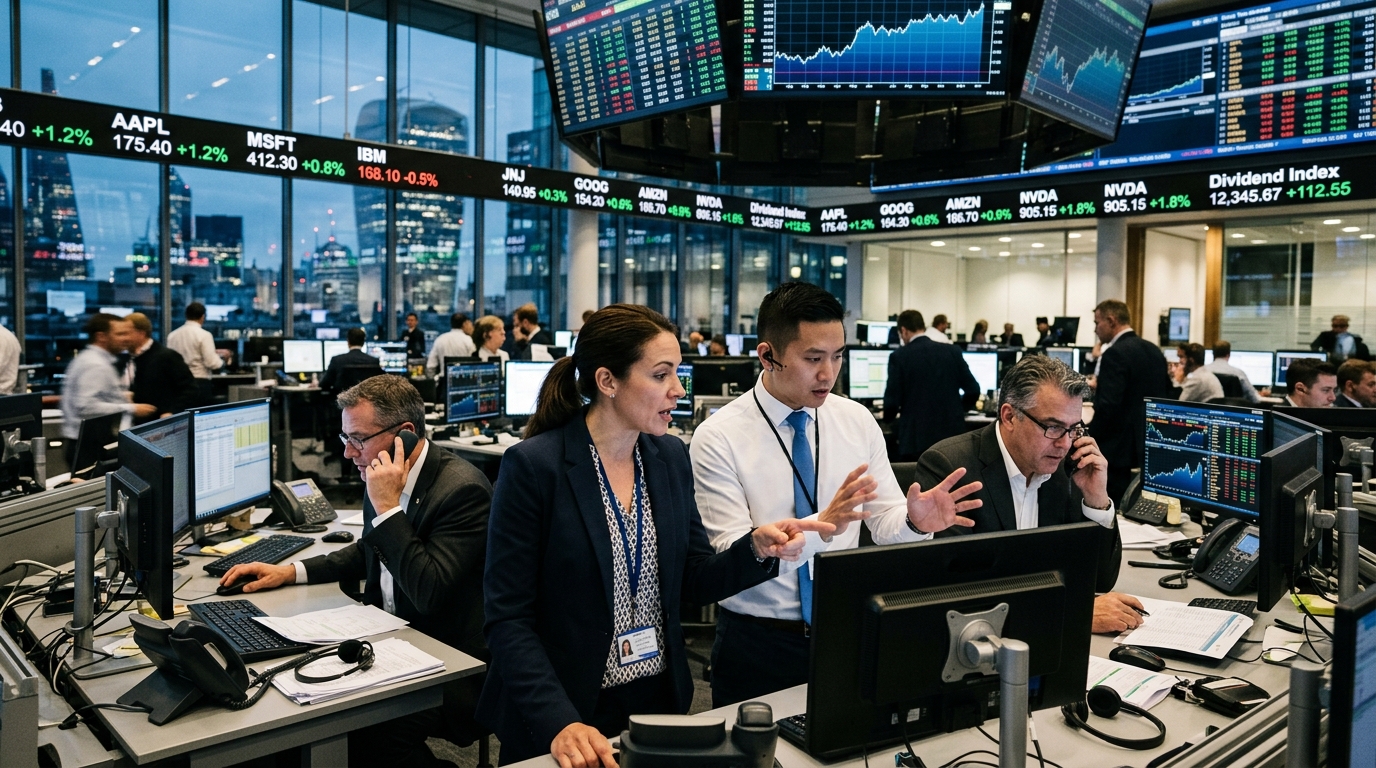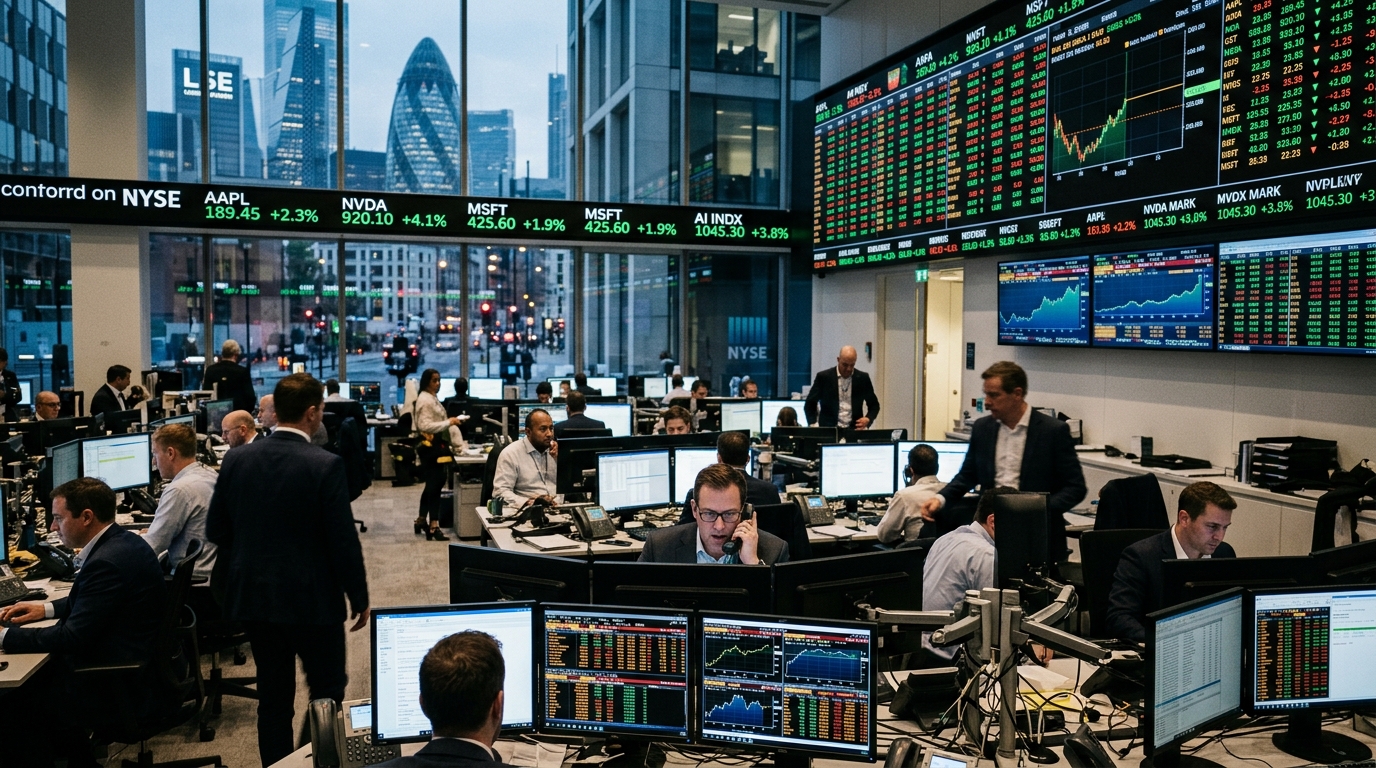
The global financial landscape of 2026 is witnessing a seismic shift as the promise of Artificial Intelligence (AI) translates into tangible profits and astronomical valuations. What was once an exclusive privilege for a handful of companies like Apple and Microsoft—the "$1 trillion club"—is now rapidly expanding, welcoming new players who form the backbone of the digital revolution. Recent reporting from NBC News highlights an undeniable reality: AI demand is not just a trend, but the primary engine driving the modern capital market.
The Rise of the Enablers and Infrastructure Giants
For decades, stock market dominance belonged to companies providing software or consumer products. Today, the focus has shifted to the hardware and infrastructure that make the training of Large Language Models (LLMs) possible. Nvidia, of course, led the way, but we are now seeing companies like Broadcom and TSMC firmly claiming their seats at the top table. Broadcom, through its expertise in custom AI chips (ASICs) and networking solutions, has become an indispensable partner for giants like Google and Meta. Its market capitalization reflects the dire need for faster and more efficient data transfer within the massive data centers proliferating globally.
On the other hand, TSMC (Taiwan Semiconductor Manufacturing Company) remains the undisputed guarantor of global production. Without its foundries, none of the trillion-dollar companies could bring their designs to life. The company's geopolitical significance, combined with its technological lead in 2nm and 3nm processes, has made it the most critical bottleneck in the global supply chain, pushing its valuation to awe-inspiring levels.
Meta’s Redemption and the Open Source Strategy
One of the most impressive recovery stories is that of Meta. After a period of skepticism due to its heavy focus on the Metaverse, Mark Zuckerberg’s company has rebranded itself as a leading AI powerhouse. Its strategy of offering the Llama model as open source has created a massive ecosystem of developers who rely on its technologies. This has not only increased its influence but also improved the efficiency of its own advertising algorithms, leading to record revenues. Meta's re-entry into the trillion-dollar club serves as proof that the market rewards rapid adaptation to AI imperatives.
- Data Center Investment: Capital expenditures (CAPEX) of major tech firms have reached unprecedented levels, with billions funneling into GPU procurement and infrastructure construction.
- The Energy Challenge: The rise in market value is accompanied by a demand for vast amounts of power, driving companies to invest in nuclear energy and renewables.
- Software Dominance: Despite the rise of hardware, Microsoft and Google continue to monopolize the integration of AI into everyday office and search applications.
Bubble Fears vs. Structural Transformation
Many analysts wonder if we are facing a new "dot-com bubble." However, the key difference lies in profitability. Unlike the year 2000, today's tech giants generate astronomical cash flows. AI demand is not based on speculation but on the real needs of enterprises for automation and data analysis.
"We are not just seeing a stock market rally, but the restructuring of the global production model,"Wall Street executives note. The concentration of wealth in these few companies does, however, raise questions about competition and social inequality, as the gap between the technology "haves" and "have-nots" widens.
In conclusion, the entry of more companies into the $1 trillion club marks the maturation of the AI market. As we move deeper into 2026, the question is no longer whether AI is useful, but who will control its infrastructure. Investors remain focused on scale and efficiency, making technological superiority the only currency that truly matters in the new digital economy.