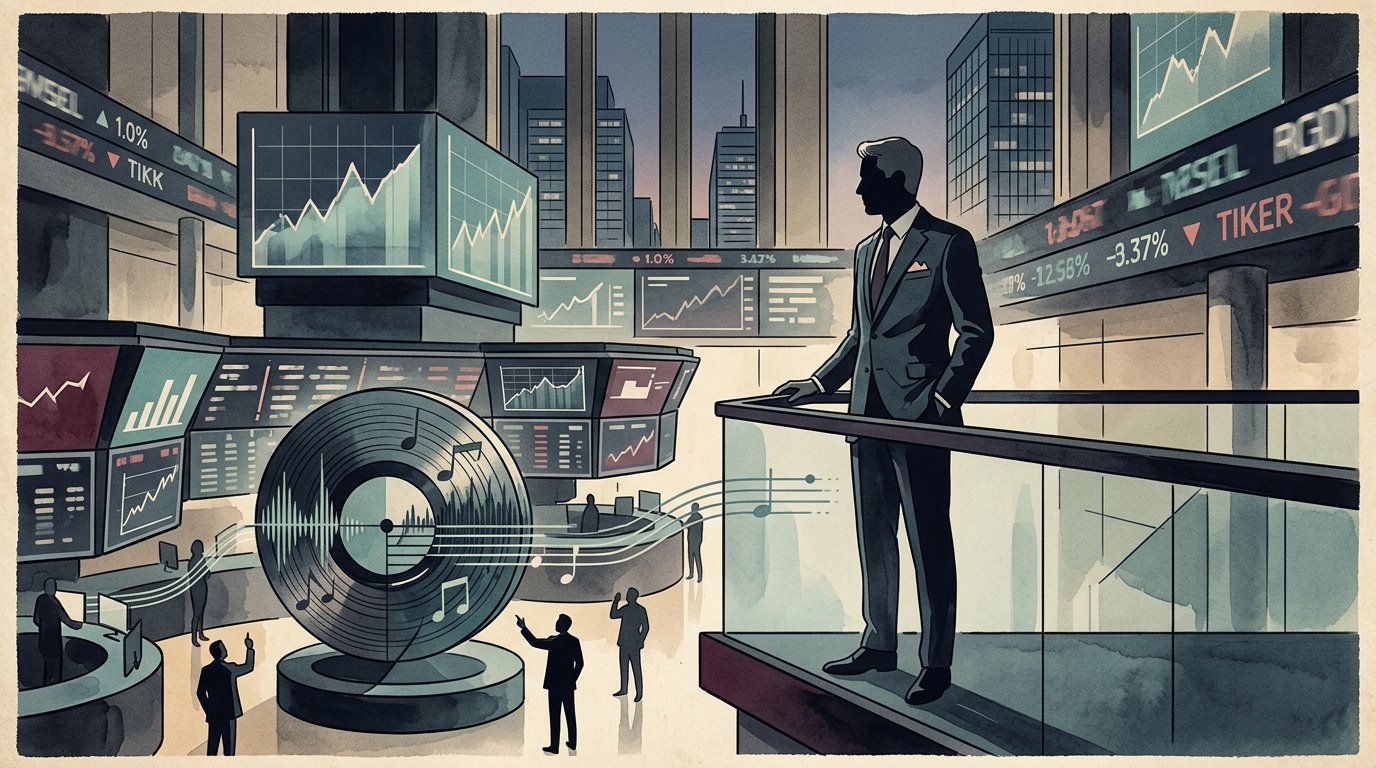
As we navigate the first half of 2026, Wall Street stands on the precipice of a tectonic shift reminiscent of the dot-com era, yet with far deeper roots in real-world economics and infrastructure. Artificial intelligence companies, which until recently survived on astronomical venture capital funding rounds, are now preparing for their grand entrance into the public markets. This move is not merely a search for liquidity; it is a declaration of maturity for an industry that promises to upend every facet of human activity.
The Protagonists of the New Era
At the center of this frenzy lies OpenAI. Despite the internal upheavals of previous years and constant shifts in its governance structure, the company behind ChatGPT remains the "holy grail" for investors. With a valuation now approaching $150 billion, its potential IPO is considered the most anticipated in the history of technology. However, OpenAI is not alone. Anthropic, which has positioned itself as the "ethical alternative" backed by giants like Amazon and Google, appears to be accelerating its path to a debut, seeking to capitalize on enterprise demand for safe and steerable AI models.
Beyond the creators of large language models (LLMs), infrastructure players like Databricks and CoreWeave are the unsung heroes of this period. Databricks, with its "lakehouse" platform that merges data warehousing and AI, is expected to be one of the market's most stable pillars. Investors view these companies as the "picks and shovels" of the modern gold rush, considering them less risky than companies that rely solely on consumer-facing content consumption.
The Profitability Challenge and the Regulatory Maze
Despite the excitement, the road to Wall Street is not paved with rose petals. 2026 marks the year where "promise" must be converted into "profit." Investors are no longer satisfied with impressive demos. They demand sustainable profit margins, especially considering the massive operational costs of data centers and the energy consumption required for model training. Profitability remains the big question mark for many of these firms, which continue to "burn" billions of dollars every quarter.
Furthermore, the regulatory landscape has become exceedingly complex. The full implementation of the EU AI Act and new guidelines from the US administration have created a compliance framework that increases costs. Companies seeking to go public must prove not only their technological superiority but also their ability to navigate legal minefields involving copyright, data protection, and the mitigation of algorithmic bias.
Why 2026 is the Decisive Moment
The timing is no coincidence. Following a period of high interest rates that constrained high-risk investments, the global economy is showing signs of stabilization. The need for fresh capital is imperative, as the race to acquire the latest generation of Nvidia semiconductors and build proprietary infrastructure requires billions. Venture capitalists are also pushing for exits, as their capital has been locked up for over five years in some instances.
- OpenAI is targeting a record valuation that could exceed $150 billion.
- Anthropic attracts institutional investors with an emphasis on corporate governance and safety.
- Databricks is poised to dominate the enterprise data sector.
- CoreWeave is expanding cloud infrastructure to meet the insatiable demand for GPUs.
In conclusion, the upcoming IPOs will serve as the ultimate litmus test for artificial intelligence. If the markets welcome these companies with enthusiasm, a new era of economic growth will begin. However, if expectations are frustrated, we may face a sharp correction that will affect the entire tech sector for the next decade. Wall Street is no longer just buying code; it is buying the future of global productivity.