In an era where horsepower is being eclipsed by processing power, the announcement of the expanded partnership between Stellantis and Qualcomm is not merely corporate news, but a defining milestone for the future of global mobility. As of May 2026, the transition to Software-Defined Vehicles (SDVs)—cars whose core functionalities are dictated primarily by software—has become the ultimate survival objective for legacy automakers competing with Tesla and the rising giants from China.
The Strategic Core: Snapdragon Digital Chassis
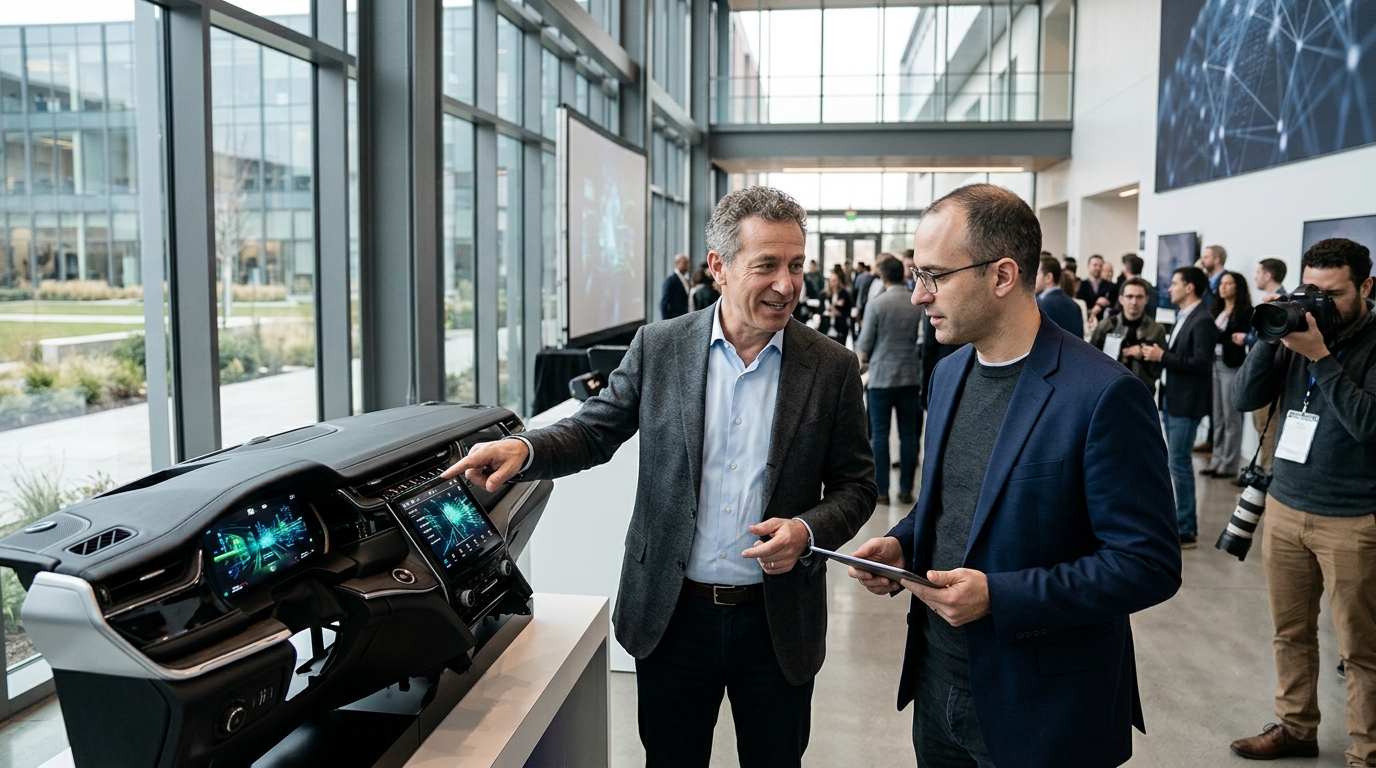
The collaboration centers on the integration of Qualcomm’s Snapdragon Digital Chassis across the entire portfolio of Stellantis’s 14 iconic brands, ranging from Peugeot and Fiat to Jeep and Maserati. Nakul Duggal, Qualcomm’s head of Automotive, Robotics, and IoT, emphasized that this move allows Stellantis to "modernize technology across the board," providing a unified architecture that replaces the dozens of fragmented Electronic Control Units (ECUs) found in older vehicle generations.
The Snapdragon Digital Chassis is far more than a simple processor; it is a comprehensive ecosystem comprising Snapdragon Cockpit (for infotainment), Snapdragon Ride (for autonomous driving), and Snapdragon Connectivity (for 5G and cloud integration). This consolidation enables Stellantis to deliver over-the-air (OTA) updates, allowing vehicles to evolve and gain new features years after leaving the showroom—much like a modern smartphone.
Automation and the Speed of Innovation
A primary pillar of this partnership is the acceleration of autonomous driving systems. Stellantis, under the leadership of CEO Carlos Tavares, has targeted the implementation of Level 3 autonomy—where the driver can legally disengage from the road under specific conditions—at scale by 2027. Qualcomm’s expertise in AI and real-time data processing is the catalyst needed to overcome the technical hurdles that have previously kept high-level automation in the experimental phase.
"The ability to move fast as the automation and self-driving landscape grows is what will separate the winners from the losers in the next decade," Duggal noted during the announcement.
Stellantis is investing billions into three proprietary software platforms: STLA Brain, STLA SmartCockpit, and STLA AutoDrive. Qualcomm provides the high-performance hardware substrate upon which these platforms reside, ensuring the computational headroom necessary for intensive machine learning tasks and complex sensor fusion.
Economic Realities and the Data Frontier
For Stellantis, this alliance carries profound economic implications. Utilizing a common technological foundation across diverse brands yields massive economies of scale, reducing R&D overhead. Furthermore, it paves the way for recurring revenue models through software-as-a-service (SaaS). Imagine a Maserati owner opting to "unlock" high-performance track modes or advanced AR-navigation for a monthly fee, directly through the vehicle's interface.
However, this digital revolution raises critical questions regarding cybersecurity and data privacy. As vehicles become data-gathering hubs—tracking location, driving behavior, and even biometric health—the responsibility of companies like Stellantis and Qualcomm toward the consumer increases exponentially. Their success will be measured not just by the speed of their silicon, but by the robustness of their digital ethics and security protocols.
Conclusion: The Connected Horizon
The Stellantis-Qualcomm expansion signals the definitive end of the automotive industry as a closed mechanical club. Today, it is a frontier of high-tech engineering. For the driver, this translates to safer journeys, more intuitive interfaces, and a user experience that mirrors a digital office more than a traditional cabin. The challenge for Stellantis remains to preserve the distinct "soul" of its historic brands while transforming them into supercomputers on wheels. In the race for the future, the engine is no longer the heart of the car; the software is.