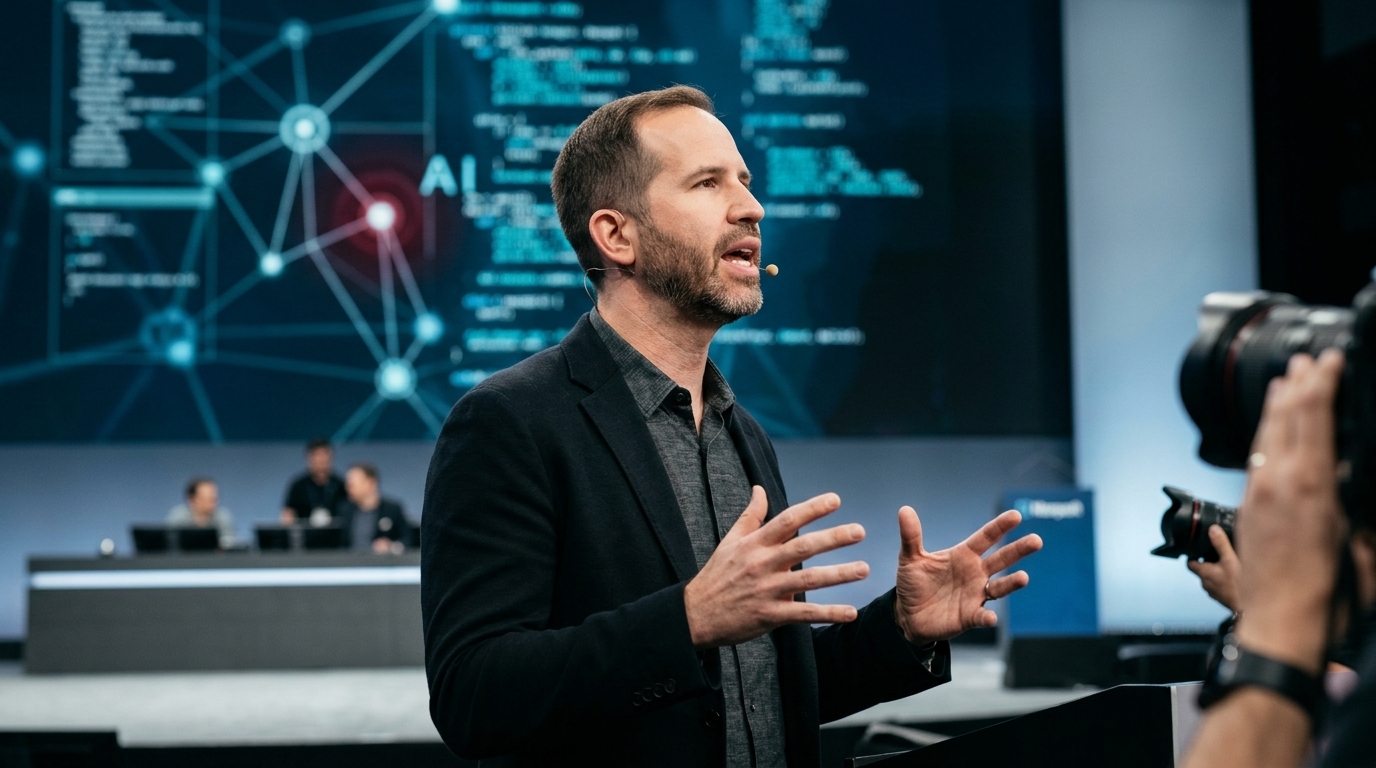
The announcement of the departure of S&P Global’s Market Intelligence chief is more than just a routine executive shuffle; it is the prelude to a deep and radical restructuring of one of the world’s most powerful pillars of financial information. As we progress through 2026, S&P Global appears to be moving away from the traditional model of raw data delivery, pivoting its entire resource base toward the full integration of Generative AI across its services.
This move comes at a time when competition in the financial data sector has reached a boiling point. With Bloomberg and the London Stock Exchange Group (LSEG) investing billions into their own proprietary large language models, S&P Global recognizes that merely owning data is no longer enough. Value is shifting toward the ability to extract real-time insights, automate report generation, and predict trends through algorithms that understand the context of the global economy.
The IHS Markit Legacy and the Need for Unification
To understand today’s shift, one must look back at the monumental merger with IHS Markit, completed a few years ago. S&P Global inherited a vast ocean of data, ranging from maritime routes to detailed energy analytics. However, unifying these disparate sources into a single, user-friendly platform proved to be a significant challenge. The new leadership emerging after the current chief's exit will have the primary task of the "alchemical" conversion of these scattered data points into a unified data lake, accessible by advanced AI agents.
Analysts believe S&P Global aims to create an ecosystem where users no longer need to manually search for information across terminals. Instead, AI will act as a continuous partner, suggesting investment strategies and warning of risks before they become apparent in traditional indicators. This "proactive analysis" is the holy grail of the modern fintech industry.
Competition in the Era of Large Language Models
The departure of the Market Intelligence head coincides with growing pressure from new, AI-native players. Companies without the burden of legacy systems are developing tools that can analyze thousands of pages of corporate earnings in seconds. To maintain its dominance, S&P Global must prove that its own AI is more reliable because it is powered by its own proprietary, verified data.
- Unification of data and technology departments under a single strategic command.
- Development of specialized AI models for credit rating assessments based on alternative data.
- Focus on user experience through Natural Language Processing (NLP).
- Strengthening partnerships with cloud providers to support the massive computing power required.
Challenges and Ethical Dilemmas
However, the pivot toward AI is not without risks. The financial market demands 100% accuracy. The "hallucinations" of language models could lead to catastrophic investment decisions if proper safeguards are not in place. S&P Global is challenged to balance the speed of innovation with its traditional reliability as a rating agency.
"Data is the new oil, but AI is the refinery. Without the refinery, the oil is just a messy liability,"
Furthermore, there is the issue of the workforce. This restructuring will likely mean a change in the profile of employees the company seeks. Traditional financial analysts must now possess data science skills, as their roles transform from information collectors to supervisors of algorithmic systems. The departure of the Market Intelligence chief may be just the tip of the iceberg in a series of hierarchical changes we will see in the coming months.
Conclusion: The New Era of Intelligence
In conclusion, S&P Global stands at a crossroads. The decision to "reorient" its focus on AI is not a choice but a necessity for survival. In a world where information is abundant but time is scarce, the winner will be the one who provides the most valid and immediately actionable knowledge. The departure of the old guard paves the way for a new generation of leaders who understand that the future of finance is written in code.