In an era where the lines between technology, entertainment, and industrial design are increasingly blurred, an unexpected figure is stepping forward to claim a central role in the future of our commute. Will.i.am, the multi-talented frontman of the Black Eyed Peas and a seasoned tech investor, has recently unveiled his vision for the "AI Autocycle"—an autonomous vehicle aimed at radically reshaping the urban mobility landscape.
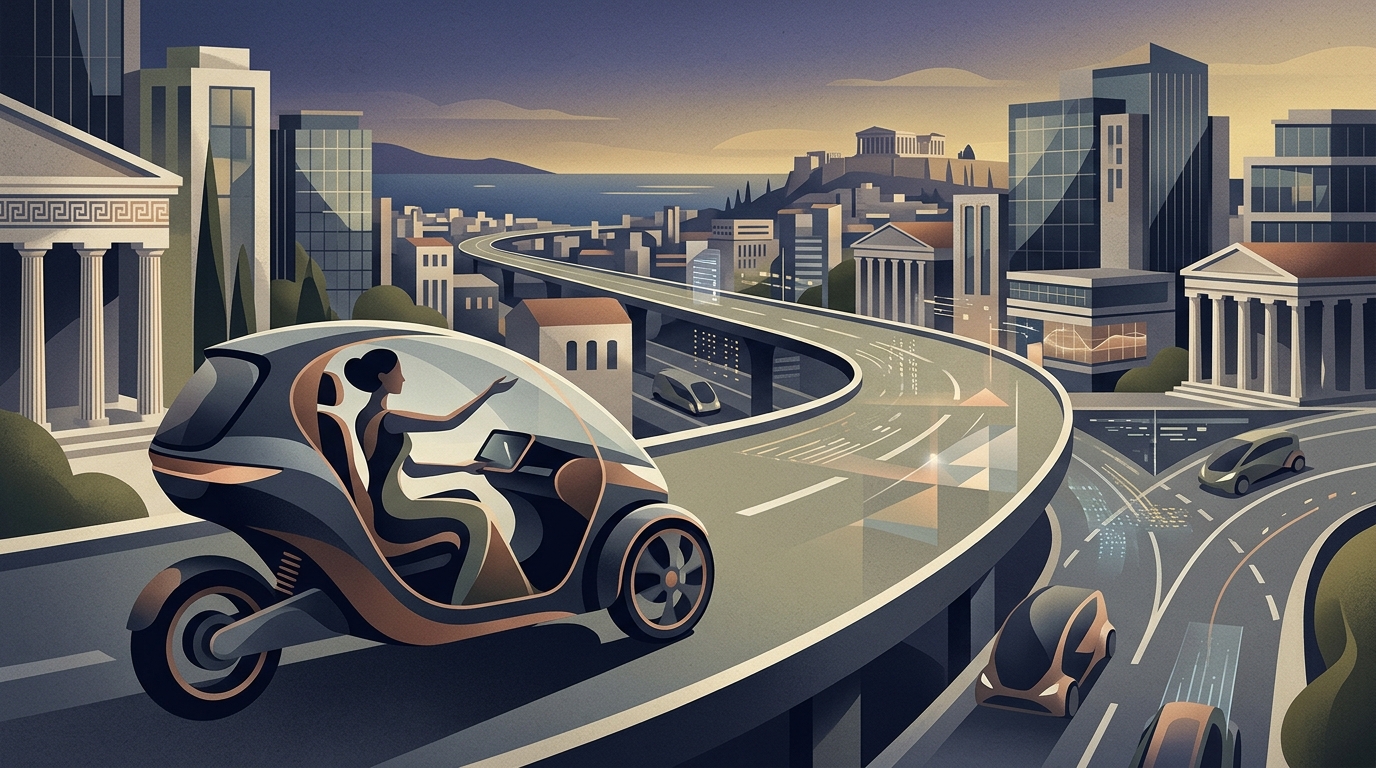
This is not merely another celebrity vanity project. Will.i.am, through his ventures and collaborations with giants like Mercedes-AMG, has spent years exploring the integration of artificial intelligence into the automotive experience. The autocycle—a three-wheeled hybrid between a car and a motorcycle—represents his answer to the escalating problem of urban gridlock in major metropolises, from Los Angeles to Athens.
The Philosophy of the AI Autocycle: More Than a Vehicle
The core argument behind the AI autocycle is spatial efficiency and navigational intelligence. Traditional cars, even electric ones, occupy excessive road space while typically carrying only a single passenger. Will.i.am’s autocycle utilizes a narrower silhouette, allowing more vehicles to flow through the streets simultaneously without causing bottlenecks. However, the true "magic" lies within the software.
The AI embedded in the vehicle goes beyond Level 4 or 5 autonomous driving. It functions as a personal assistant that predicts driver needs, optimizes routes in real-time based on city-wide traffic data, and interacts with the urban environment via V2X (Vehicle-to-Everything) communication. Will.i.am envisions an ecosystem where the vehicle learns user habits, transforming commute time from a wasted interval into a productive or recreational experience.
Technological Innovation and Urban Infrastructure
The challenge for adopting such vehicles in regions like Greece and the broader EU remains infrastructure. While our cities are designed for traditional vehicles, the AI autocycle requires smart intersections and robust 5G/6G networks to operate at peak potential. The three-wheel configuration offers stability combined with the agility needed for the narrow streets of historic city centers, where a typical SUV would struggle.
- Agility: Superior maneuvering capabilities in densely populated urban areas.
- Reduced Footprint: Occupies roughly one-third of the space of a traditional sedan.
- AI-First Design: The vehicle is built around the processor, not the internal combustion engine.
- Sustainability: Fully electric, utilizing next-generation batteries for enhanced range.
Will.i.am argues that the future is not about owning a massive vehicle but about accessing smart mobility solutions. This aligns with the "Mobility as a Service" (MaaS) model, where citizens can hail an autonomous autocycle via an app, complete their journey, and the vehicle moves on to the next passenger, drastically reducing the need for parking infrastructure.
Challenges and the Ethical Framework
Despite the excitement, questions linger. How safe is a lightweight three-wheeled vehicle in a collision with a conventional truck? Who bears liability in an accident involving AI? The European Union is working diligently on the legislative framework for autonomous driving, but the speed of technological advancement often outpaces the slow wheels of bureaucracy.
"We aren't just making a car. We are making a computer on wheels that understands the rhythm of the city," Will.i.am stated in a recent interview.
In conclusion, Will.i.am’s move signals that the automotive industry no longer belongs exclusively to traditional manufacturers. The entry of creative minds from the tech and art sectors brings a new aesthetic and a fresh approach to everyday problems. If the AI autocycle manages to navigate the hurdles of mass production and regulation, we may soon see our streets filled with vehicles that look more like a sci-fi movie set than the cars we have known for the past century.