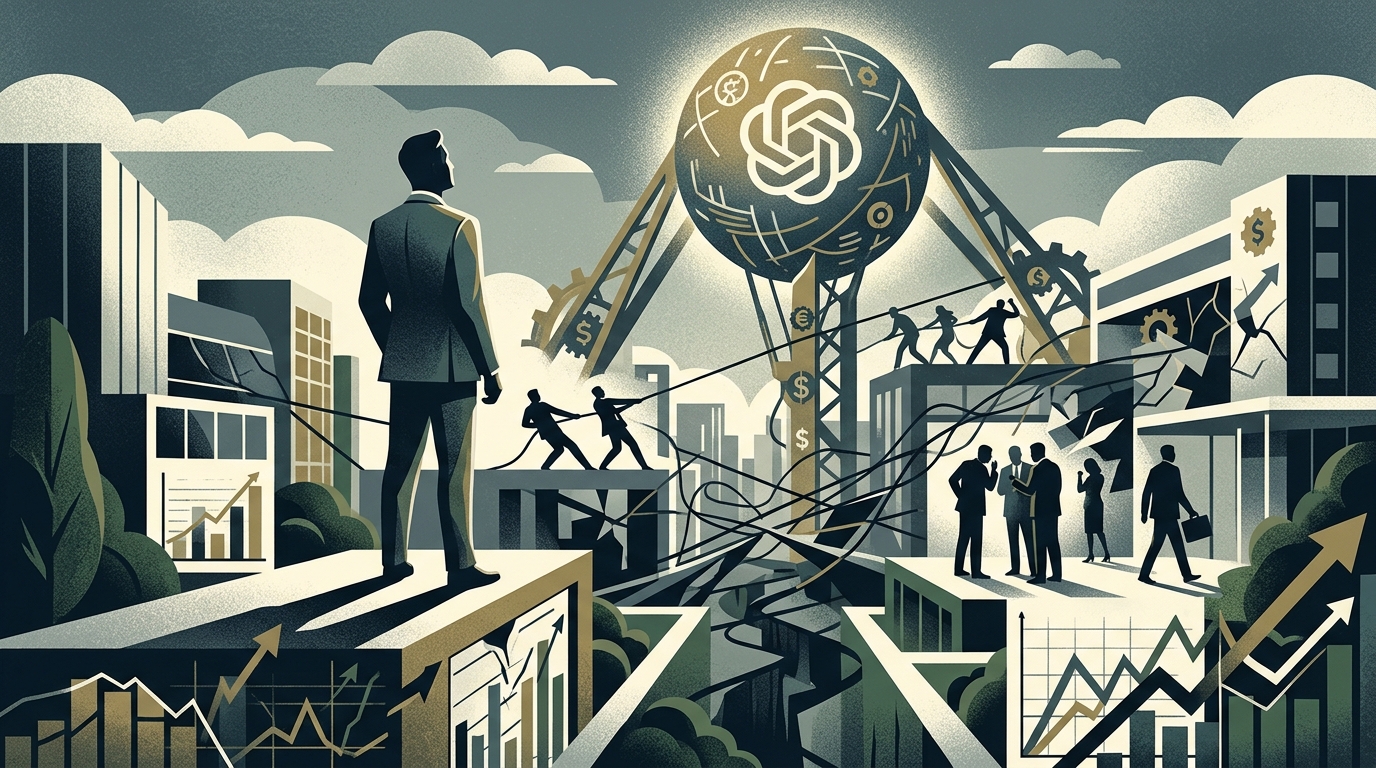
In the corridors of SoftBank’s Tokyo headquarters, the atmosphere is electric, but not necessarily with the excitement one would expect for a historic investment. Masayoshi Son, the enigmatic founder and CEO of the group, has decided to pour $60 billion into OpenAI, the company behind ChatGPT. It is a move that will either solidify SoftBank as the ultimate sovereign of the Artificial Intelligence era or lead it into a financial abyss similar to that of WeWork.
The Vision of Singularity vs. Concentration Risk
For Son, this investment is not merely a business move; it is an existential commitment. He has repeatedly stated his belief in the arrival of Artificial General Intelligence (AGI) within the next decade, arguing that it will be 10,000 times smarter than humans. However, SoftBank’s internal analysts are expressing serious reservations. Their primary argument is "concentration risk." Committing such a staggering amount to a single entity, no matter how pioneering OpenAI is, violates the basic rules of portfolio diversification that the group promised to uphold following the failures of Vision Fund 1.
According to sources close to the management, there is growing resentment over how Son bypasses traditional due diligence processes. "Masa operates on instinct, but his instinct has cost us billions in the past," says an executive who wishes to remain anonymous. OpenAI, under Sam Altman’s leadership, is burning capital at an unprecedented rate to train its models and purchase Nvidia processors. The need for continuous funding means that $60 billion might only be the beginning.
The Shadow of WeWork and the Ghost of the Past
The comparison to WeWork is inevitable. Back then, Son was also captivated by the vision of a charismatic leader, investing billions into a company that eventually collapsed. Critics within SoftBank point out that OpenAI, despite its technological superiority, faces intense competition from Google, Meta, and Anthropic. Furthermore, the legal landscape surrounding copyright and model training remains a minefield. If OpenAI loses its dominance or faces regulatory hurdles, SoftBank will be exposed to a loss that could shake its very foundations.
- The investment represents a massive percentage of SoftBank’s available liquidity.
- Concerns persist regarding OpenAI’s governance following the 2023 board crisis.
- Reliance on ARM to fund these bets creates pressure on the semiconductor firm’s stock.
Strategy or Megalomania?
Son is no stranger to risk. His investment in Alibaba in 2000 is considered one of the most successful in venture capital history. But 2026 is a different era. Markets are more cautious, and the cost of capital is higher. Son’s "all-or-nothing" strategy clashes with shareholders' desire for stability and dividends. The question looming over Tokyo is whether Son sees something everyone else is ignoring, or if he is simply chasing a chimera in an attempt to justify his legacy before retiring.
"I don't invest in companies; I invest in the future of humanity," Son reportedly said in a recent internal meeting.
For SoftBank’s employees and investors, this "future" looks excessively expensive and dangerously uncertain. As OpenAI prepares for the next round of GPT-6 model development, the eyes of the entire financial world are fixed on the Son-Altman relationship—an alliance that could change the world or trigger one of the largest financial implosions of the century.