Salesforce Inc., the undisputed titan of the Customer Relationship Management (CRM) market for over two decades, is facing a critical turning point. The recent announcement of its financial forecasts, which came in below Wall Street expectations, was more than just an earnings miss. It served as a catalyst for a deeper debate regarding the future of the Software-as-a-Service (SaaS) model in the era of generative artificial intelligence (AI).
The Statistics of Uncertainty
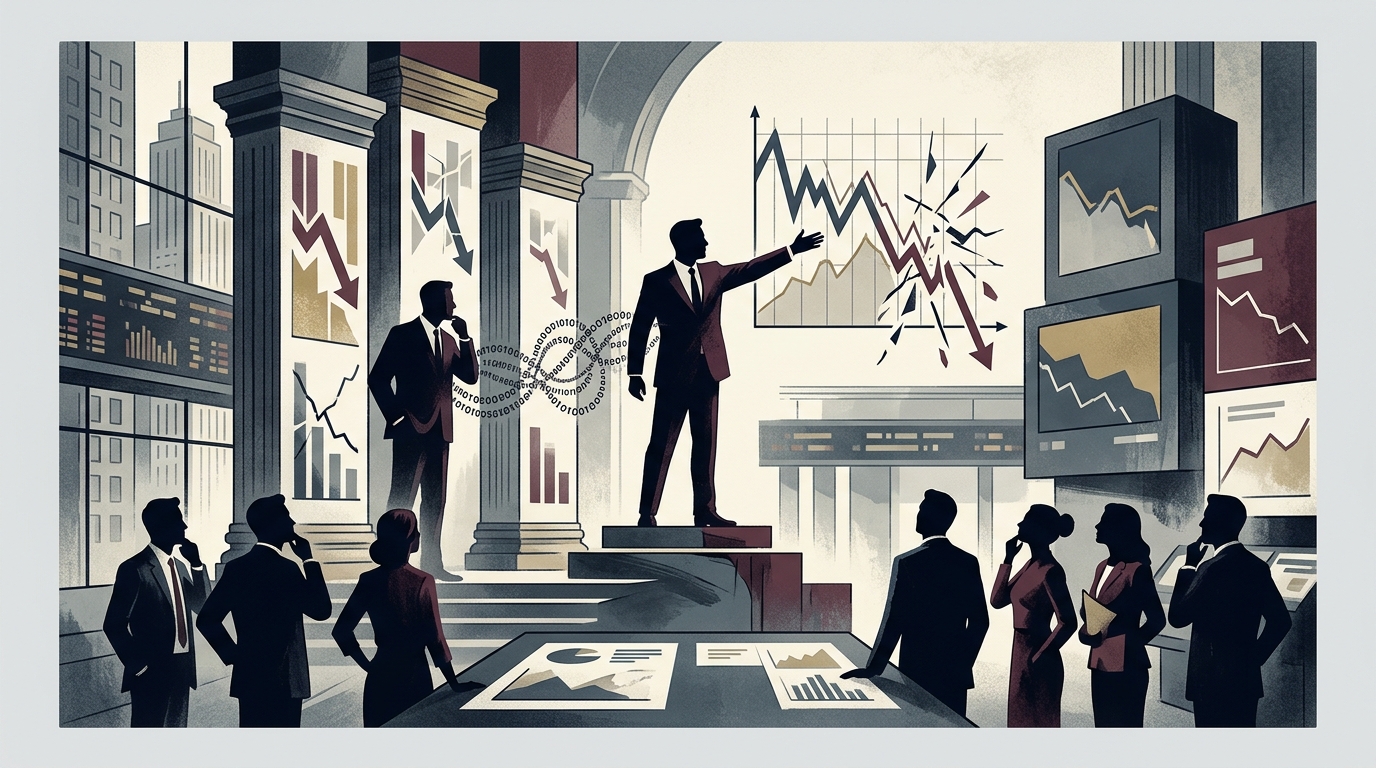
The data released on May 27, 2026, reveals a slowdown that many analysts feared but few hoped to see so soon. Salesforce projected revenue for the current quarter that fell short of average analyst estimates, leading to an immediate drop in its stock price in after-hours trading. This "lukewarm" outlook arrives at a moment when the company is striving to convince the market that AI is its next great growth engine, rather than the executioner of its traditional business model.
For years, Salesforce's growth relied on increasing seat counts and expanding subscriptions. However, as enterprises pivot toward automation, the necessity for hundreds of human accounts on a CRM platform is being called into question. If an AI agent can perform the work of ten sales representatives or support staff, the traditional per-user pricing model begins to collapse.
The AI Paradox
Marc Benioff, CEO of Salesforce, has poured billions into the "Agentforce" platform, which promises autonomous agents capable of managing tasks without human intervention. Yet, the paradox remains: the success of these tools could cannibalize the company’s core revenue streams. Investors are questioning whether Salesforce can transition fast enough from a model based on human productivity to one based on AI consumption.
- Slowing cloud software spending as budgets shift toward AI infrastructure (Nvidia, Microsoft).
- Competition from nimble startups born in the AI era that do not carry the "legacy weight" of older systems.
- Pressure to shift pricing models from subscriptions to outcome-based or consumption-based billing.
Benioff's Strategic Response
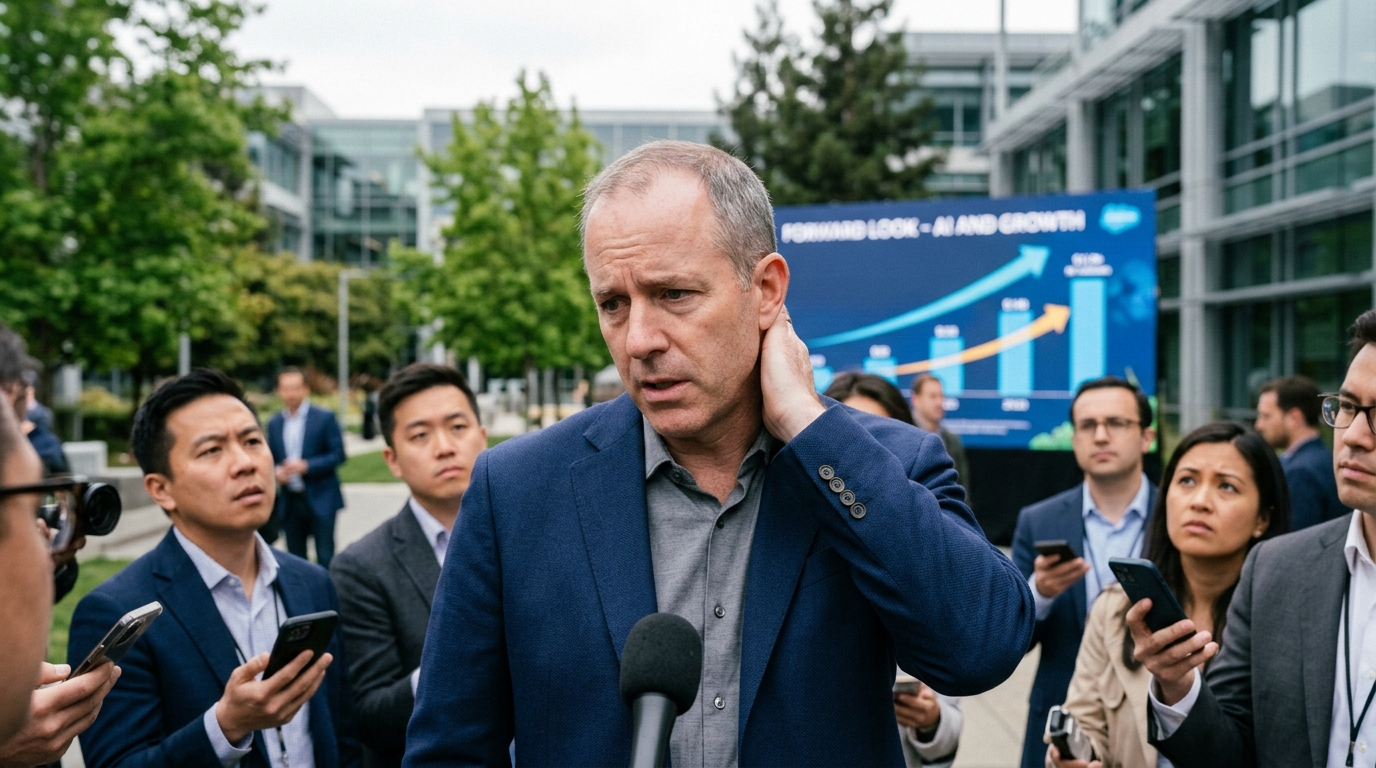
In his statements, Benioff attempted to reassure analysts by emphasizing that Salesforce possesses the most valuable asset in the AI era: customer data. Without the data stored in Salesforce's Data Cloud, large language models (LLMs) cannot provide personalized solutions to enterprises. "AI is only as good as the data that powers it," he noted emphatically.
"We are not just in a phase of product transition, but in a structural shift in how technology delivers value to businesses," industry analysts noted.
However, the market remains skeptical. The transition from SaaS to "AI-as-a-Service" carries risks for profit margins. Running AI models is more expensive than hosting simple databases, and Salesforce must prove it can maintain profitability while fundamentally reshaping its tech stack.
The Future of Enterprise Software
The Salesforce case is a harbinger for the entire software industry. Companies like Adobe, Workday, and ServiceNow are watching closely. If the industry leader struggles to translate AI into immediate revenue growth, then the "bubble" of AI expectations in software may be starting to deflate, giving way to a harsher reality.
The question that will dominate the remainder of 2026 is whether Salesforce can persuade its customers to pay more for the "intelligence" of its systems at the same time those customers are seeking to cut costs through automation. The battle for dominance in the next generation of enterprise software has only just begun, and the old strategic playbooks appear increasingly obsolete.