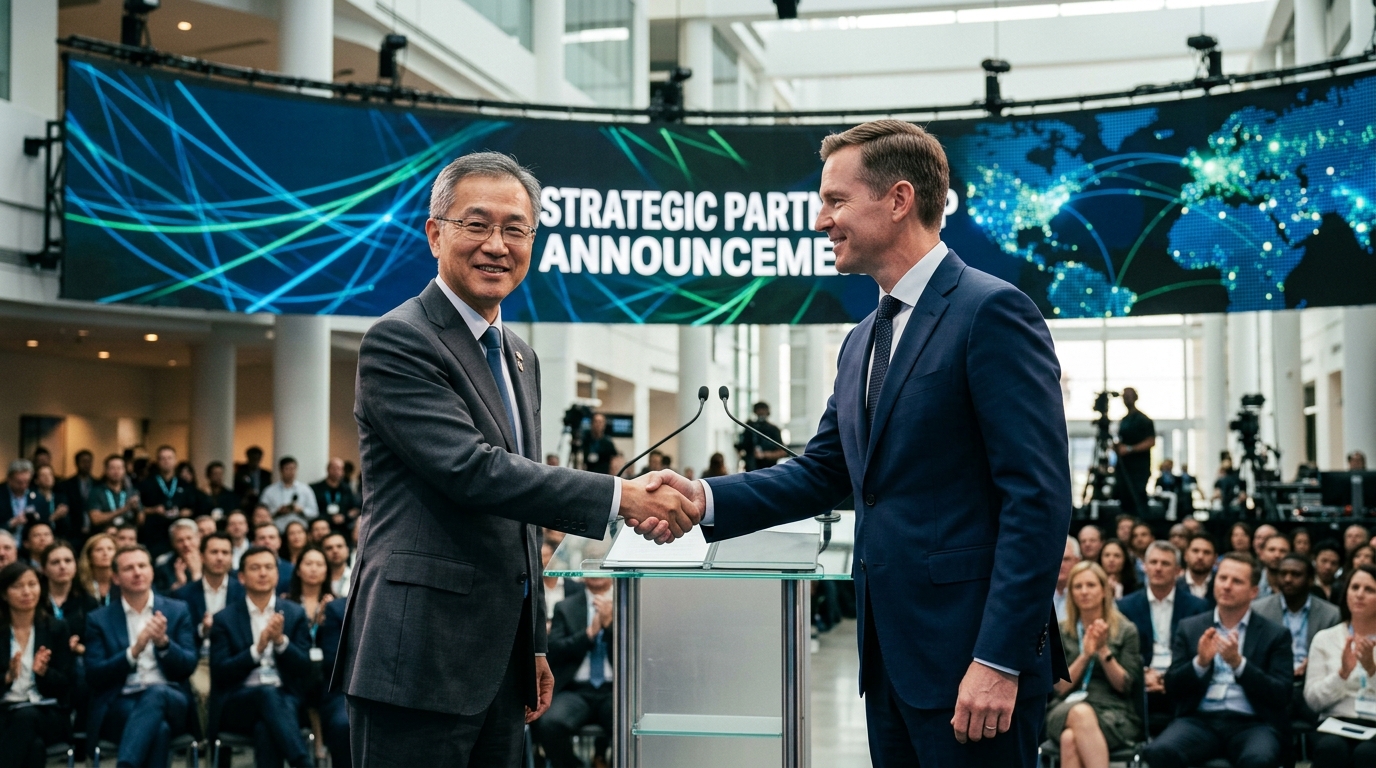
In a move poised to redraw the map of the global semiconductor market, Qualcomm, the American giant of mobile chips, has reportedly entered into a deal with ByteDance, the parent company of TikTok, to supply specialized artificial intelligence processors for its data centers. The news, initially reported by Bloomberg, marks a critical turning point for both Qualcomm, which seeks to diversify away from the smartphone market, and ByteDance, which faces constant pressure due to U.S. export restrictions.
Qualcomm's Strategic Pivot to Data Centers
For decades, Qualcomm’s name has been synonymous with the Snapdragon processors that power the world’s leading Android smartphones. However, stagnation in the global mobile market has forced the company’s management to seek new revenue streams. Artificial Intelligence (AI) provides the ideal opportunity. With this deal, Qualcomm is making a bold entry into the data center sector, a space currently dominated almost exclusively by Nvidia.
The processors Qualcomm will supply are not standard Snapdragons, but specialized chips designed for AI inference tasks. While Nvidia focuses on the training of massive models, Qualcomm is betting on the efficiency of running these models at scale. For ByteDance, which operates the world’s most sophisticated recommendation algorithms via TikTok and Douyin, the need for computing power that is both potent and energy-efficient is imperative.
ByteDance and the Search for Alternatives
ByteDance has long been in Washington’s crosshairs. Restrictions imposed by the U.S. Department of Commerce on the export of advanced AI chips (such as Nvidia’s H100) to China have created a massive gap in the company’s supply chain. Although ByteDance is developing its own chips internally, the partnership with Qualcomm allows it to maintain its competitive edge without relying solely on domestic Chinese solutions that often lag in performance.
- Reducing dependence on Nvidia and its limited supply quotas.
- Optimizing TikTok's algorithms for faster response times.
- Strengthening infrastructure for Generative AI in video content.
This move also signals that ByteDance does not intend to back down despite threats of a TikTok ban in the U.S. On the contrary, it is investing billions in hardware to ensure its technological superiority remains intact, regardless of the political climate.
Geopolitical Implications and the Regulatory Landscape
This deal moves within a "gray" legal and political area. Qualcomm is a U.S. company, and selling technology to a Chinese entity like ByteDance will be scrutinized by regulators. However, it appears that the specific chips involved in the deal do not fall under the strictest restrictions concerning high-performance chips for military use or the training of large language models.
"Technology knows no borders, but semiconductor policy has become the new Iron Curtain," industry analysts remark.
If Qualcomm can convince Washington that supplying these chips serves U.S. economic interests without compromising national security, it will pave the way for other American companies to claim a share of the massive Chinese AI market. However, the risk of a sudden change in legislation remains the biggest wildcard for the success of this partnership.
Conclusion: A New Chapter in AI
The Qualcomm-ByteDance partnership is more than just a commercial agreement. It is a statement of intent. Qualcomm wants to prove it can compete with Nvidia in the data center arena, and ByteDance wants to show that its innovation cannot be confined by geographical borders. As AI shifts from the stage of theoretical research to universal application, the battle for the hardware that powers it will only intensify, forcing companies to balance profitability with geopolitical responsibility.