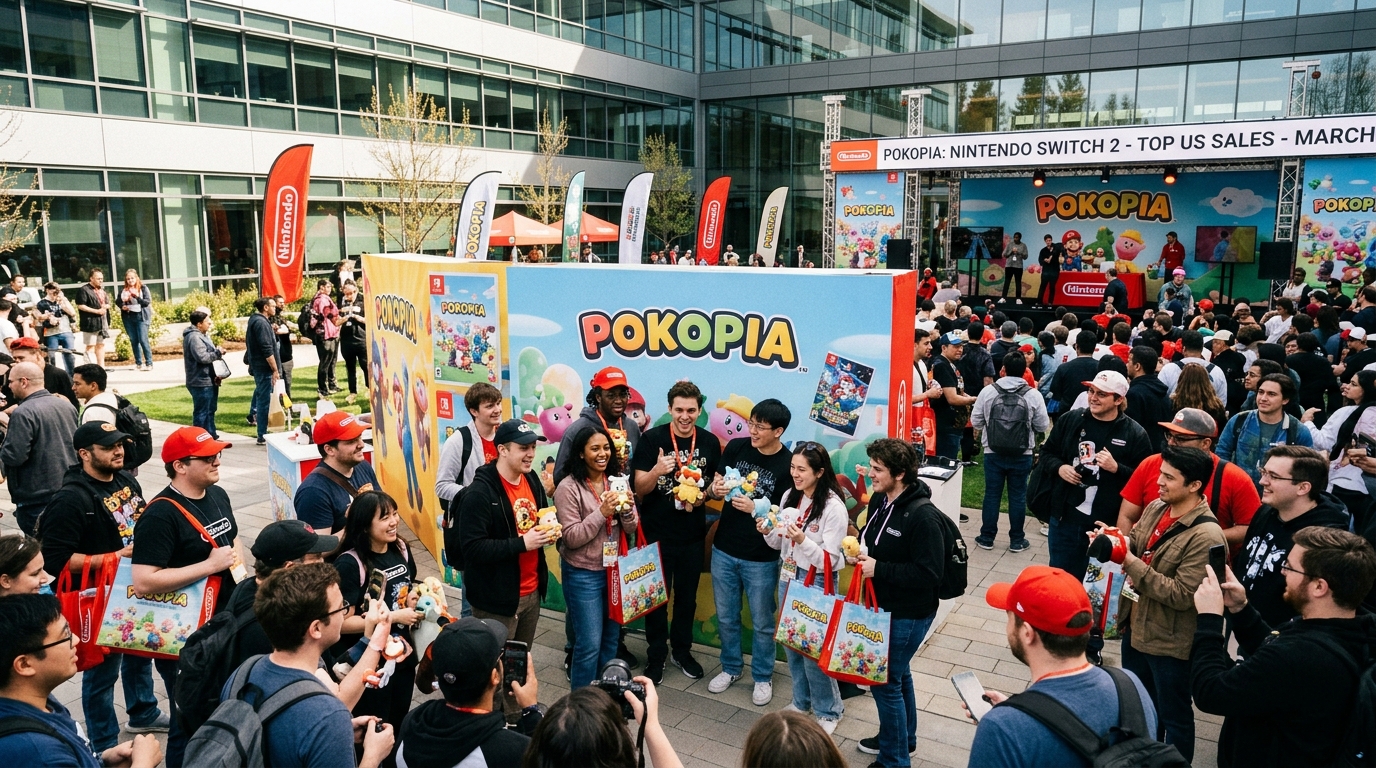
In a stunning display of market dominance reminiscent of the gaming industry's golden eras, Nintendo Co. managed to sweep the United States market during March 2026. The driving force behind this surge was none other than the highly anticipated 'Pokémon Pokopia,' a title that didn't just refresh interest in the iconic franchise but acted as the ultimate catalyst for Switch 2 hardware sales. According to the latest data from Bloomberg Tech and the NPD Group, Nintendo’s hybrid console outsold both the PlayStation 5 Pro and the latest Xbox iterations, confirming that content remains the undisputed king of the industry.
The Pokopia Catalyst: More Than Just a Game
'Pokémon Pokopia' represents a structural shift in how Game Freak and Nintendo approach their flagship franchise. After years of experimenting with open-world mechanics, Pokopia delivered a visual fidelity many thought impossible for a handheld device, fully leveraging the NVIDIA DLSS technology embedded in the Switch 2. The game's success wasn't limited to traditional fans; it attracted a new generation of players through innovative social features and a dynamic ecosystem that bridges the gap between the console and mobile devices.
Analysts point out that March is traditionally a 'lull' period for hardware sales as consumers wait for summer announcements. However, Nintendo’s strategy to release a system-seller in this window proved masterstroke. Demand for the Switch 2 spiked by 45% compared to February, with inventories at major retailers like Best Buy and Amazon selling out within hours of restocking. The 'Pokopia flurry,' as retailers are now calling it, created a scarcity phenomenon that further fueled consumer desire.
The Strategic Superiority of the Switch 2
While its competitors focus on raw processing power and 8K graphics, Nintendo continues to bet on versatility and accessibility. The Switch 2, with its upgraded OLED screen and full backward compatibility, has become the de facto choice for families and hardcore gamers alike who seek AAA quality on the go. The March success indicates that the market is not saturated with the hybrid model; on the contrary, it is hungry for refined experiences that do not sacrifice mobility.
Furthermore, Nintendo’s supply chain appeared more resilient in 2026 compared to previous years. Despite global geopolitical tensions affecting semiconductor production, the Japanese giant managed to secure a steady flow of units for the US market, avoiding the massive shortages that defined the original Switch launch. This availability, combined with marketing focused on the 'next generation of Pokémon,' created the perfect conditions for March's dominance.
Economic Implications and Future Outlook
Nintendo’s financial resurgence through the Switch 2 has broader implications for the tech sector. The company’s stock rose 8% on the Tokyo Stock Exchange immediately after the US sales figures were released. Investors now view the Switch 2 not just as a console, but as a service platform. The Nintendo Switch Online subscription service also saw record sign-ups, as Pokopia requires an active connection for many of its cooperative features.
Looking ahead, the challenge for Nintendo will be maintaining this momentum. With Sony reportedly preparing a new handheld device and Microsoft bolstering Game Pass, competition will intensify in the second half of 2026. However, the 'moat' provided by a brand like Pokémon is difficult to breach. Nintendo’s ability to translate technological nostalgia into modern consumer necessity remains its greatest asset. March 2026 will go down in history as the month Nintendo proved that, in the world of pixels, imagination and timing always trump teraflops.