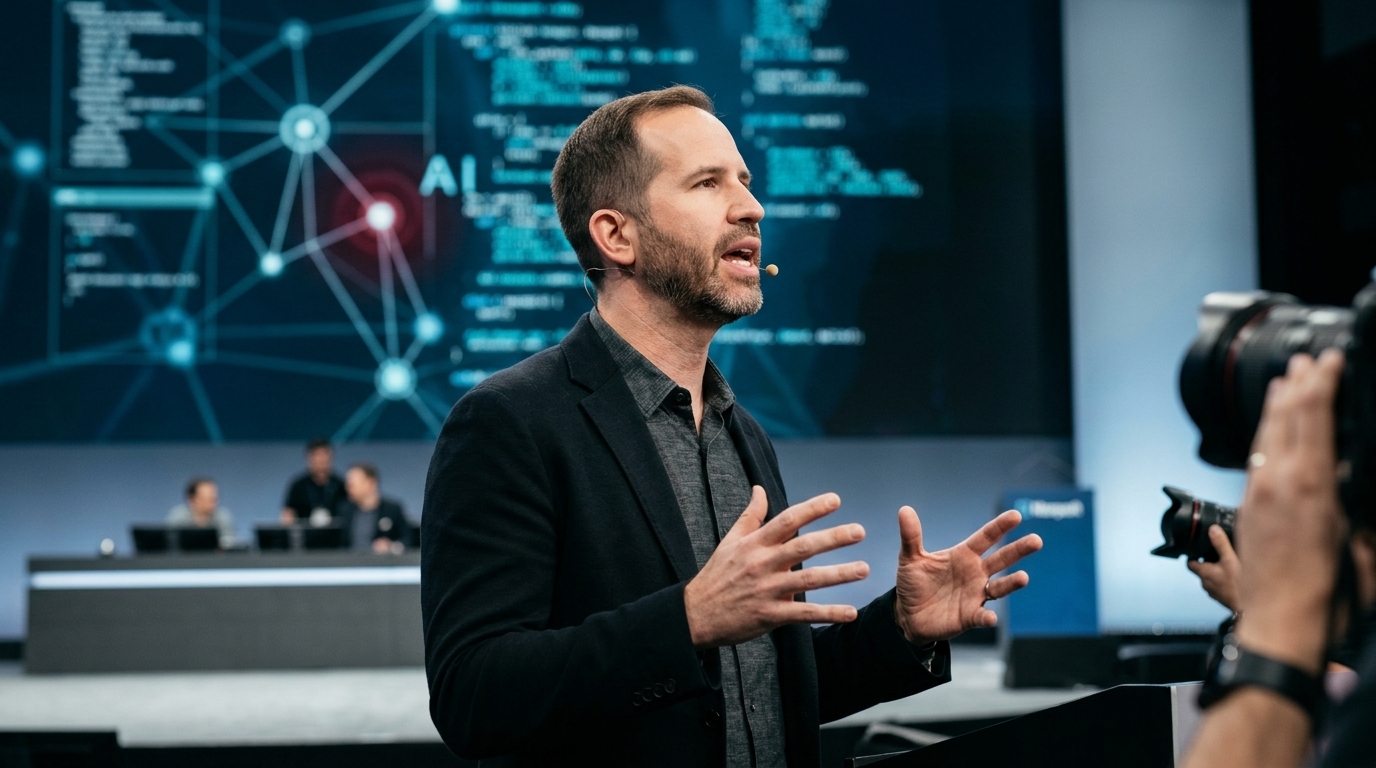
As we navigate the first half of 2026, the artificial intelligence landscape bears little resemblance to the chaotic "golden age" of 2023. The market has matured, investors are now demanding profitability over promises, and one question looms over Silicon Valley: Has OpenAI missed the ideal window for its Initial Public Offering (IPO)? The company that ignited the revolution with ChatGPT appears trapped between its insatiable need for capital and a complex corporate structure that unnerves institutional investors.
The Private Valuation Trap
For years, OpenAI enjoyed the privilege of raising billions from private investors and Microsoft, effectively shielding itself from the scrutiny of public markets. However, this strategy has created a "golden cage." With its valuation reaching astronomical levels in private funding rounds, a public listing would require an even higher price tag to be deemed a success. In an environment where interest rates remain high enough to discourage excessive risk-taking, Wall Street views companies that "burn" billions on model training without a clear path to net profitability with growing skepticism.
OpenAI is no longer the only game in town. Anthropic, Google with Gemini, and Meta with Llama have significantly narrowed the technological gap. When a technology becomes commoditized, profit margins shrink. Investors are questioning whether OpenAI can maintain its first-mover advantage or if it will end up as the "Netscape" of AI—a pioneer that blazed the trail but failed to dominate the final commercial landscape.
The Governance Stumbling Block
Perhaps the greatest obstacle to an OpenAI IPO is not its balance sheet, but its very soul. The hybrid structure between a non-profit parent and a for-profit subsidiary remains a legal enigma. Public markets loathe ambiguity. Shareholders of a listed company demand that the board of directors acts primarily in their financial interest. In OpenAI's case, a charter that prioritizes "humanity's safety" over profits creates a fundamental friction with the logic of the stock market.
"OpenAI is trying to walk a tightrope: it wants the capital of capitalism but the moral autonomy of a research lab. Ultimately, Wall Street will force it to choose," notes a senior analyst at Goldman Sachs.
The governance crisis witnessed in late 2023, involving the temporary ousting of Sam Altman, left permanent scars. Although the company stabilized, the trust of large-scale institutional investors—such as pension funds and sovereign wealth funds—has been shaken. An IPO requires a level of transparency that OpenAI, citing competition and safety concerns, has been hesitant to provide.
The Microsoft Dependency and the Road Ahead
Another critical factor is the relationship with Microsoft. OpenAI relies heavily on Azure infrastructure for its survival. To prospective investors, OpenAI can sometimes look more like a sophisticated R&D arm of Microsoft than a truly independent entity. If Microsoft decides to pivot toward its own in-house models—a move already rumored in the halls of Redmond—OpenAI's valuation could evaporate overnight.
2026 is the year of reckoning. Other industry players, such as Databricks or even smaller specialized AI startups, are preparing to go public with more transparent business models. If OpenAI delays further, it risks seeing the "window of opportunity" slam shut as market liquidity flows toward more predictable and manageable players. The challenge for Altman is to convince the world that OpenAI is not just a research miracle, but a sustainable, profitable wealth-generation machine.
- The constant need for capital to fund GPT-6 and GPT-7 makes an IPO almost inevitable.
- Regulators in the US and EU are pushing for transparency, which a public listing would accelerate.
- Venture capital exhaustion means the sources of "easy" private money are drying up.
In conclusion, OpenAI hasn't missed the train yet, but the speed of the market means it can no longer afford to wait on the platform. Transitioning into a public company will be the hardest test in its history—a process that will force it to shed its idealistic mantle and embrace the cold reality of corporate accountability.