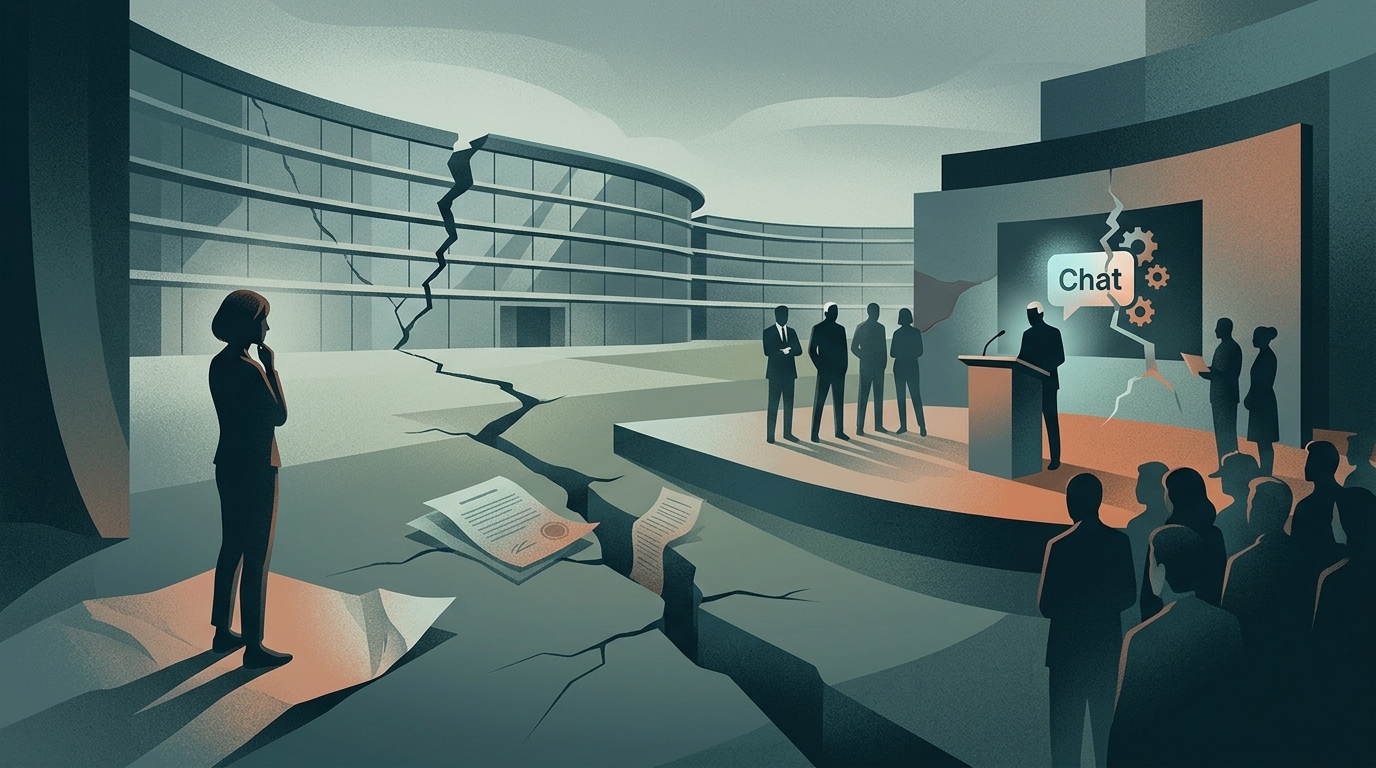
In the high-stakes corridors of Silicon Valley, alliances are often as brittle as the stock gains they promise. Today, May 15, 2026, the high-profile partnership between Apple and OpenAI appears to be at a breaking point. Following a bombshell court order in Elon Musk’s ongoing legal crusade against OpenAI, internal communications are surfacing that suggest the AI pioneer feels "burned" and "deceived" by how Apple has integrated ChatGPT into its ecosystem.
The revelation, first detailed by Ars Technica, stems from a judge's order requiring Apple to hand over internal messages regarding its secretive deal with Sam Altman’s firm. These documents, which Musk has relentlessly pursued, seem to validate months of industry whispers: OpenAI believes Apple intentionally hamstrung its technology to protect its own dominance over the user interface and brand identity.
A Clash of Philosophies: Agility vs. The Walled Garden
The friction lies at the heart of two diametrically opposed corporate cultures. OpenAI views ChatGPT as a nascent universal operating system—an intelligence layer that should be deeply embedded and proactive. Apple, conversely, remains the ultimate practitioner of the "walled garden" philosophy. To Tim Cook’s team, ChatGPT was never meant to be the star; it was a safety net, a secondary option triggered only when Apple’s native Siri reached its limits.
Insiders at OpenAI have reportedly described the integration as "crappy" and "subpar." They point to restrictive latency caps, limited access to system-level data, and a user experience that requires constant, friction-heavy confirmations before the AI can act. OpenAI leadership feels this implementation devalues their product, making it look sluggish and disconnected rather than the cutting-edge tool it is. "They didn't give us a seat at the table," one source reportedly noted, "they gave us a stool in the corner of the room."
The Musk Factor: Prying Open the Black Box
Elon Musk’s role in this unfolding drama adds a layer of strategic irony. Musk, who co-founded OpenAI before becoming its most vocal critic, argues that the company has betrayed its non-profit roots for corporate gain. By forcing the disclosure of Apple’s internal communications, Musk aims to prove that OpenAI has become a mere "subcontractor" to Big Tech, stripped of its autonomy and original mission.
The judicial decision to pierce the veil of Apple’s secrecy is a rare move. Typically, partnership agreements of this magnitude are protected by ironclad non-disclosure agreements. However, the court’s interest in potential anti-competitive behavior and the formation of AI oligopolies has cleared the way for transparency. These documents are expected to reveal whether Apple used OpenAI as a "Trojan horse" to buy time while it refined its own proprietary "Apple Intelligence" models.
Economic Implications and the Future of AI Alliances
For OpenAI, the Apple deal was supposed to be the ultimate distribution play, granting access to billions of devices. But if the user experience is mediocre, the ChatGPT brand risks being associated with frustration rather than innovation. Furthermore, the financial terms remain a point of contention. If, as some reports suggest, Apple is not paying a direct licensing fee but instead offering "exposure" as compensation, OpenAI has every reason to feel its intellectual property is being exploited.
- Apple reportedly restricted ChatGPT's access to real-time user data under the guise of privacy, significantly limiting the AI's utility.
- OpenAI fears that Apple is merely using them as a placeholder until their internal LLMs are ready to take over the entire stack.
- The court-ordered documents may reveal exclusivity clauses that prevent OpenAI from striking deeper integrations with competitors like Samsung or Google.
As AI continues to redefine our relationship with technology, this conflict highlights a critical power struggle: Who will control the interface of the future? Is it the company that builds the hardware, or the company that builds the brain? For now, Apple holds the keys to the kingdom, leaving OpenAI to wonder if its deal with the Cupertino giant was a masterstroke or a massive tactical error.