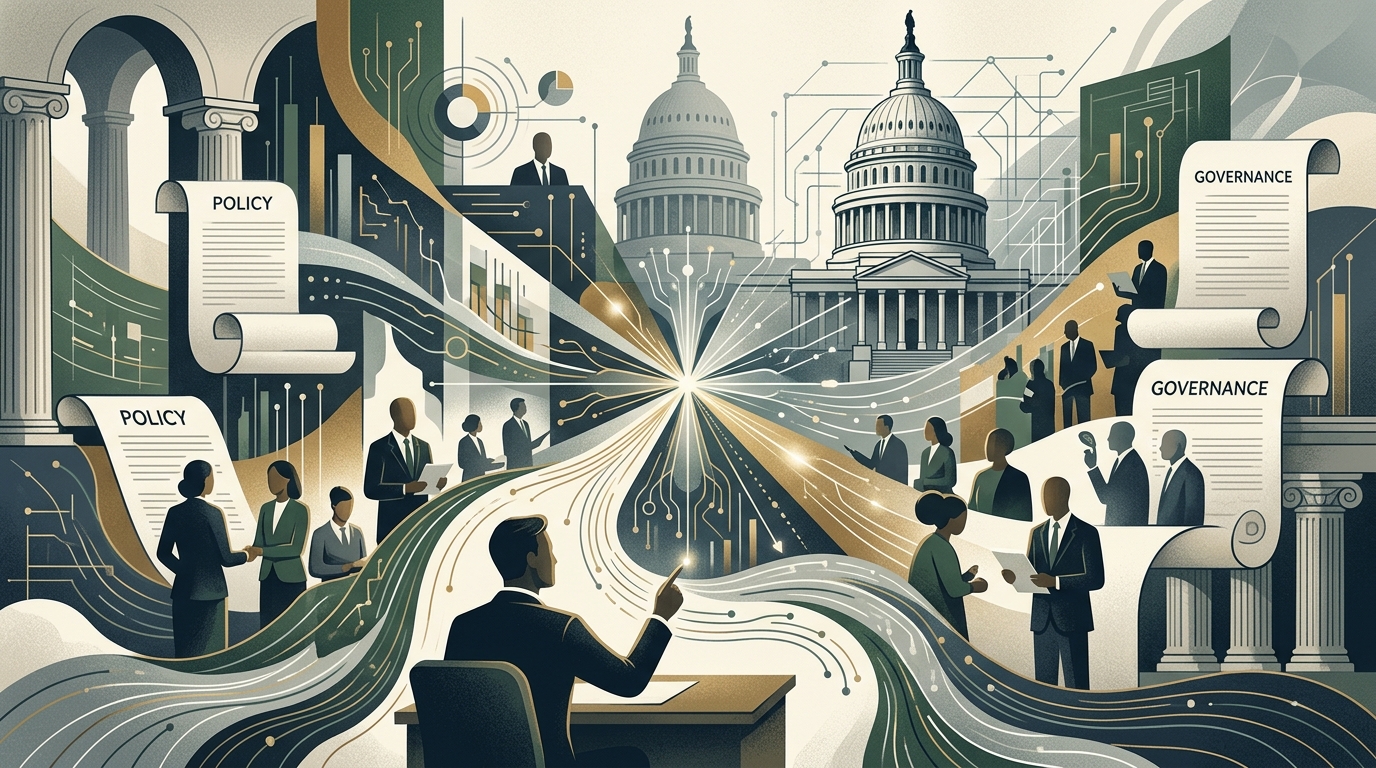
On May 15, 2026, the landscape of American governance underwent a seismic shift. In a landmark announcement, officials from the General Services Administration (GSA) confirmed that the OneGov platform is now positioned to serve nearly 3.4 million federal employees, granting them direct access to Artificial Intelligence (AI) tools. This is far more than a mere software rollout; it represents a structural transformation into what analysts are calling "Bureaucracy 2.0."
The OneGov initiative functions as a centralized hub—a digital marketplace and a secure workspace where civil servants can leverage Generative AI for drafting documents, analyzing vast datasets, and enhancing citizen services. This move follows President Biden’s Executive Order on the Safe, Secure, and Trustworthy Development and Employment of Artificial Intelligence, which laid the groundwork for integrating these technologies into the core of government operations.
Democratizing Technology and Securing the Perimeter
The primary hurdle for AI adoption in government has always been security. How can an employee at the Department of Defense or the IRS utilize a large language model without risking the exposure of sensitive state secrets or citizens' private data? The GSA’s solution lies within the rigorous framework of the Federal Risk and Authorization Management Program (FedRAMP).
The OneGov platform integrates tools that have already received necessary certifications, creating a "walled garden" or sandbox environment. This allows users to experiment and produce work without their data being used to train public AI models, a common concern with consumer-grade versions of ChatGPT or Claude. The GSA acts as the gatekeeper of trust, ensuring that innovation does not come at the expense of national security.
From Theory to Practice: The Civil Servant’s New Toolkit
What does providing AI access to 3.4 million people actually look like in practice? The applications are as diverse as the agencies themselves. In procurement, AI can parse through thousands of pages of contracts in seconds, identifying anomalies or cost-saving opportunities. In social services, it can expedite claim processing, reducing the chronic backlogs that frustrate the public.
- Automated Reporting: Drafting initial versions of internal reports and briefing memos.
- Data Analysis: Processing statistical data for real-time policy modeling and evidence-based decision making.
- Translation and Accessibility: Delivering government services in multiple languages with unprecedented accuracy and speed.
However, the challenge is as much educational as it is technical. The GSA has launched a massive upskilling initiative, as AI literacy is rapidly becoming a non-negotiable skill for advancement within the federal hierarchy.
Economic Implications and Operational Efficiency
The sheer scale of OneGov is expected to ripple through the technology market. As the world’s largest buyer of IT services, the U.S. government is using its purchasing power to enforce standards of ethics and transparency among AI vendors. By consolidating access through a single platform, the government achieves economies of scale, driving down the per-user cost and preventing the fragmentation of legacy systems.
"We are not just offering a tool; we are providing a new infrastructure for 21st-century governance," a senior GSA official stated during the rollout briefing.
In conclusion, the expansion of OneGov is a bold bet on the future of the state. If successful, the U.S. federal government will transform into an agile, data-driven organization capable of meeting modern challenges. If it falters, it risks scaling algorithmic bias at an unprecedented level. One thing is certain: the era of manual bureaucracy is fading, and digital intelligence is taking the helm.