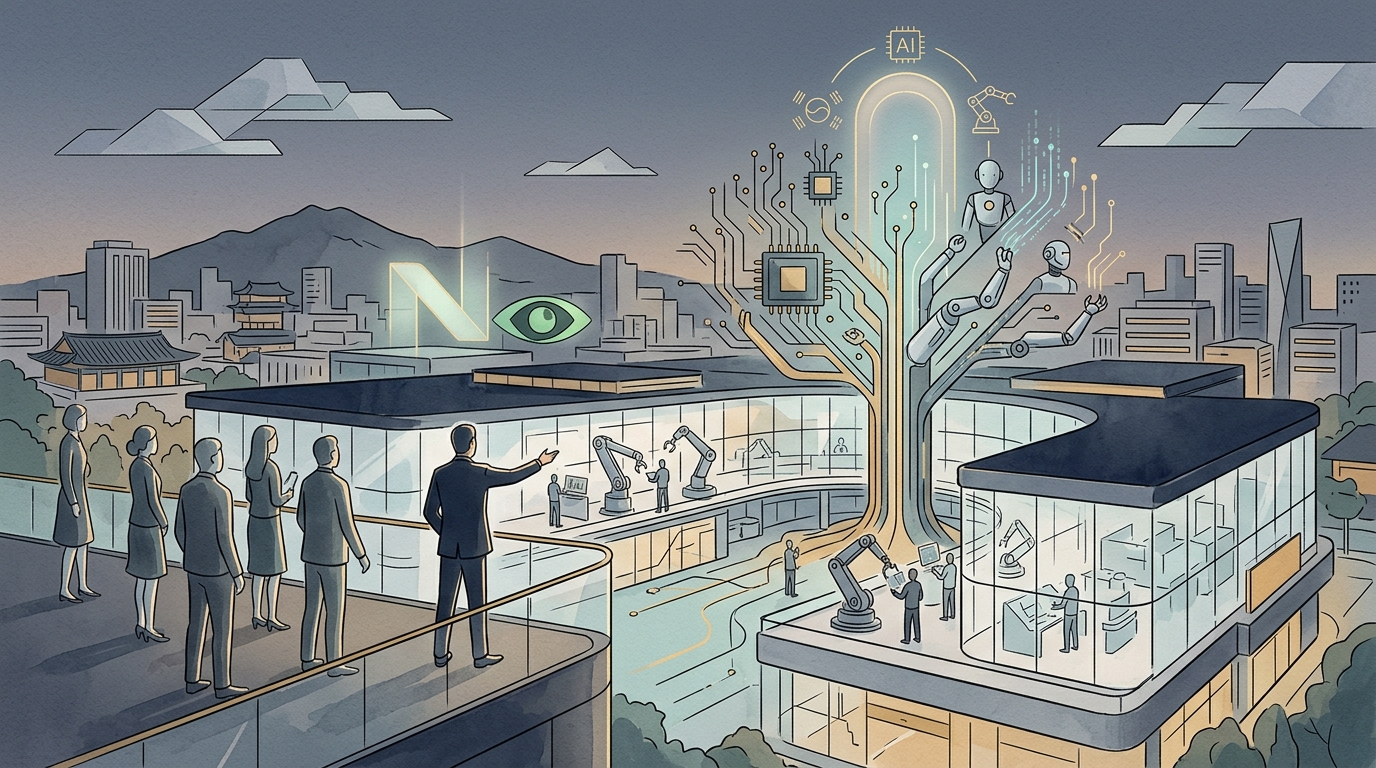
In a strategic move destined to reshape the global technological landscape, Nvidia CEO Jensen Huang has signaled the semiconductor giant's intent to invest heavily in South Korea’s robotics and 'Physical AI' sectors. This announcement, made during high-level engagements with Korean industry leaders, underscores a fundamental paradigm shift: artificial intelligence is no longer confined to digital screens and large language models; it is rapidly manifesting in the physical world.
The Strategic Pivot to Physical AI
The term 'Physical AI' refers to artificial intelligence models capable of perceiving, understanding, and interacting with the physical environment. Unlike Generative AI, which processes digital information to produce text or images, Physical AI requires a profound integration of software and hardware. Huang emphasized that South Korea is an ideal partner for this endeavor due to its global dominance in advanced semiconductors, heavy industry, and sophisticated manufacturing.
Nvidia views South Korea not merely as a supplier of critical components—such as the High Bandwidth Memory (HBM) provided by SK Hynix and Samsung—but as a fertile ecosystem for the next generation of intelligent machines. "The next wave of AI will be robotics," Huang stated, highlighting that humanoid robots and autonomous factories will be the vanguard of the new industrial revolution. By combining Nvidia's computational prowess with Korea's mechanical expertise, the goal is to create machines that can learn and operate in complex, unstructured human environments.
The Role of Korean Tech Giants
Nvidia’s investment interest is perfectly timed. South Korea is home to some of the world's most advanced robotics players. Hyundai Motor Group’s acquisition of Boston Dynamics—the creators of the iconic Atlas robot—has placed the country at the forefront of kinetic AI. Simultaneously, companies like Doosan Robotics and Hanwha Robotics are pioneering collaborative robots (cobots) that are already revolutionizing manufacturing lines across the globe.
A partnership with Nvidia offers these firms the massive computational power required to make their robots truly autonomous. By utilizing Nvidia’s Isaac platform and the Omniverse—a platform for simulating physics-based digital twins—Korean companies can train their robots in virtual environments before deploying them in the real world. This 'sim-to-real' pipeline drastically reduces R&D costs and time-to-market, making the mass production of humanoid robots a feasible reality within the next five years.
Geopolitical and Economic Implications
Huang’s overtures also carry significant geopolitical weight. As the United States seeks to diversify its high-tech supply chains and limit China’s access to cutting-edge AI, strengthening ties with South Korea is a strategic imperative. Korea serves as a reliable, democratic hub of technological excellence, offering a secure environment for Nvidia’s long-term capital investments and joint ventures.
Economically, Nvidia’s entry into the Korean robotics ecosystem is expected to spark a venture capital boom. Interest in 'AI-on-chip' solutions specifically designed for edge robotics is already soaring. The South Korean market, which has traditionally relied on hardware exports, is now poised to transform into a provider of integrated AI solutions, merging its world-class hardware with Nvidia’s industry-leading software stacks.
Challenges and the Future of Labor
Despite the prevailing optimism, the transition to Physical AI is fraught with challenges. Integrating AI into physical systems raises critical questions regarding safety, ethics, and liability. What happens when an autonomous robot causes an accident in a shared workspace? Furthermore, there are valid concerns about labor displacement. South Korea already possesses the highest robot density per worker in the world; further automation could strain the social contract.
Jensen Huang argues that AI will catalyze the creation of new job categories, transforming manual laborers into supervisors of intelligent systems. However, the social acceptance of this transition will depend on how equitably the benefits are distributed. The Nvidia-Korea alliance is more than a business deal; it is the opening chapter of a new era where intelligence gains a physical form, and industry acquires a digital conscience. The world is watching as the 'Godfather of AI' and the 'Kings of Hardware' join forces to build the future.