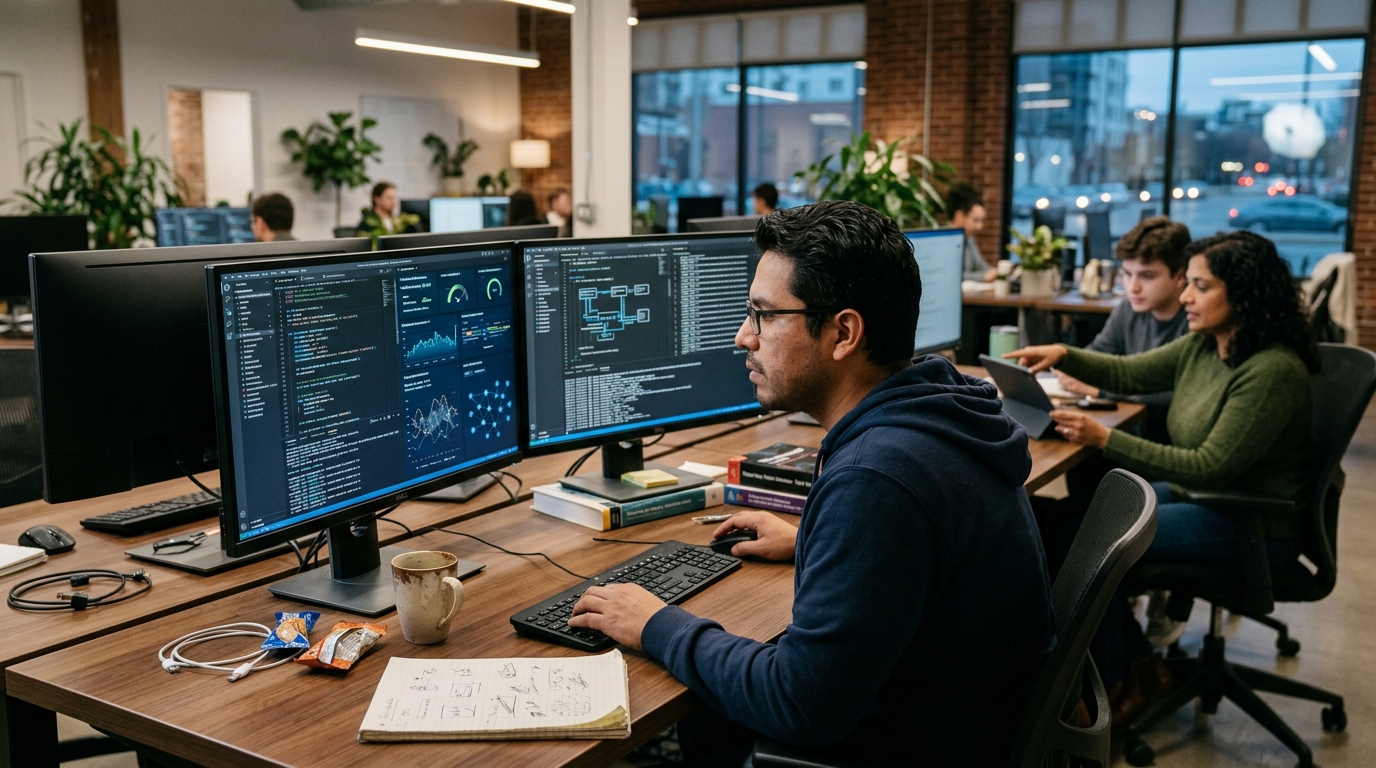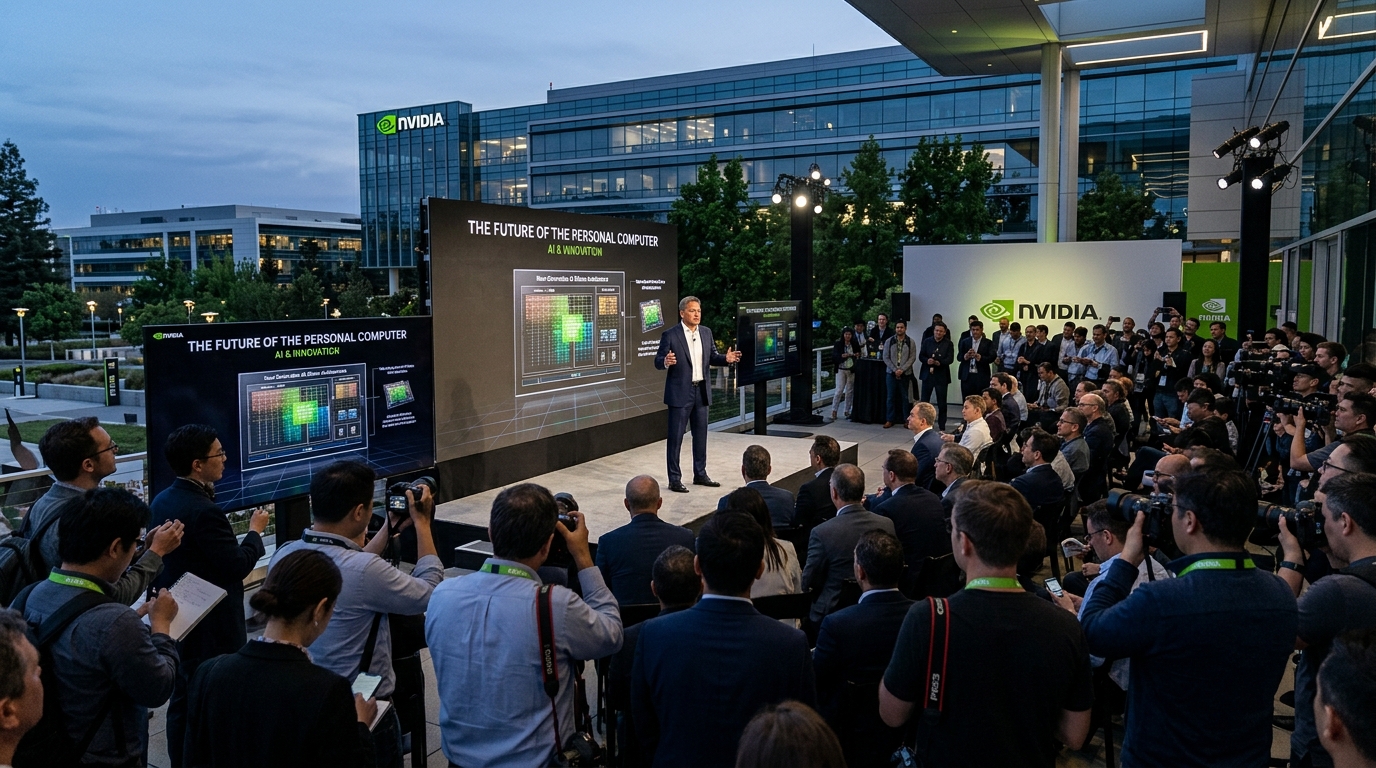
In an era where artificial intelligence has ceased to be an abstract concept and has become the central pillar of the global economy, Nvidia, under the leadership of visionary Jensen Huang, is making a move that promises to radically change our relationship with technology. During its recent presentation, the company that dominates the semiconductor market announced a new generation of chips aimed at "reinventing the personal computer." This is not just an increase in processing power, but a fundamental paradigm shift: the transition from the traditional PC to the "AI PC."
Next-Generation Architecture: From Blackwell to Rubin
Nvidia is not resting on the laurels of its dominance in data centers. With the new Rubin architecture, which succeeds the already successful Blackwell, the company is bringing the power of supercomputers to every user's desk. The new chips integrate advanced Neural Processing Units (NPUs) and next-generation Tensor cores, enabling the execution of complex Large Language Models (LLMs) locally, without the need for a cloud connection. This means faster response times, increased privacy protection, and the ability to operate in environments without internet access.
According to company executives, the personal computer of the future will not wait for commands but will anticipate user needs. Through "Digital Humans" and local AI Agents, the computer will be able to compose code, edit video in real-time, and manage the owner's schedule with the precision of an experienced assistant. Nvidia argues that this development is the most significant since the creation of the Graphical User Interface (GUI) in the late 1980s.
Strategic Conflict and the Windows Ecosystem
Nvidia's move does not happen in a vacuum. We are in the midst of fierce competition with Apple and Qualcomm, which have already presented their own proposals for AI-driven hardware. However, Nvidia's advantage lies in its vast software ecosystem, CUDA, and its close collaboration with Microsoft for the full integration of the new chips' capabilities into Windows 12. The promise is simple: a computer that "understands" the world around it through sensors and cameras, turning every interaction into a natural conversation.
- Local Processing: Reduced dependence on remote servers and improved latency.
- Energy Efficiency: Despite the massive power, the new chips promise lower consumption per AI task.
- Gaming and Creativity: DLSS 5.0 technology will allow the creation of photorealistic worlds in real-time with minimal computational effort.
"The computer is no longer a tool you use. It is a partner that works with you," said Jensen Huang, highlighting the philosophy behind the new product line.
Challenges and Social Implications
Despite the excitement, this "reinvention" brings significant challenges. The cost of new systems is expected to be high, creating a digital divide between those who can afford "personal intelligence" and those who remain on traditional systems. Furthermore, the concentration of so much power in the hands of one company raises questions about competition and dominance in the semiconductor market. Nvidia seems to be building not just chips, but a new infrastructure for human productivity, something that requires careful oversight from regulatory authorities.
In conclusion, Nvidia is laying the foundations for a new era in computing. If its promises are fulfilled, the way we work, create, and communicate will change irreversibly. The personal computer, as we have known it for the last 40 years, is becoming history, giving way to a machine that does not just execute code, but generates meaning.