In the ever-shifting landscape of global artificial intelligence, Mistral AI is no longer just a "European hope" but a formidable force rewriting the industry's playbook. In a recent appearance on Bloomberg Tech, the company's Chief Revenue Officer, Marjorie Janiewicz, signaled the start of a new chapter: a deep commitment to the U.S. market and a strategic pivot toward becoming a full-stack provider focused on enterprise-grade customization.
The Evolution into a Full-Stack Ecosystem
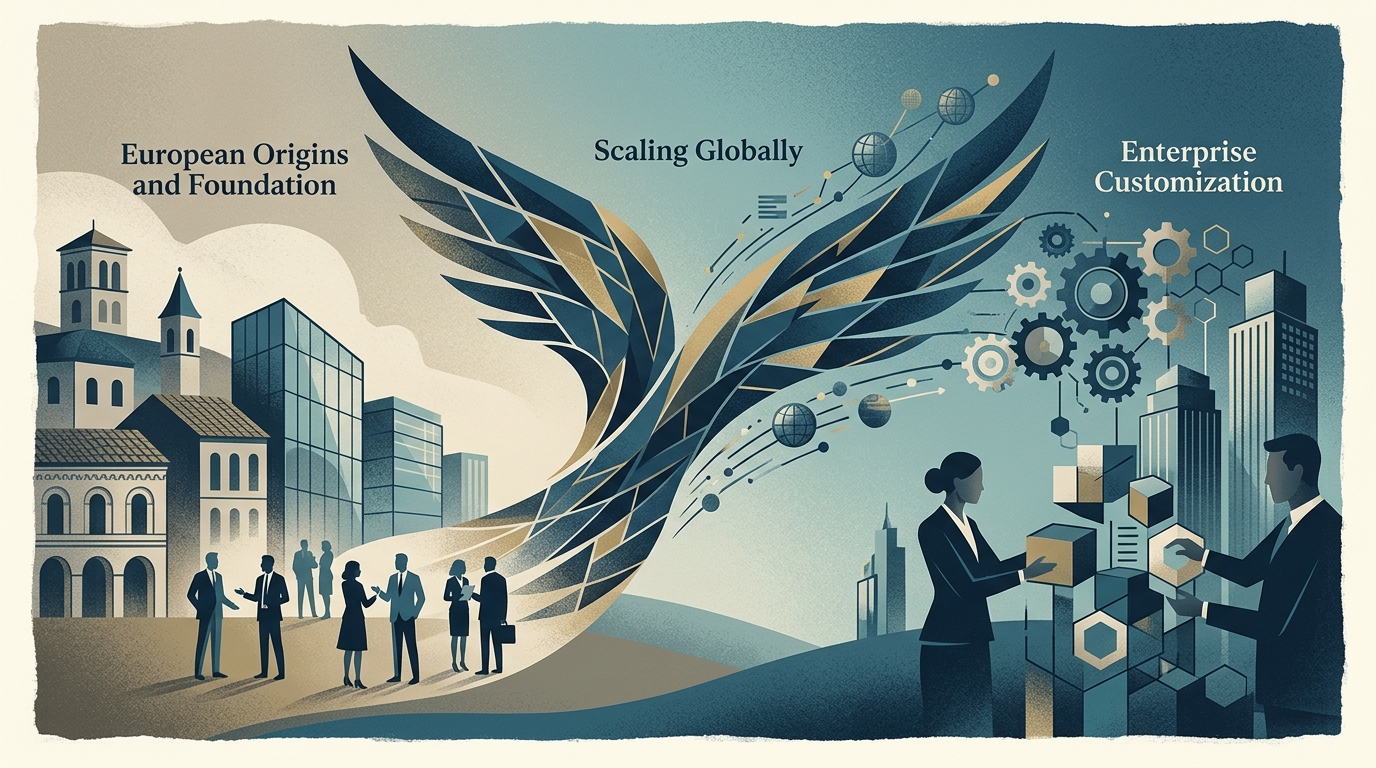
Mistral AI initially captured global attention by proving that model efficiency could rival brute-force scale. Their early releases, such as Mistral 7B and Mixtral 8x7B, demonstrated that high-quality reasoning didn't require astronomical parameter counts. However, as of April 2026, the company has transcended its status as a mere model provider. As Janiewicz articulated, Mistral has evolved into a "full-stack" entity. This means they now offer the entire value chain: the underlying models, the orchestration tools, and the infrastructure partnerships necessary for seamless enterprise integration.
This strategy addresses a critical market pain point: How can large organizations deploy AI without relinquishing control over their sensitive data or their unique operational logic? Mistral’s answer is "customization at scale." Rather than pushing a one-size-fits-all model, the French firm is championing solutions tailored to specific industries—from high-frequency trading in finance to predictive maintenance in heavy manufacturing.
U.S. Strategy and Global Momentum
Despite its Parisian headquarters, Mistral AI is aggressively expanding its footprint in the United States. Janiewicz emphasized that the company remains "very committed" to the U.S., which continues to be the world's largest consumer and incubator of AI technology. This presence is more than just sales-driven; it is a strategic maneuver to tap into the Silicon Valley talent pool and deepen integrations with cloud titans like Microsoft Azure and AWS.
Yet, the momentum is truly global. We are witnessing a surge in demand for "Sovereign AI" across Asia and the Middle East. Governments and corporations in these regions are increasingly wary of total dependence on a handful of California-based providers. By positioning itself as the "third way"—balancing the performance of closed systems like OpenAI with the flexibility of open weights—Mistral is capturing market share in regions that prioritize technological autonomy and reliability.
The Customization Advantage
Why would a Fortune 500 company choose Mistral over established giants like Google or OpenAI? Janiewicz argues that the competitive edge lies in flexibility and portability. Mistral’s models are designed to be lean, making them ideal for deployment in diverse environments, including on-premise servers and private clouds.
- Cost Efficiency: Smaller, optimized models require significantly less compute, driving down the total cost of ownership for enterprises.
- Data Privacy: The ability to run models locally is a non-negotiable requirement for highly regulated sectors like healthcare and defense.
- Agility: Mistral’s architecture allows for rapid fine-tuning, enabling companies to iterate on their internal AI tools much faster than with monolithic competitors.
Challenges and the Future of AI Sovereignty
Despite the current tailwinds, the path forward is fraught with challenges. Meta’s Llama series continues to dominate the open-source conversation, while Google’s aggressive pricing models are squeezing margins across the board. Furthermore, Mistral must navigate the complexities of its European identity—operating under the EU AI Act—while maintaining the breakneck speed of innovation required to compete in the American market.
Janiewicz remains confident that Mistral has found the optimal balance. As the industry moves from the "hype phase" of experimentation to the "utility phase" of production, the demand for tools that actually solve specific business problems will only grow. Mistral isn't just aiming to be an alternative; it wants to be the standard-bearer for the next generation of enterprise intelligence.
"AI is no longer a laboratory experiment; it is the backbone of the modern enterprise. At Mistral, we are building the bridge between raw compute and tangible customer value," Janiewicz noted during the interview.
In conclusion, Mistral AI’s trajectory in 2026 serves as a masterclass in strategic adaptability. In a world dominated by tech giants, agility, specialization, and an understanding of regional sovereignty are proving to be as vital as the number of GPUs in a data center. The challenge for the French champion now is to prove that its full-stack approach can sustain profitability in a market where the cost of raw intelligence is rapidly approaching zero.