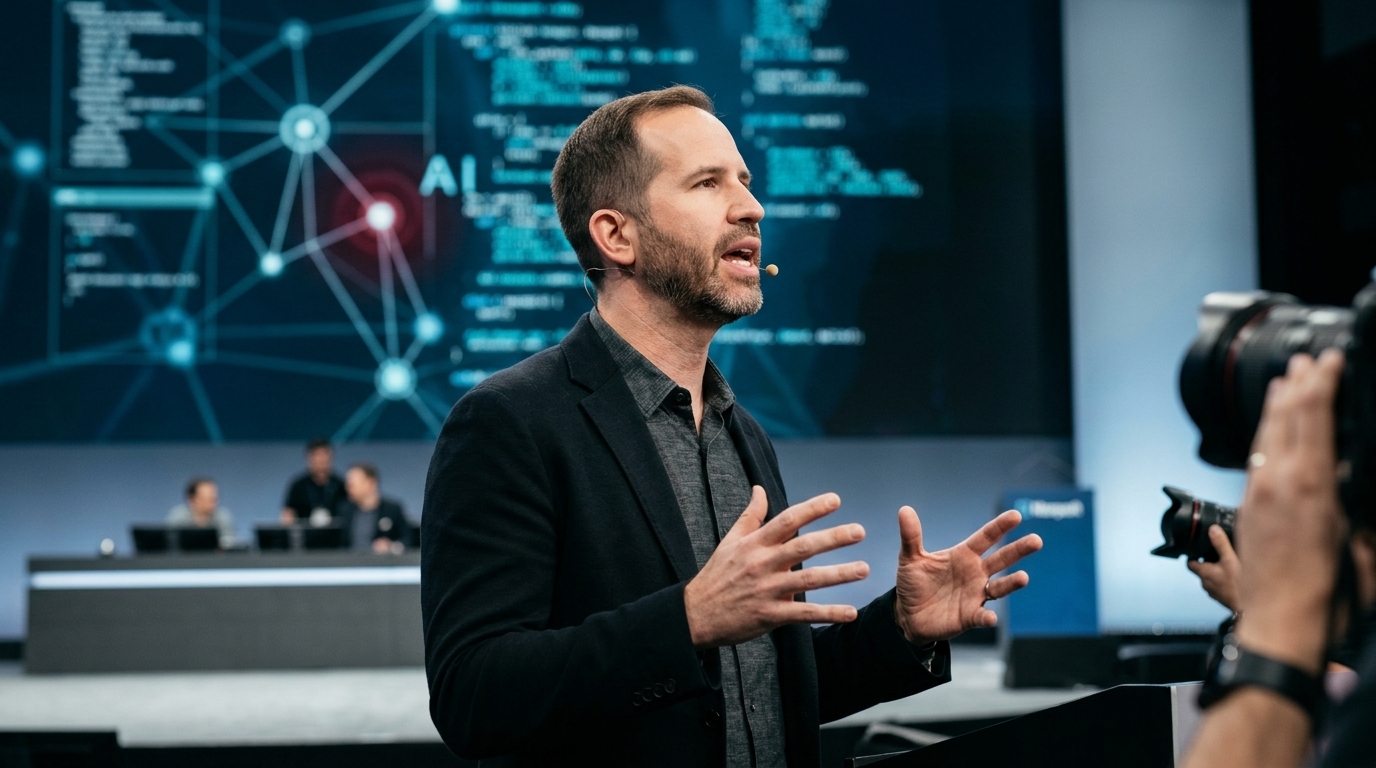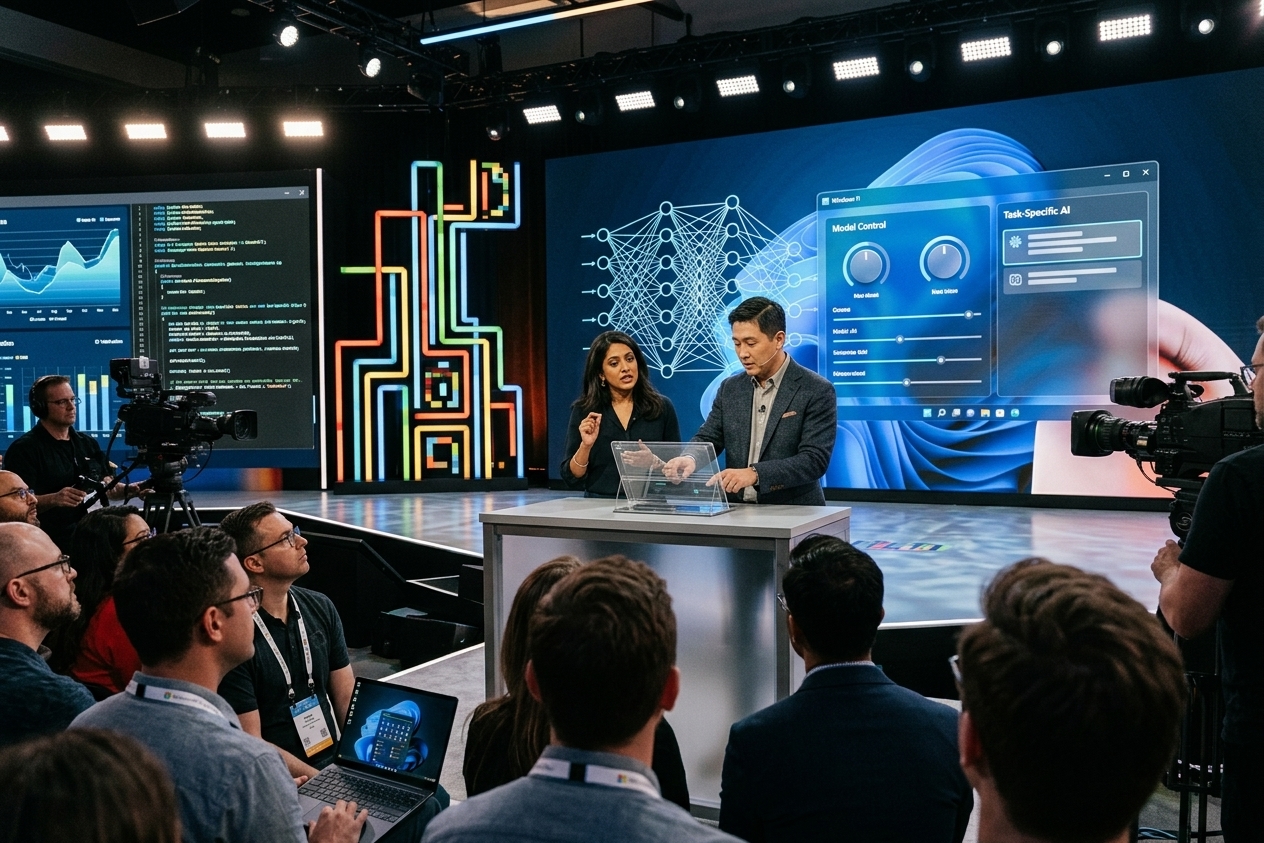
In San Francisco, the atmosphere at the Build 2026 conference is electric. For Microsoft, this is not just an annual meeting with the developer community, but a moment of existential reimagining. After years of heavy reliance on OpenAI, the Redmond tech giant is attempting to prove it possesses its own autonomous intelligence, both in software and infrastructure. This year's Build marks the official transition from "AI as an add-on" to "AI as the foundation" of Windows.
Emancipation from OpenAI: The MAI-1 Model
The most talked-about announcement concerns MAI-1, the first truly large language model (LLM) developed entirely in-house by Microsoft, under the leadership of Mustafa Suleyman. Until last year, Microsoft was seen as OpenAI’s "big benefactor." With MAI-1, the company is sending a clear message to the market and investors: its dominance will not depend on third parties. MAI-1 is rumored to feature over 500 billion parameters, positioning it precisely between GPT-4 and Gemini 1.5 Pro in terms of power, but with optimizations that make it ideal for the Azure ecosystem.
This strategy isn't just about power; it's about cost. Running third-party models is expensive. With its own model, Microsoft can offer more competitive pricing to Azure customers and integrate AI deeper into Office 365 without incurring external royalties. Additionally, Microsoft unveiled the next generation of Small Language Models (SLMs), the Phi-4 series, which allows complex AI tasks to run locally on the device without needing a cloud connection.
Windows: From Operating System to Personal Assistant
Windows 11 is receiving its most radical upgrade in history. Microsoft introduced the new "AI Shell," an environment that allows artificial intelligence to "see" and understand what is happening on the user's screen in real-time. This isn't just a chatbot in a sidebar. It is an integrated function that can automate workflows across different applications. For example, a developer can ask Copilot to "transfer this draft from Figma to React code and upload it to GitHub," with the system executing the moves autonomously.
Significant emphasis was also placed on the controversial "Recall" feature. Following the intense privacy backlash in 2024, Microsoft brought the feature back with full end-to-end encryption and processing exclusively on the computer's NPU (Neural Processing Unit). Recall now functions as a user's "photographic memory," allowing them to search for anything they saw or did on their computer using natural language, without that data ever leaving the device.
The Revolution of Copilot+ PCs and Developers
For developers, Microsoft announced "Dev Home AI," a control center that allows for easy training and customization of local AI models. With the new architecture of Copilot+ PCs, computers no longer rely solely on the CPU and GPU; the NPU becomes the protagonist. Microsoft promises that AI-optimized applications will run with 1/10th the energy compared to the past, offering unprecedented battery life on mobile devices.
- Integration of PyTorch directly into Windows for faster model development.
- New "AI Debugging" tools in Visual Studio that predict bugs before code is even written.
- Expansion of the Windows Subsystem for Linux (WSL) with hardware acceleration support for AI workloads.
In conclusion, Build 2026 is the milestone where Microsoft stops following trends and starts dictating them. The battle for desktop dominance now goes through neural processors and the ability of an operating system to understand its user better than ever. The remaining question is whether users are ready to trust such a close "partner" in their daily lives.