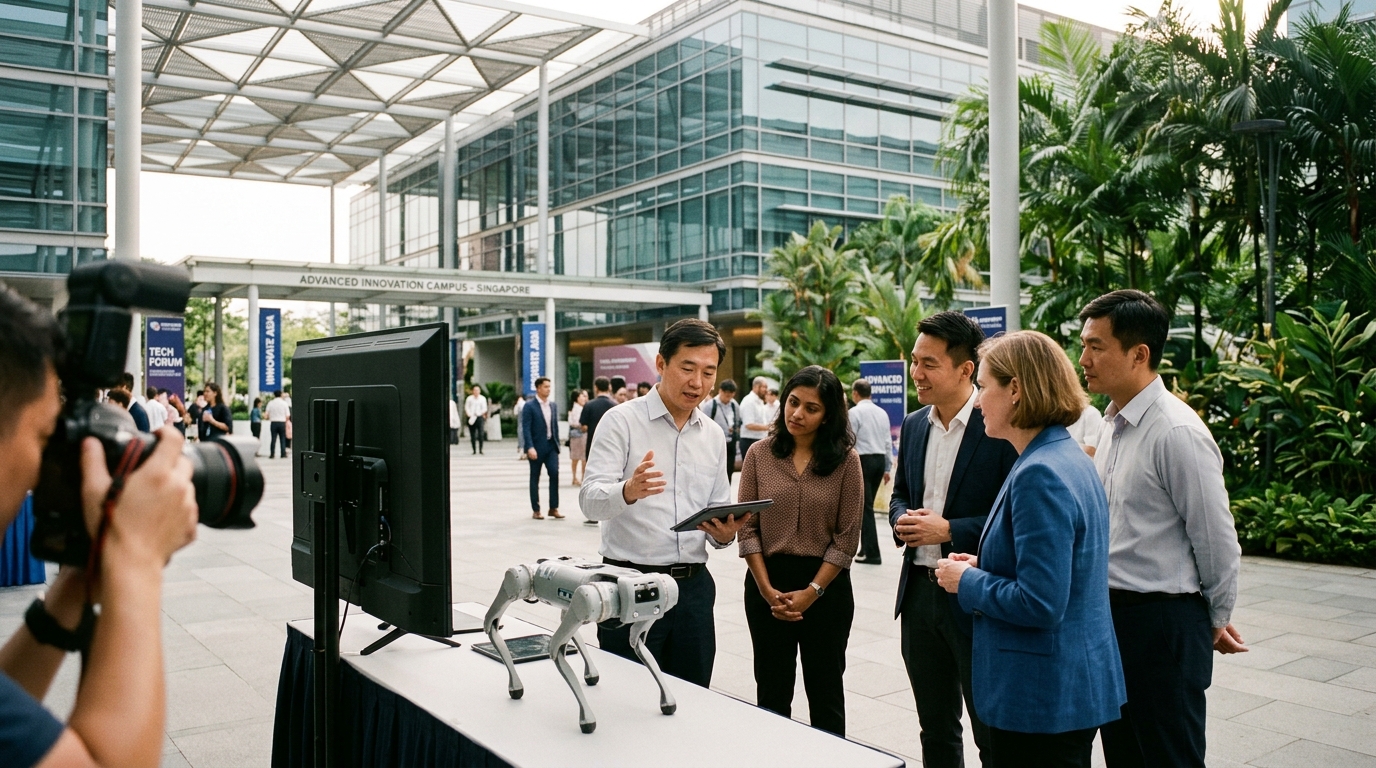
Singapore, the tiny city-state that has evolved into a global tech hub, finds itself once again at the center of the AI geopolitical chessboard. The recent "mess" involving Manus AI—a startup with Chinese roots that saw its collaboration with Meta collapse amid questions about its origins and data transparency—could be viewed as an ominous warning. However, for market analysts and entrepreneurs alike, the reality is different: Singapore's appeal remains not only intact but arguably strengthened.
The Manus Incident and the Rift with Meta
Manus AI, which bills itself as the creator of the "world's first truly autonomous AI agent," recently found itself in a whirlwind of scrutiny. Meta, the American social media giant, reportedly withdrew its interest in a close partnership when doubts surfaced regarding whether the company was truly "Singapore-born" or merely a front for Chinese interests attempting to bypass U.S. export restrictions on chips and high-end technology. This incident highlighted the deep-seated suspicion in Washington regarding anything with Chinese DNA, even if the headquarters are located on neutral ground.
Despite the negative publicity, the flow of Chinese capital and talent toward Singapore shows no signs of slowing down. The reasons are structural. For a Chinese startup founder, staying in mainland China means suffocating regulatory oversight from Beijing and almost certain exclusion from Western markets. Singapore offers a "purgatory" of sorts—a place where technology can receive an international seal of approval, gaining access to American Nvidia chips and Western venture capital.
The Phenomenon of "Singapore Washing"
The term "Singapore Washing" has begun to circulate widely in the corridors of investment banks. It describes the process by which Chinese companies move their headquarters, staff, and intellectual property to Singapore to decouple from their Chinese identity.
"It's not just a move of offices; it's an attempt to change the geopolitical destiny of a company,"notes a tech executive based in Marina Bay.
The Singaporean government, for its part, maintains a delicate balance. While it is eager to attract the cream of global tech talent, it knows that if it allows the city to become a "backdoor" for sanctions evasion, it risks losing the trust of the United States. However, Singapore's legal framework, intellectual property protection, and low taxation remain unbeatable advantages that no single company's failure can undermine.
The Survival Strategy of AI Startups
For AI startups, the stakes are all about access to resources. Training Large Language Models (LLMs) requires immense computational power, which is currently controlled almost exclusively by the U.S. through restrictions on high-performance GPUs. Chinese startups operating in Singapore can—under certain conditions—access these resources, something that would be impossible in Shenzhen or Shanghai.
- Access to international talent hesitant to work in China due to political conditions.
- Easier listing on stock exchanges like New York or Hong Kong with an international profile.
- Compliance with Western data protection standards (GDPR, etc.), which is essential for expansion into Europe.
Conclusions and Outlook
The Manus AI incident will likely lead to stricter due diligence from Western investors and tech giants. Companies choosing Singapore will now have to actively demonstrate their independence from Beijing, not just on paper but in their data structures and board compositions. Nevertheless, Singapore remains the "golden bridge." In a world splitting into two technological blocs, the need for a neutral intermediary is greater than ever. The Manus mess was not the beginning of the end, but rather the end of the beginning for the new era of "Global-Chinese" enterprises.